All posts
Software Atelier 1: Fundamentals of Informatics (2015)
The first of the ateliers, which are a crucial part of our Bachelor curriculum is roughly divided into three main pieces. On the one hand the students will obtain first-hand experience with a variety of tools of the trade, such as LaTeX, HTML, Versioning, and the unix shell. Second, the students will get an overview of the history of computer science since its very beginning up to the present day. The third part of the atelier is dedicated to a group project, in which students will put into practice what they learned in the course.
Software Engineering (2015)
Software engineering is the discipline of engineering large software systems, that is developing software systems that are available in multiple versions and whose design, development and maintenance involve multiple people. Modern software engineering requires to manage methods, tools and techniques to develop systems on time and on schedule. The course provides the fundamental skills to engineer large software systems, manage a software process, elicit, specify and analyze software requirements, architect and design dependable and maintainable software, validate and verify software systems.
Use at Your Own Risk: The Java Unsafe API in the Wild
Java is a safe language. Its runtime environment provides strong safety guarantees that any Java application can rely on. Or so we think. We show that the runtime actually does not provide these guarantees—for a large fraction of today's Java code. Unbeknownst to many application developers, the Java runtime includes a \"backdoor" that allows expert library and framework developers to circumvent Java's safety guarantees. This backdoor is there by design, and is well known to experts, as it enables them to write high-performance systems-level code in Java. For much the same reasons that safe languages are preferred over unsafe languages, these powerful but unsafe capabilities in Java should be restricted. They should be made safe by changing the language, the runtime system, or the libraries. At the very least, their use should be restricted. This paper is a step in that direction. We analyzed 74 GB of compiled Java code, spread over 86,479 Java archives, to determine how Java’s unsafe capabilities are used in real-world libraries and applications. We found that 25% of Java bytecode archives depend on un- safe third-party Java code, and thus Java's safety guarantees cannot be trusted. We identify 14 different usage patterns of Java’s unsafe capabilities, and we provide supporting evidence for why real-world code needs these capabilities. Our long-term goal is to provide a foundation for the design of new language features to regain safety in Java.
UrbanIt: Visualizing Repositories Everywhere
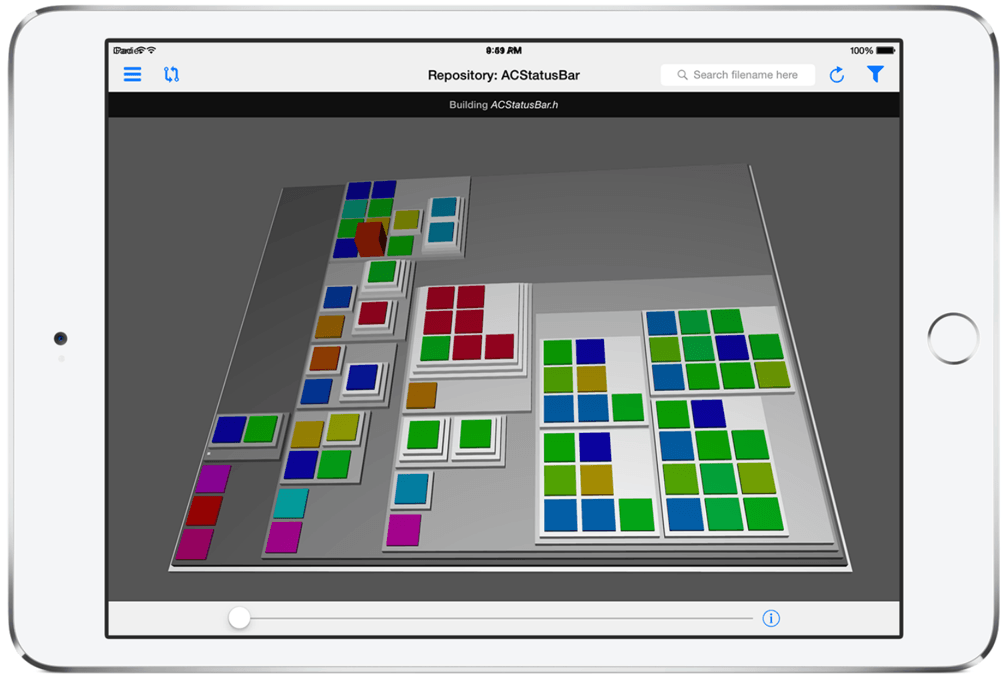
Software evolution is supported by a variety of tools that help developers understand the structure of a software system, analyze its history and support specific classes of analyses. However, the increasingly distributed nature of software development requires basic repository analyses to be always available to developers, even when they cannot access their workstation with full-fledged applications and command-line tools. We present UrbanIt, a gesture-based tablet application for the iPad that supports the visualization of software repositories together with useful evolutionary analyses (e.g., version diff) and basic sharing features in a portable and mobile setting. UrbanIt is paired with a web application that manages synchronization of multiple repositories.
SODA: The Stack Overflow Dataset Almanac
Stack Overflow has become a fundamental resource for developers, becoming the de facto Question and Answer (Q&A) website, and one of the standard unstructured data sources for software engineering research to mine knowledge about development. We present SODA, the Stack Overflow Dataset Almanac, a tool that helps researchers and developers to better understand the trends of discussion topics in Stack Overflow, based on the available tagging system. SODA provides an effective visualization to support the analysis of topics in different time intervals and frames, leveraging single or co-occurrent tags. We show, through simple usage scenarios, how SODA can be used to find interesting peculiar moments in the evolution of Stack Overflow discussions that closely match specific recent events in the area of software development. SODA is available at http://rio.inf.usi.ch/soda/
Blended, Not Stirred: Multi-concern Visualization of Large Software Systems
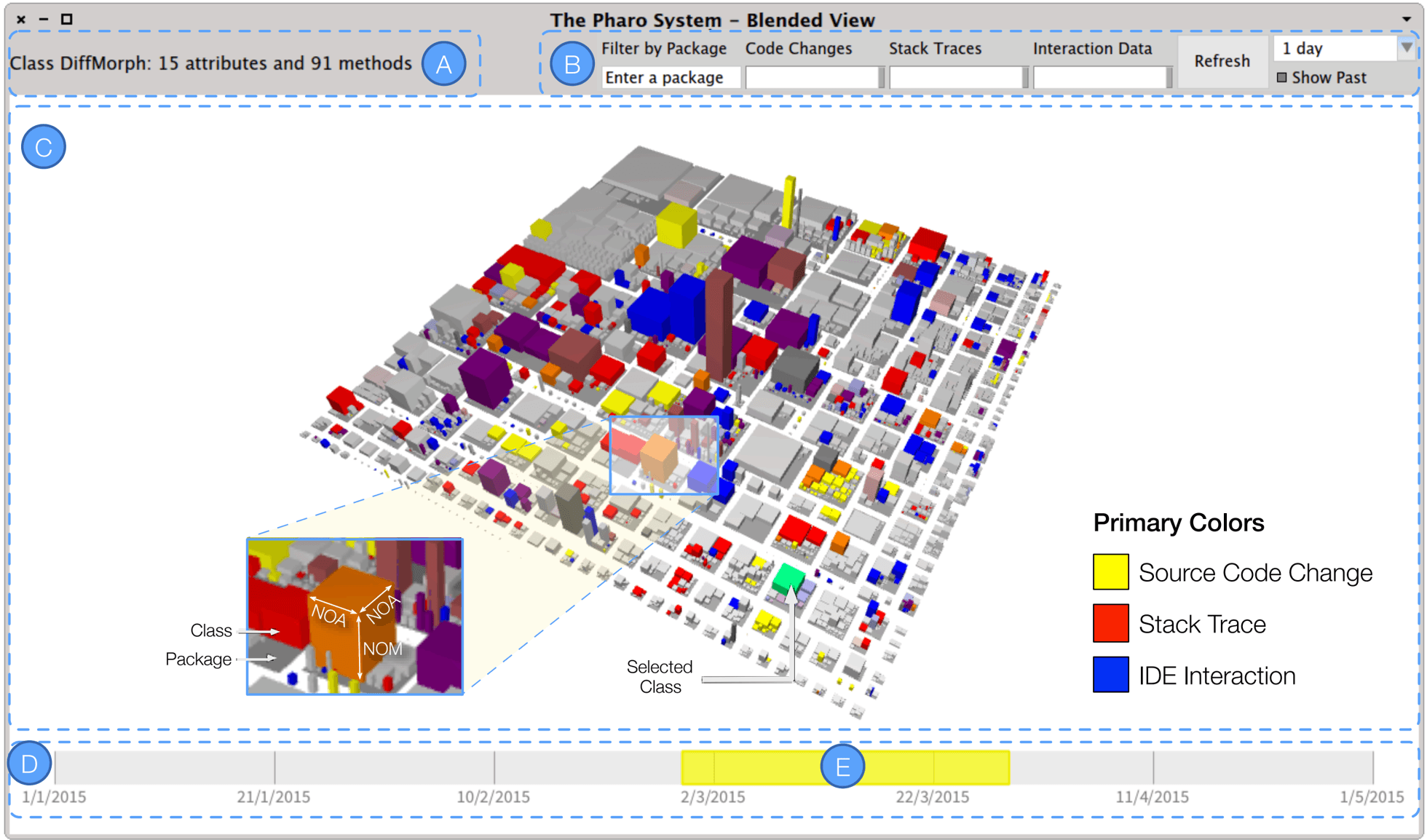
While constructing and evolving software systems, developers generate directly and indirectly a large amount of data of diverse nature, such as source code changes, bug tracking information, IDE interactions, stack traces, etc. Often these diverse data sources are processed and visualized in isolation, leading to a partial view of systems. We present a blended approach to visualize several data \"ingredients" at once, to give as complete an answer as possible to the question "What happened to the system in the last few days?". The goal is to enable a quick and comprehensive assessment of what happened to a software system in any given time frame.