Conference
Browse all content in this category
A Taxonomy of Design Quality in Super Mario Maker 2
Thanks to its popularity, Super Mario Maker 2 (SMM2) features myriad user-designed platforming levels that span a broad range of styles, genres, difficulty, and quality. This paper is a first attempt at charting out this vast landscape of levels, with the goal of exploring the main concepts that characterize design quality. To this end, we first selected 500 videos by popular YouTube streamers that play SMM2 levels. With the help of an LLM, we extracted and clustered by topic segments where the streamer comments about the design of the level they are playing. Then, we applied a grounded theory coding process to extract the concepts emerging in these segments, and we combined and organized them hierarchically. The resulting taxonomy identifies the main abstract concepts that pertain to the design of a level in SMM2 and its resulting quality, as well as several concrete elements of the game that belong to each abstract category. Besides illustrating the underlying dimensions that characterize design quality in SMM2, our results also illuminate the diverse landscape of player-designed levels in the game.
Mining a Century of Swiss Trademark Data
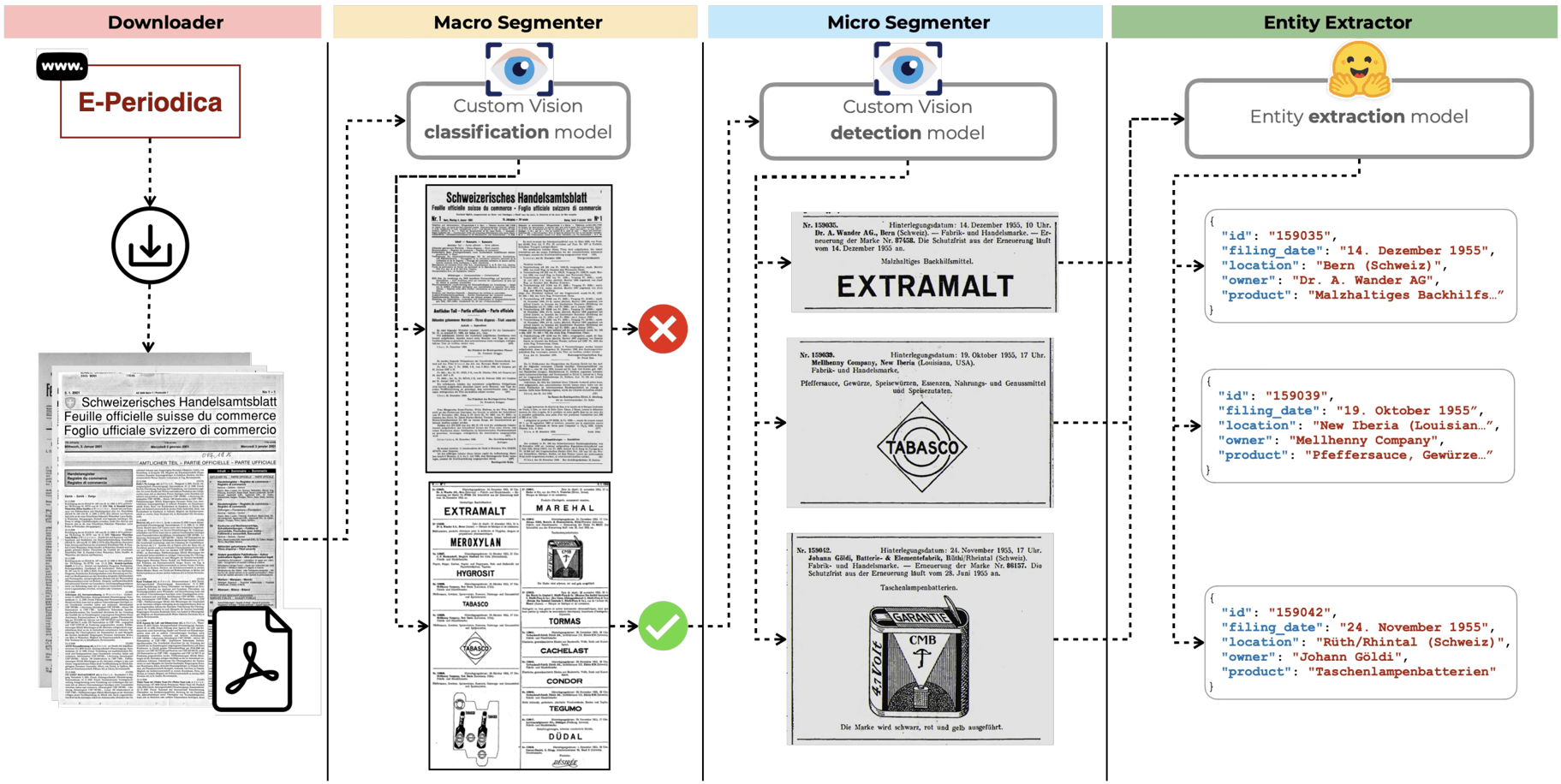
This paper presents an approach for extracting trademark registration events from the Swiss Official Gazette of Commerce (SOGC), an official daily journal published by the Swiss Confederation since January 1883. Until 2001, the data is only available as scanned documents, which constitute the target dataset of this study. Our approach is composed of a chain of three steps based on state-of-the-art deep learning techniques. We leverage image classification to identify pages containing trademarks (macro segmentation); we apply object detection to identify the portion of the page corresponding to a registration event (micro segmentation); last, we perform information extraction using a document AI technique. We obtain a dataset of ca. 500,000 trademark registration events, extracted from a corpus of 430,000 pages. Each step of our workflow has relatively high accuracy: the macro and micro segmentation steps show precision and recall greater than 95% on a manually constructed dataset. The dataset offers a unique historical perspective on trademark registrations in Switzerland that is not available from any other source. Showcasing what can be achieved with the extracted information, we provide answers to a set of preliminary economics questions.
What Makes a Level Hard in Super Mario Maker 2?
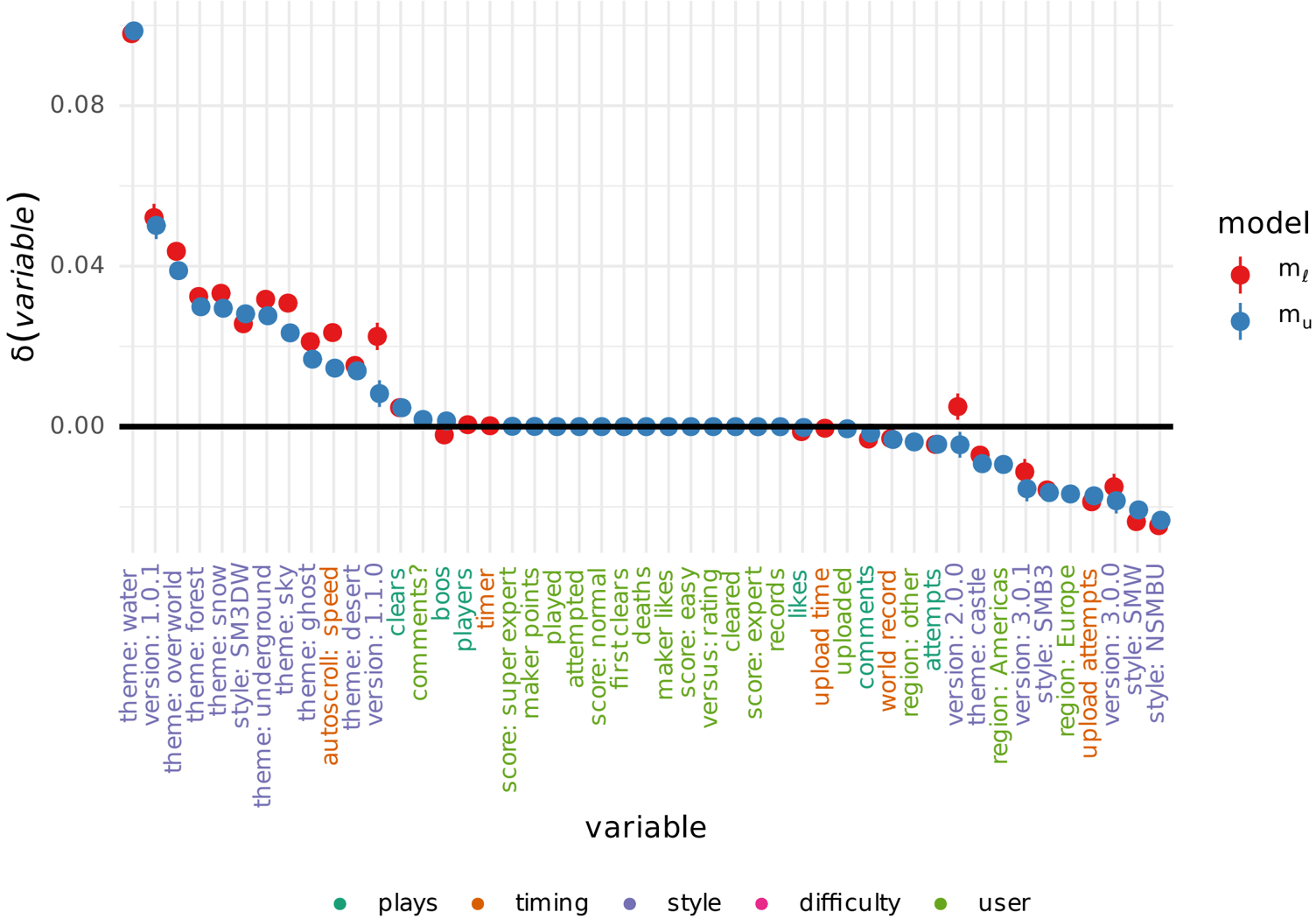
Games like Super Mario Maker 2 (SMM2) lower the barrier for casual users to become level designers. In this paper, we set out to analyze a vast amount of data about SMM2 user-written levels, in order to understand what factors affect a level's difficulty as experienced by other users. To this end, we perform two kinds of analyses: one based on regression models and one using natural language processing techniques. The main results shed light on which level characteristics (e.g., its style, popularity, timing) and which topics and sentiments have a consistent association with easier or harder levels. While none of our findings are startling, they help distill some key differences between easy and hard SMM2 levels, which, in turn, can pave the way for a better understanding of end-user level design.
Visualizing Interaction Data Inside & Outside the IDE to Characterize Developer Productivity
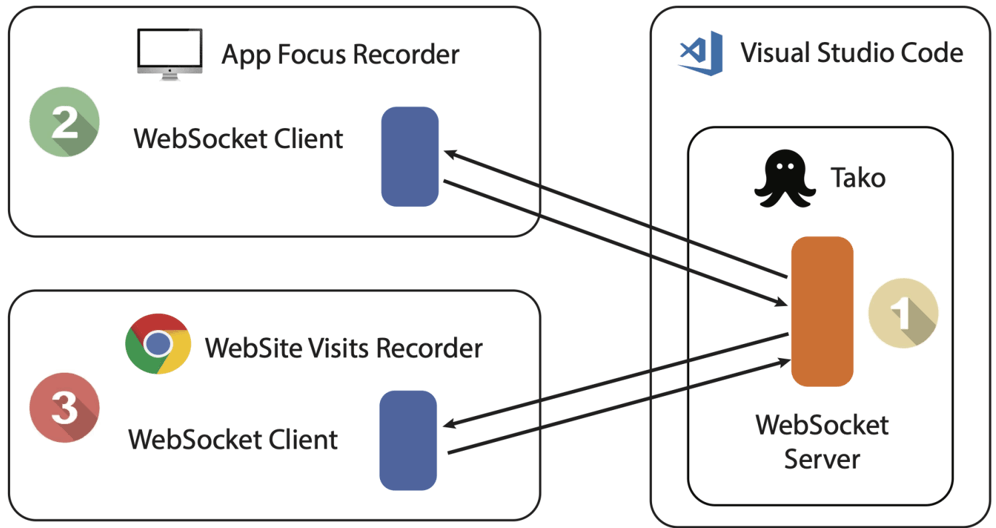
Work fragmentation is a common phenomenon in the workspace, and is detrimental to the actual work taking place. To measure and study the impact of work fragmentation in software development, several studies exploited interaction data, i.e., the data generated by the events performed by the developers in the IDE. However, the absence of information on activities performed outside the IDE could lead to a misclassification of development time. In fact, sometimes leaving the IDE is not an interruption of the task at hand, e.g., when consulting API documentation, or when discussing with colleagues in ad-hoc collaboration applications. In this paper, we propose Ferax, a data analytics platform that developers can leverage for retrospection and possibly to improve their productivity. The capabilities of Ferax are twofold: First, it extends Tako, a profiler to record IDE interaction data for Visual Studio Code, with information about which applications were used and which websites were visited. Second, to enable the understanding of productivity and interruptions on developer sessions, Ferax provides interactive visualizations that show the detailed sequence of events inside and outside the IDE, the switches the developer performs by classifying them as productive or possible interruptions, and the time distribution for application usage. As a preliminary evaluation of Ferax we have collected and analyzed real development sessions from a set of master students and two professional developers. We illustrate how a developer can leverage Ferax to characterize her usual habits, to elicit the impact of interruptions, and to better characterize sessions which were only apparently unproductive.
Investigating the Use of Code Analysis and NLP to Promote a Consistent Usage of Identifiers
Meaningless identifiers as well as inconsistent use of identifiers in the source code might hinder code readability and result in increased software maintenance efforts. Over the past years, effort has been devoted to promoting a consistent usage of identifiers across different parts of a system through approaches exploiting static code analysis and Natural Language Processing (NLP). These techniques have been evaluated in small-scale studies, but it is unclear how they compare to each other and how they complement each other. Furthermore, a full-fledged larger empirical evaluation is still missing.,,We aim at bridging this gap. We asked developers of five projects to assess the meaningfulness of the recommendations generated by three techniques, two already existing in the literature (one exploiting static analysis, one using NLP) and a novel one we propose. With a total of 922 rename refactorings evaluated, this is, to the best of our knowledge, the largest empirical study conducted to assess and compare rename refactoring tools promoting a consistent use of identifiers. Our study sheds light on the current state-of-the-art in rename refactoring recommenders, and indicates directions for future work.
The Code Time Machine
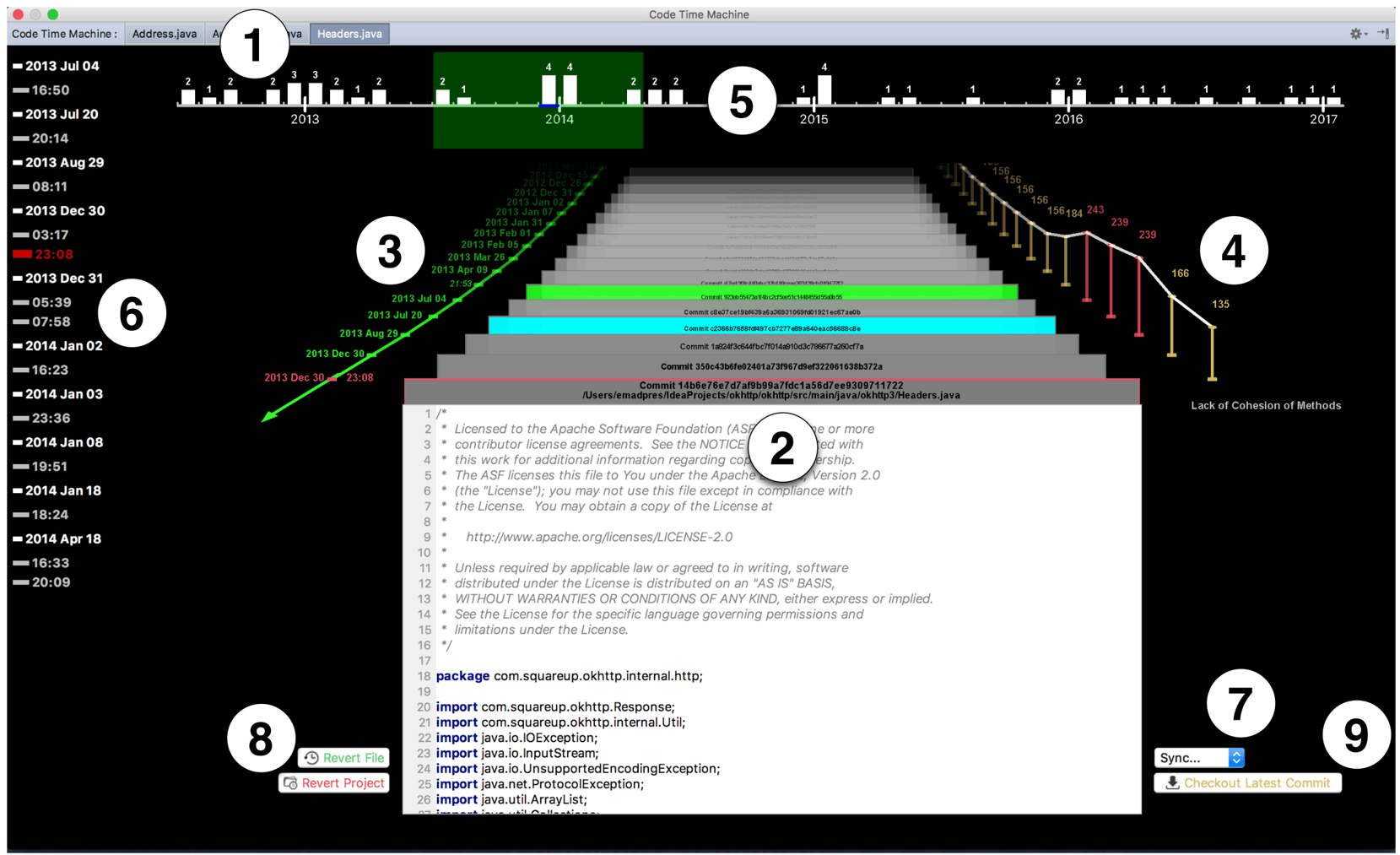
Exploring and analyzing the history of changes is an intrinsic part of software evolution comprehension. Existing tools that exploit the data residing in version control repositories provide only limited support for the intuitive navigation of code changes from a historical perspective. We present the Code Time Machine, a lightweight IDE plugin which uses visualization techniques to depict the history of any chosen file augmented with information mined from the underlying versioning system. Inspired by Apple's Time Machine, our tool allows both developers and the system itself to seamlessly move through time.
On the Uniqueness of Code Redundancies
Code redundancy widely occurs in software projects. Researchers have investigated the existence, causes, and impacts of code redundancy, showing that it can be put to good use, for example in the context of code completion. When analyzing source code redundancy, previous studies considered software projects as sequences of tokens, neglecting the role of the syntactic structures enforced by programming languages. However, differences in the redundancy of such structures may jeopardize the performance of applications leveraging code redundancy. We present a study of the redundancy of several types of code constructs in a large-scale dataset of active Java projects mined from GitHub, unveiling that redundancy is not uniform and mainly resides in specific code constructs. We further investigate the implications of the locality of redundancy by analyzing the performance of language models when applied to code completion. Our study discloses the perils of exploiting code redundancy without taking into account its strong locality in specific code constructs.
How Developers Document Pull Requests with External References
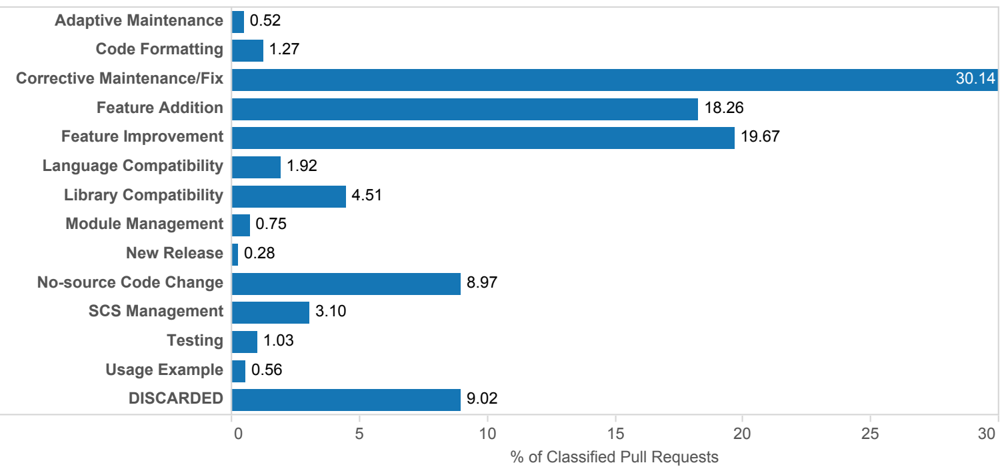
Online resources of formal and informal documentation-such as reference manuals, forum discussions and tutorials-have become an asset to software developers, as they allow them to tackle problems and to learn about new tools, libraries, and technologies. This study investigates to what extent and for which purpose developers refer to external online resources when they contribute changes to a repository by raising a pull request. Our study involved (i) a quantitative analysis of over 150k URLs occurring in pull requests posted in GitHub, (ii) a manual coding of the kinds of software evolution activities performed in commits related to a statistically significant sample of 2,130 pull requests referencing external documentation resources, (iii) a survey with 69 participants, who provided feedback on how they use online resources and how they refer to them when filing a pull request. Results of the study indicate that, on the one hand, developers find external resources useful to learn something new or to solve specific problems, and they perceive useful referring such resources to better document changes. On the other hand, both interviews and repository mining suggest that external resources are still rarely referred in document changes.