IDE Extension
Browse all content with this tag
Branching Scenarios in Interacting Video Tutorials
Davide Ciulla · Master of Science in Software & Data Engineering
Tako
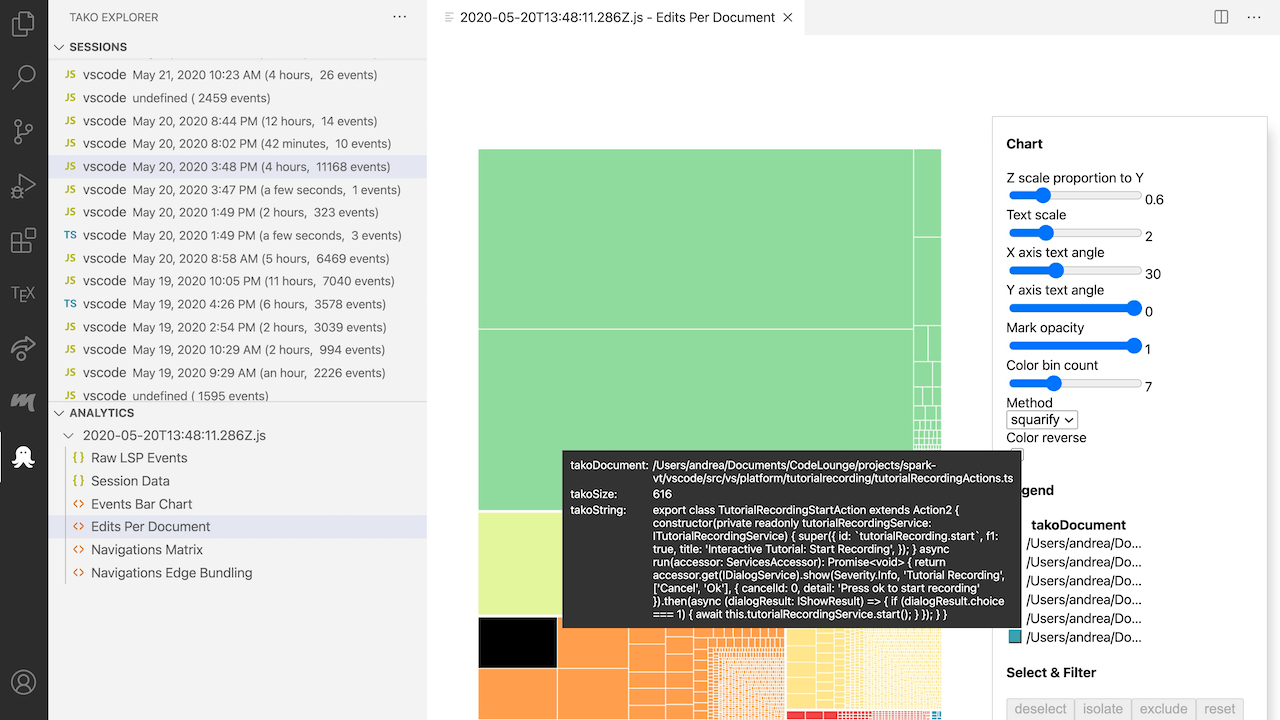
A Visual Studio Code extension that records, aggregates, and visualizes IDE interaction data — entirely on the developer's own machine
The Code Time Machine
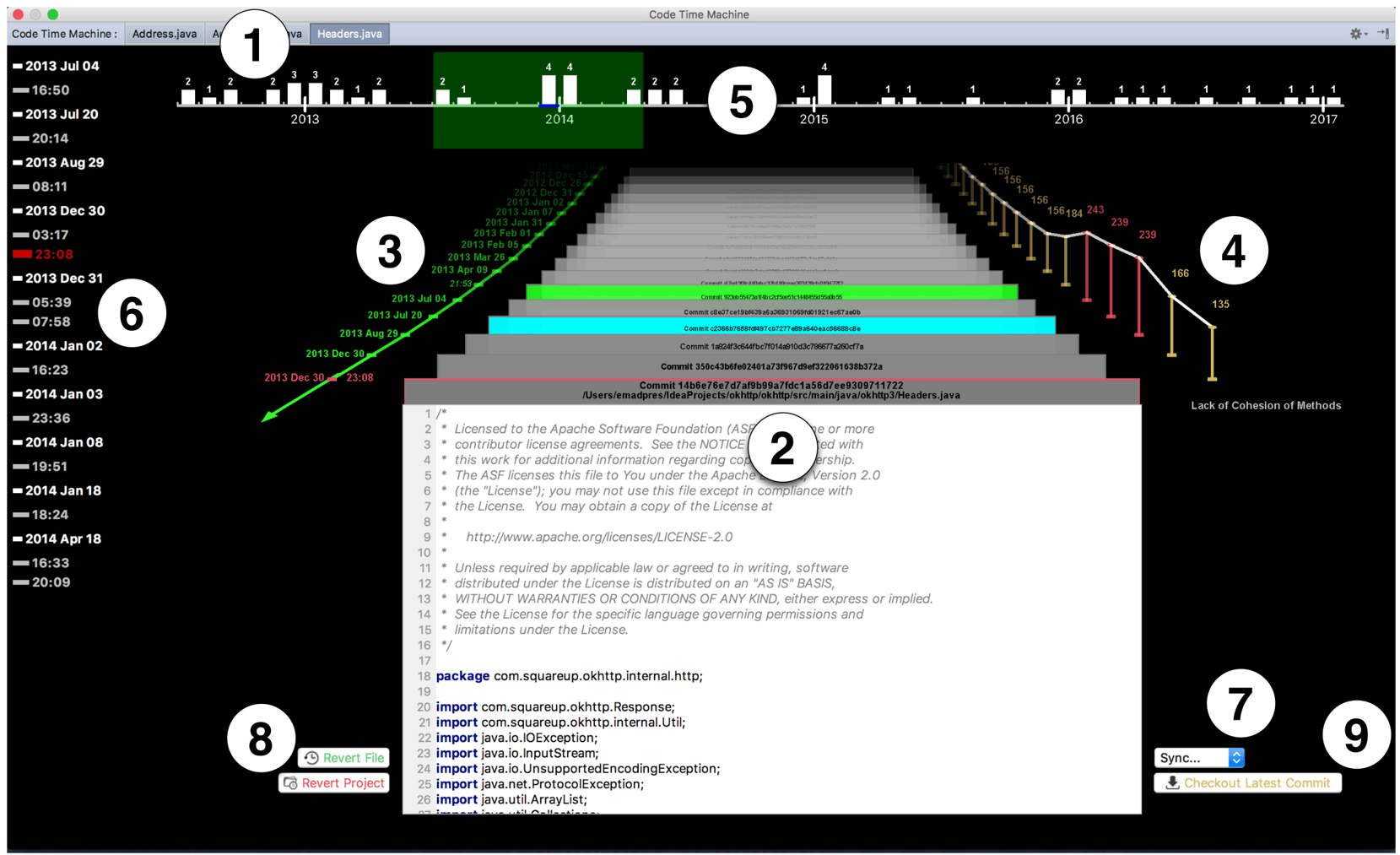
Exploring and analyzing the history of changes is an intrinsic part of software evolution comprehension. Existing tools that exploit the data residing in version control repositories provide only limited support for the intuitive navigation of code changes from a historical perspective. We present the Code Time Machine, a lightweight IDE plugin which uses visualization techniques to depict the history of any chosen file augmented with information mined from the underlying versioning system. Inspired by Apple's Time Machine, our tool allows both developers and the system itself to seamlessly move through time.
Taming the IDE with Fine-grained Interaction Data
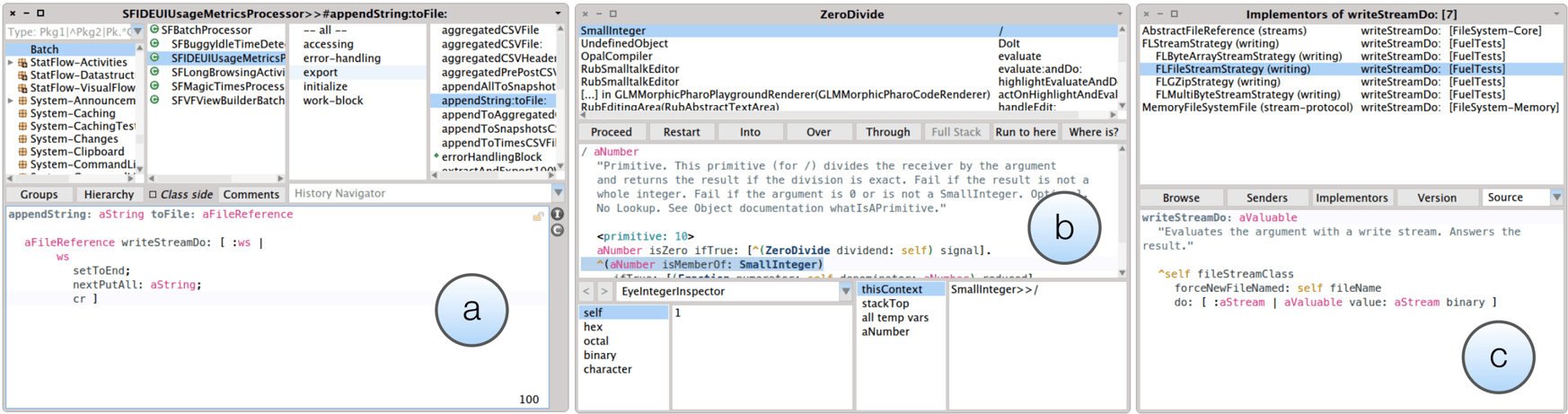
Integrated Development Environments (IDEs) lack effective support to browse complex relationships between source code elements. As a result, developers are often forced to exploit multiple user interface components at the same time, bringing the IDE into a complex, \"chaotic" state. Keeping track of these relationships demands increased source code navigation and cognitive load, leading to productivity deficits documented in observational studies. Beyond small-scale studies, the amount and nature of the chaos experienced by developers in the wild is unclear, and more importantly it is unclear how to tame it. Based on a dataset of fine-grained interaction data, we propose several metrics to characterize and quantify the "level of chaos" of an IDE. Our results suggest that developers spend, on average, more than 30% of their time in a chaotic environment, and that this may affect their productivity. To support developers, we devise and evaluate simple strategies that automatically alter the UI of the IDE. We find that even simple strategies may considerably reduce the level of chaos both in terms of effective space occupancy and time spent in a chaotic environment.
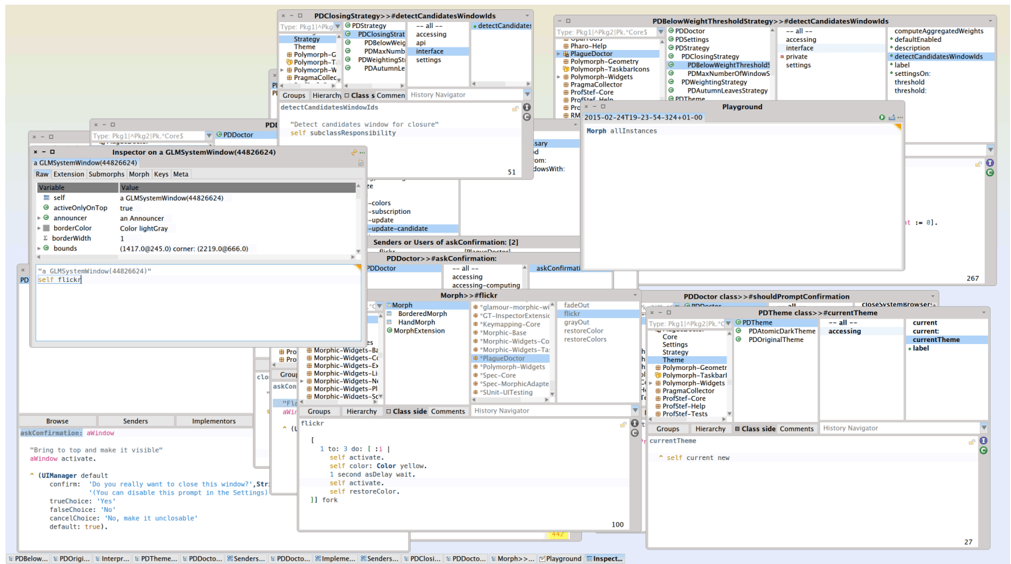
The Plague Doctor: A Promising Cure for the Window Plague
Modern Integrated Development Environments (IDEs) are often affected by the \"window plague", an overly crowded workspace with many open windows and tabs. The main cause is the lack of navigation support in IDEs, also due to the many - and not always obvious - complex relationships that exist between program entities. Researchers have shown that it is possible to mitigate the window plague by exploiting the data obtained by monitoring how developers interact with the user interface of the IDE. However, despite initial results the approach was never fully integrated in an IDE. In our previous work, we implemented DFLOW, an automatic interaction profiler that monitors all the fine-grained interactions of the developer with the IDE. Here we present a first prototype of the PLAGUE DOCTOR, a tool that seamlessly detects the windows that are less likely to be used in the future and automatically closes them. We discuss our long term vision on how to fully exploit the interaction data recorded by DFLOW to provide a more effective cure for the window plague.