Program Comprehension
Browse all content with this tag
Encoding Program Comprehension Tasks as Role Playing Games: a Prototype Framework Aiming to Produce Serious Games
Lazar Najdenov · Master of Science in Software & Data Engineering
Assessing Software Documents by Comprehension Effort
Talal El Afchal · Master of Science in Informatics
Visualizing the Evolution of Working Sets
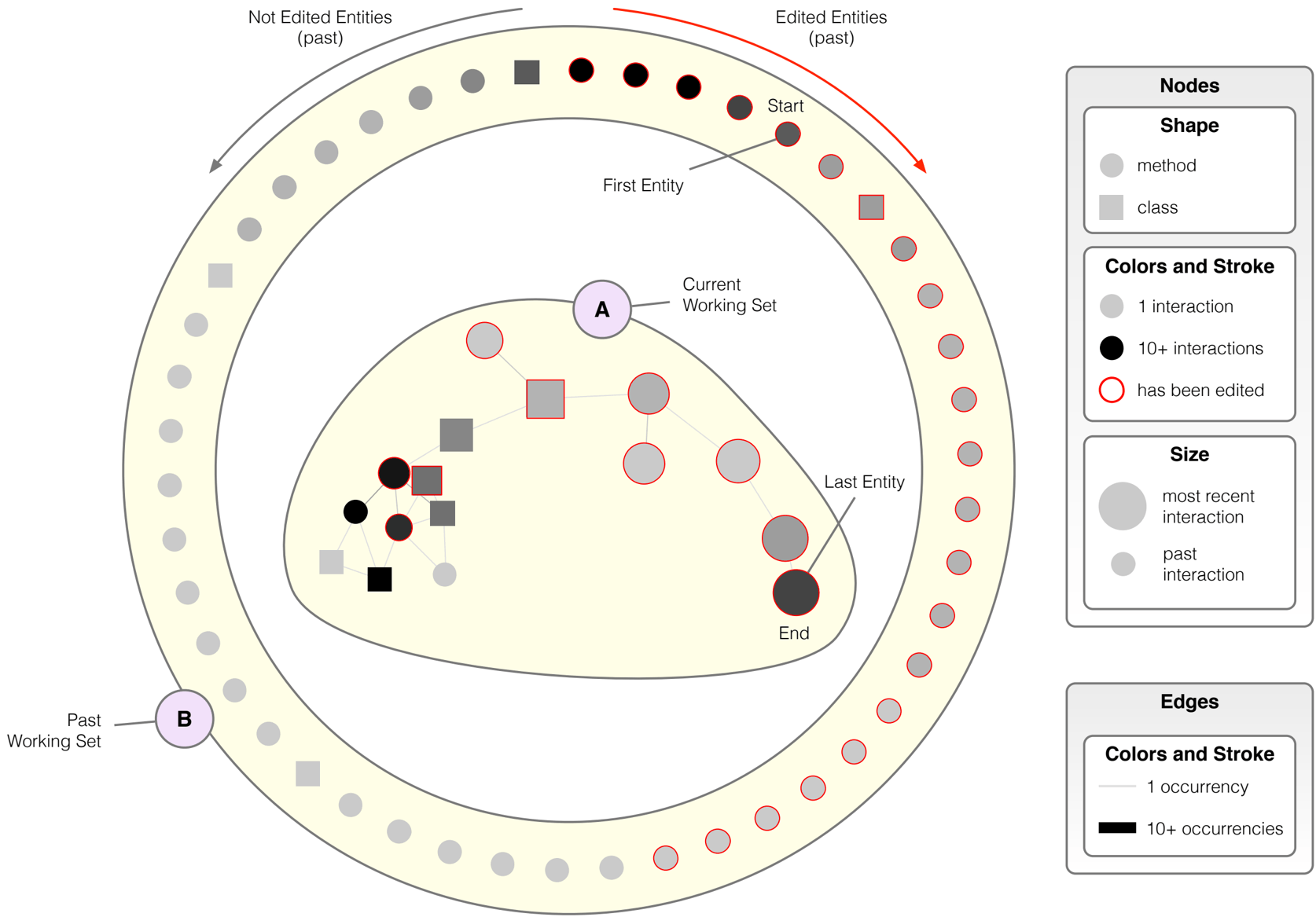
As part as their daily work, developers interact with Integrated Development Environments (IDE), generating thousands of events. Together with other aspects of development, this data also captures the modus operandi of the developer, including all the program entities she interacted with during a development session. This \"working set" (or context) is leveraged by developers to create and maintain their mental model of the software system at hand. Understanding how developers navigate and interact with source code during a development session is an open question. We present a novel visual approach to understand how working sets evolve during a development session. The visualization incrementally depicts all the program entities involved in a development session, the intensity of the developer activity on them, and the navigation paths that occurred between them. We visualized more than a thousand development sessions, and categorized them according to their visual properties.
I Know What You Did Last Summer -- An Investigation of How Developers Spend Their Time
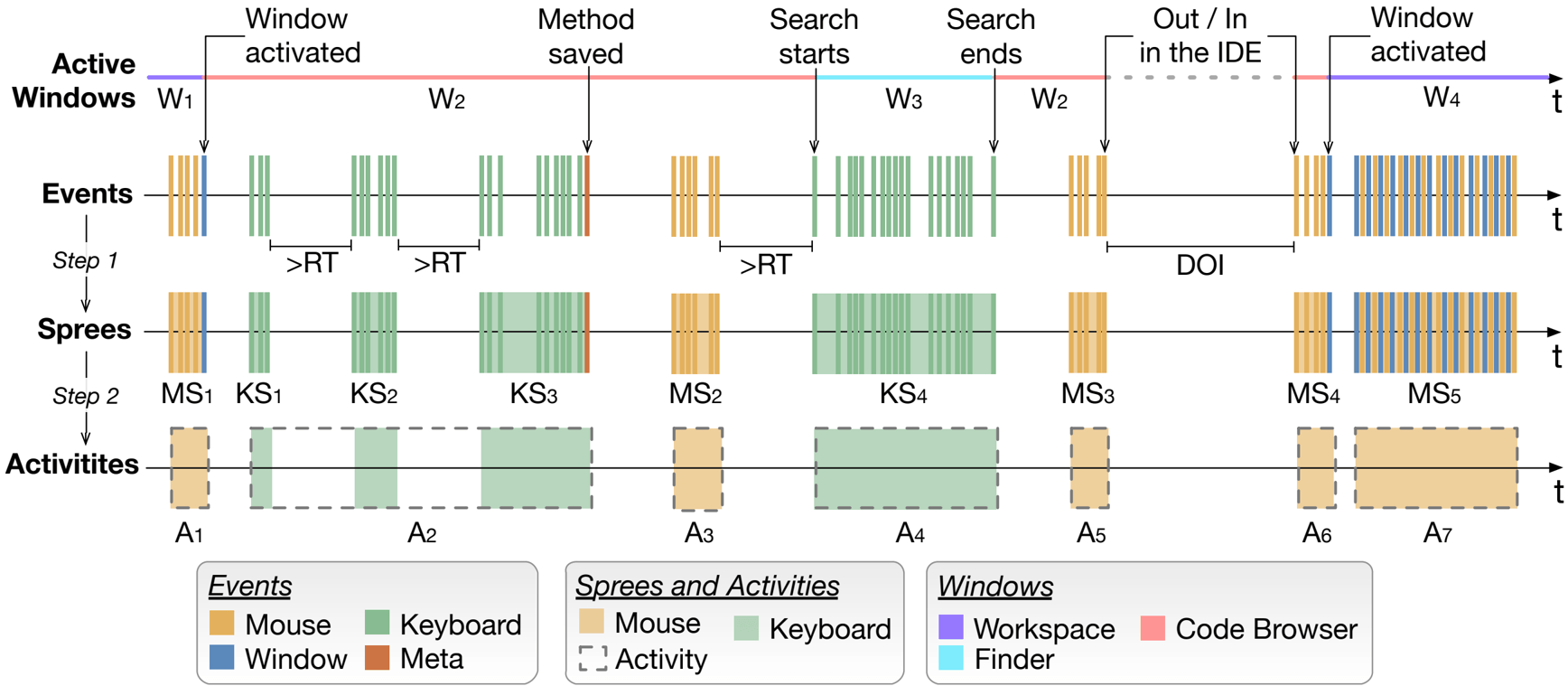
Developing software is a complex mental activity, requiring extensive technical knowledge and abstraction capabilities. The tangible part of development is the use of tools to read, inspect, edit, and manipulate source code, usually through an IDE (integrated development environment). Common claims about software development include that program comprehension takes up half of the time of a developer, or that certain UI (user interface) paradigms of IDEs offer insufficient support to developers. Such claims are often based on anecdotal evidence, throwing up the question of whether they can be corroborated on more solid grounds. We present an in-depth analysis of how developers spend their time, based on a fine-grained IDE interaction dataset consisting of ca. 740 development sessions by 18 developers, amounting to 200 hours of development time and 5 million of IDE events. We propose an inference model of development activities to precisely measure the time spent in editing, navigating and searching for artifacts, interacting with the UI of the IDE, and performing corollary activities, such as inspection and debugging. We report several interesting findings which in part confirm and reinforce some common claims, but also disconfirm other beliefs about software development.
Quantifying Program Comprehension with Interaction Data
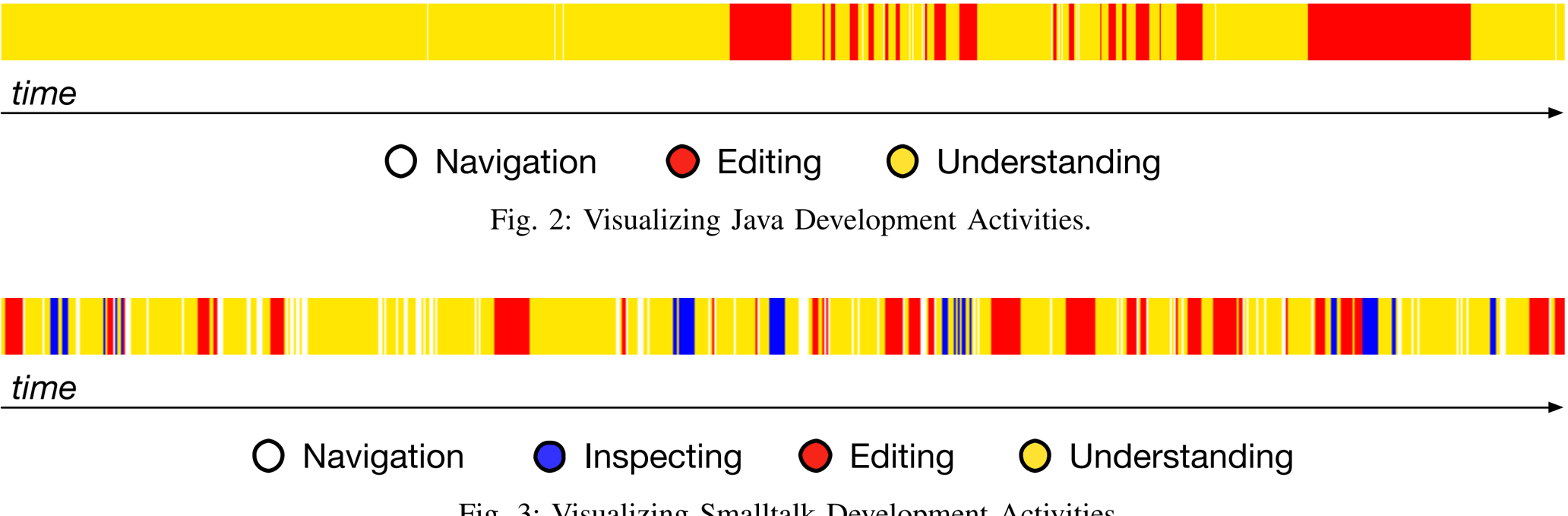
It is common knowledge that program comprehension takes up a substantial part of software development. This \"urban legend" is based on work that dates back decades, which throws up the question whether the advances in software development tools, techniques, and methodologies that have emerged since then may invalidate or confirm the claim. We present an empirical investigation which goal is to confirm or reject the claim, based on interaction data which captures the user interface activities of developers. We use interaction data to empirically quantify the distribution of different developer activities during software development: In particular, we focus on estimating the role of program comprehension. In addition, we investigate if and how different developers and session types influence the duration of such activities. We analyze interaction data from two different contexts: One comes from the ECLIPSE IDE on Java source code development, while the other comes from the PHARO IDE on Smalltalk source code development. We found evidence that code navigation and editing occupies only a small fraction of the time of developers, while the vast majority of the time is spent on reading & understanding source code. In essence, the importance of program comprehension was significantly underestimated by previous research.