Research Track
Browse all content with this tag
CEL - Touching Software Modeling in Essence
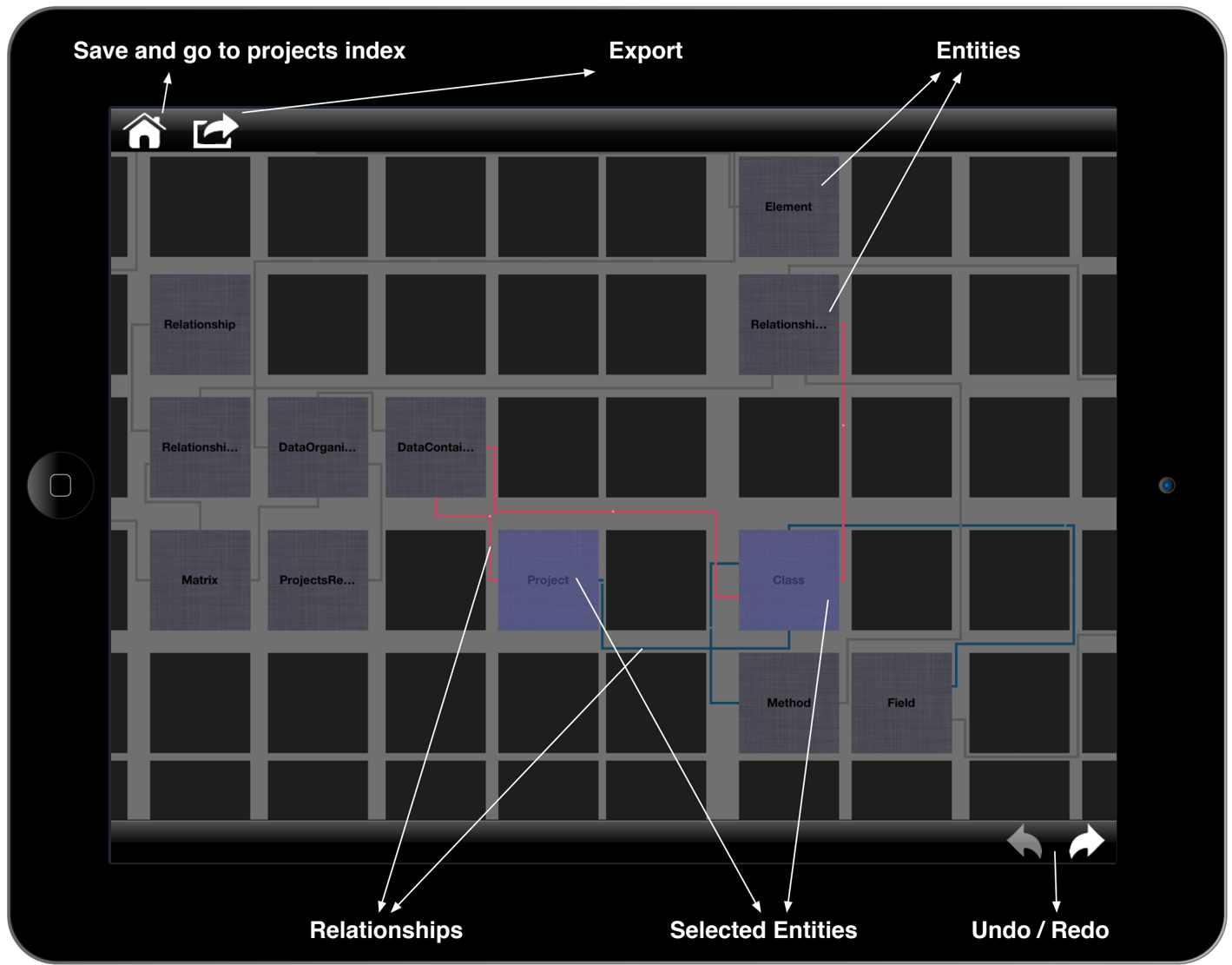
Understanding a problem domain is a fundamental prerequisite for good software design. In object-oriented systems design, modeling is the fundamental first phase that focuses on identifying core concepts and their relations. How to properly support modeling is still an open problem, and existing approaches and tools can be very different in nature. On the one hand, lightweight ones, such as pen & paper/whiteboard or CRC cards, are informal and support well the creative aspects of modeling, but produce artifacts that are difficult to store, process and reuse as documentation. On the other hand, more constrained and semi-formal ones, like UML, produce storable and processable structured artifacts with defined semantics, but this comes at the expense of creativity. We believe there exists a middle ground to investigate that maximizes the good of both worlds, that is, by supporting software modeling closer to its essence, with minimal constraints on the developer's creativity and still producing reusable structured artifacts. We also claim that modeling can be best treated by using the emerging technology of touch-based tablets. We present a novel gesture-based modeling approach based on a minimal set of constructs, and CEL, an iPad application, for rapidly creating, manipulating, and storing language agnostic object-oriented software models, which can be exported as skeleton source code in any language of choice. We assess our approach through a controlled qualitative study.
Code Review: Veni, ViDI, Vici
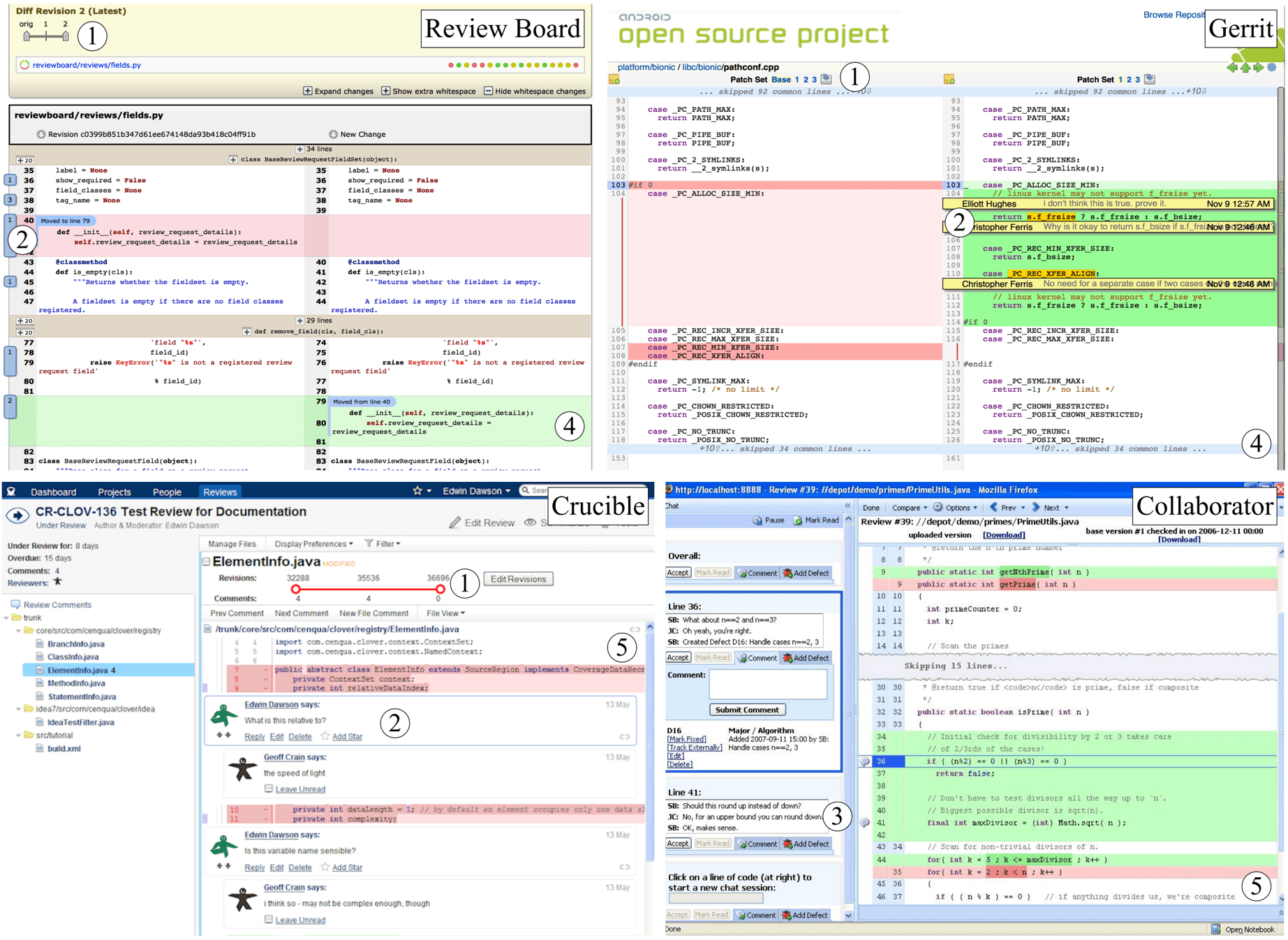
Modern software development sees code review as a crucial part of the process, because not only does it facilitate the sharing of knowledge about the system at hand, but it may also lead to the early detection of defects, ultimately improving the quality of the produced software. Although supported by numerous approaches and tools, code review is still in its infancy, and indeed researchers have pointed out a number of shortcomings in the state of the art. We present a critical analysis of the state of the art of code review tools and techniques, extracting a set of desired features that code review tools should possess. We then present our vision and initial implementation of a novel code review approach named Visual Design Inspection (ViDI), illustrated through a set of usage scenarios. ViDI is based on a combination of visualization techniques, design heuristics, and static code analysis techniques.
Quantitatively Exploring Non-code Software Artifacts
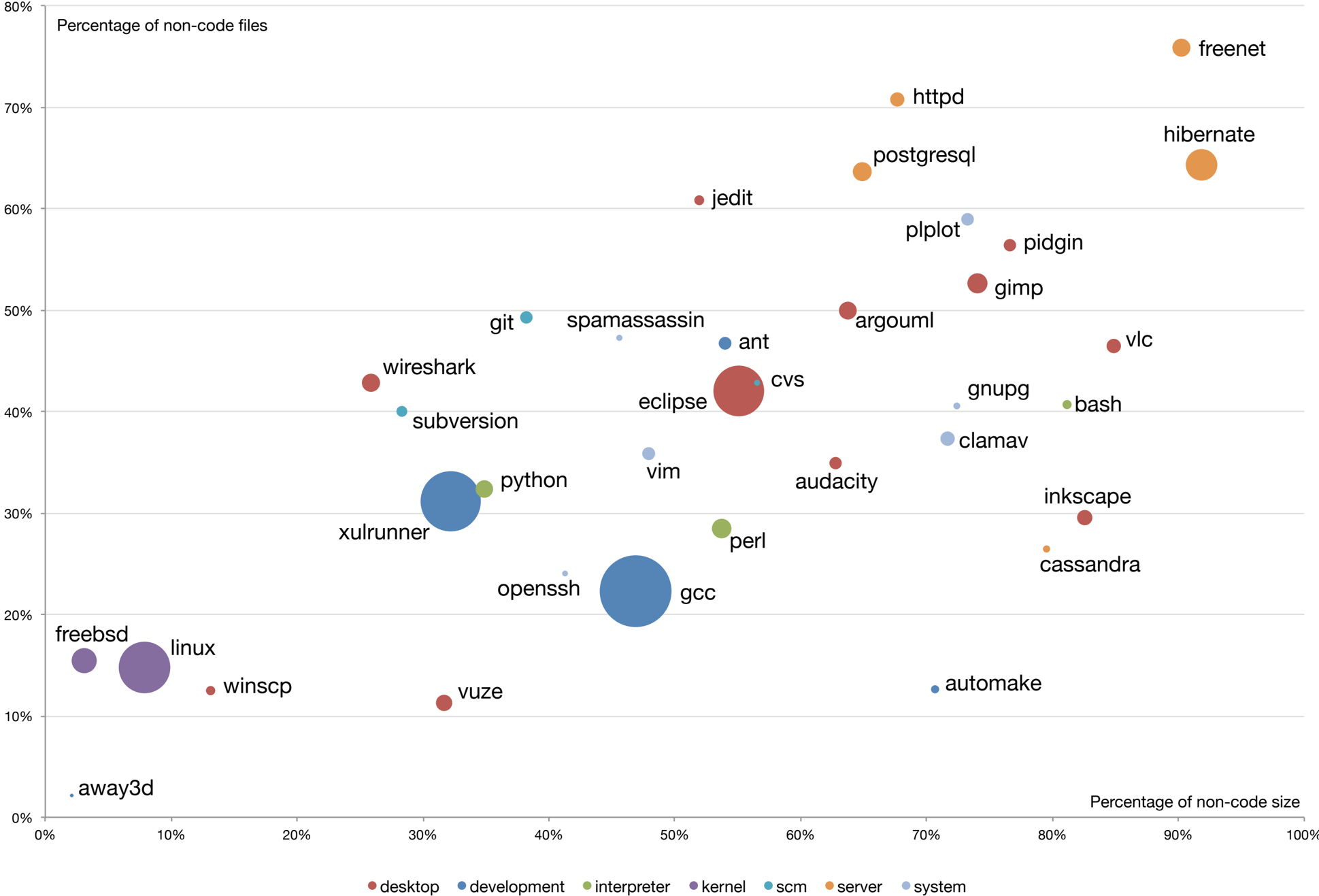
Most software engineering research focuses its analyses on source code, because correct, well designed, and efficient program code is the desired end output of software development. Nevertheless, source code is not the only constituent of software systems: Programs also comprise other types of artifacts, such as documentation, build system and configuration files, and graphics. These non-code artifacts only recently got the attention of researchers and are not yet investigated as a whole, but separately and with very specific aims. By taking a quantitative perspective, we look into non-code software artifacts to measure their role in software systems. We analyze 35 mature open-source software systems and we address exploratory questions such as: How many non-code software artifacts do software systems contain? How do they relate to source code? How much effort is put into producing and maintaining them? Our results show that a significant portion of systems is made of non-code artifacts, and that programmers spend a relevant part of their effort on non-code artifacts during the development process. Our analysis opens questions for future investigations.
Quantifying Program Comprehension with Interaction Data
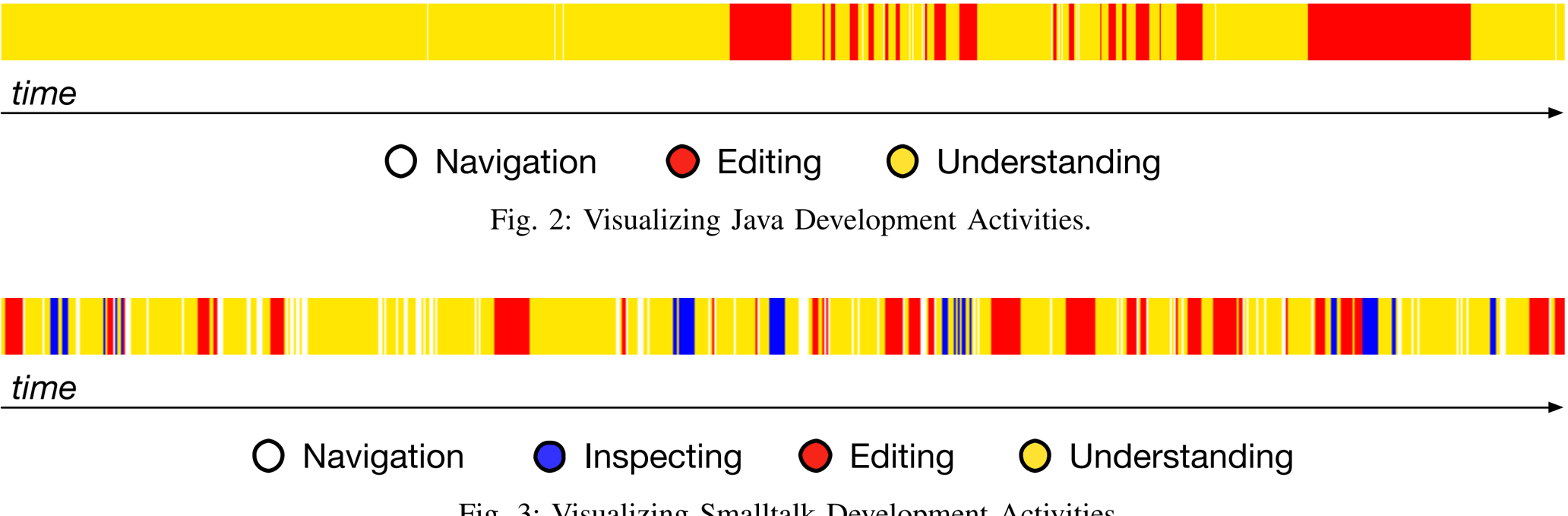
It is common knowledge that program comprehension takes up a substantial part of software development. This \"urban legend" is based on work that dates back decades, which throws up the question whether the advances in software development tools, techniques, and methodologies that have emerged since then may invalidate or confirm the claim. We present an empirical investigation which goal is to confirm or reject the claim, based on interaction data which captures the user interface activities of developers. We use interaction data to empirically quantify the distribution of different developer activities during software development: In particular, we focus on estimating the role of program comprehension. In addition, we investigate if and how different developers and session types influence the duration of such activities. We analyze interaction data from two different contexts: One comes from the ECLIPSE IDE on Java source code development, while the other comes from the PHARO IDE on Smalltalk source code development. We found evidence that code navigation and editing occupies only a small fraction of the time of developers, while the vast majority of the time is spent on reading & understanding source code. In essence, the importance of program comprehension was significantly underestimated by previous research.
Understanding and Classifying the Quality of Technical Forum Questions
Technical questions and answers (Q&A) services have become a valuable resource for developers. A prominent example of technical Q&A website is StackOverflow (SO), which relies on a growing community of more than two millions of users who actively contribute by asking questions and providing answers. To maintain the value of this resource, poor quality questions - among the more than 6,000 asked daily - have to be filtered out. Currently, poor quality questions are manually identified and reviewed by selected users in SO, this costs considerable time and effort. Automating the process would save time and unload the review queue, improving the efficiency of SO as a resource for developers. We present an approach to automate the classification of questions according to their quality. We present an empirical study that investigates how to model and predict the quality of a question by considering as features both the contents of a post (e.g., from simple textual features to more complex readability metrics) and community-related aspects (e.g., popularity of a user in the community). Our findings show that there is indeed the possibility of at least a partial automation of the costly SO review process.
Visualizing Developer Interactions
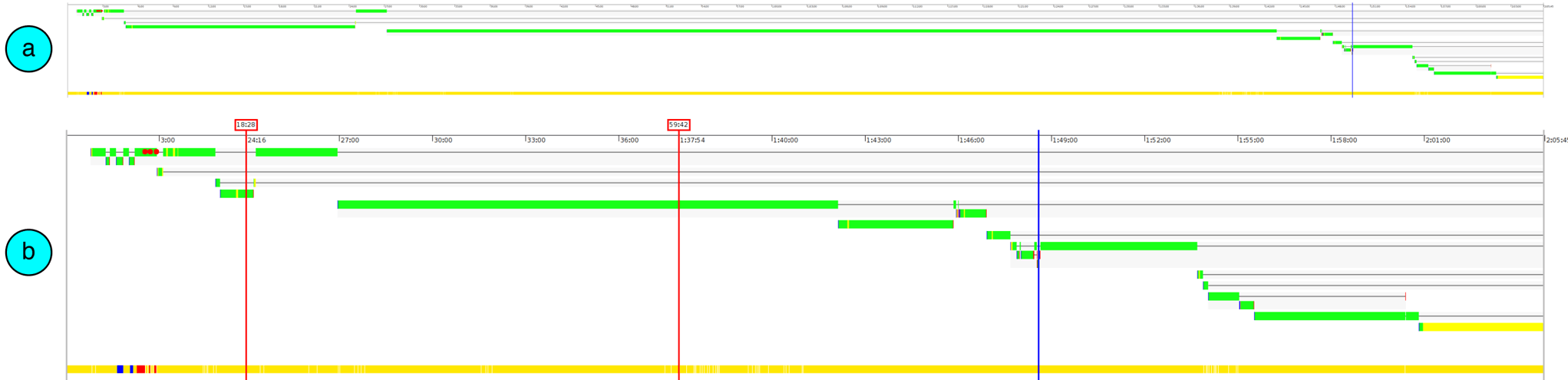
Integrated Development Environments (IDEs) have become the de facto standard vehicle to develop software systems. The user interface (UI) of an IDE offers a staggering amount of facilities to manipulate source code, such as inspectors, debuggers, recommenders, alternative viewers, etc. It is unclear how developers use the UI of an IDE and whether such UIs actually give appropriate support to the developers. We present a visual approach to understand and characterize development sessions from the UI perspective. The tool supporting our approach mines and processes the finest-grained UI-level events making up development sessions and presents them visually. We have collected, visualized, and analyzed hundreds of development sessions and report on our findings.
Behavioral validation of JFSL specifications through model synthesis
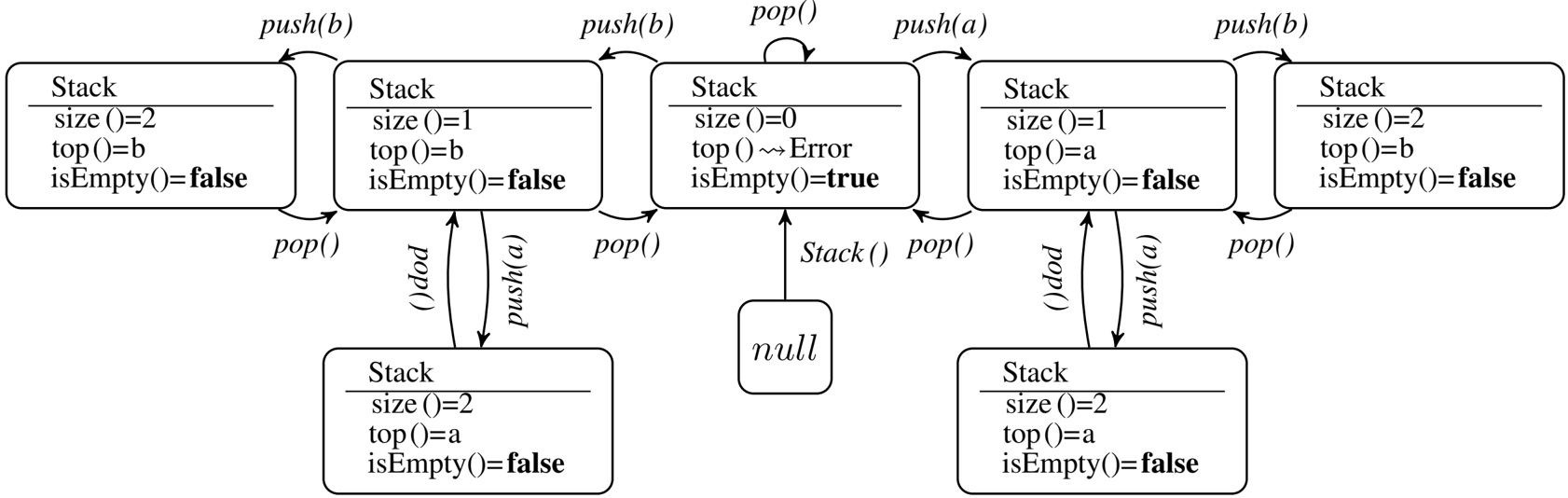
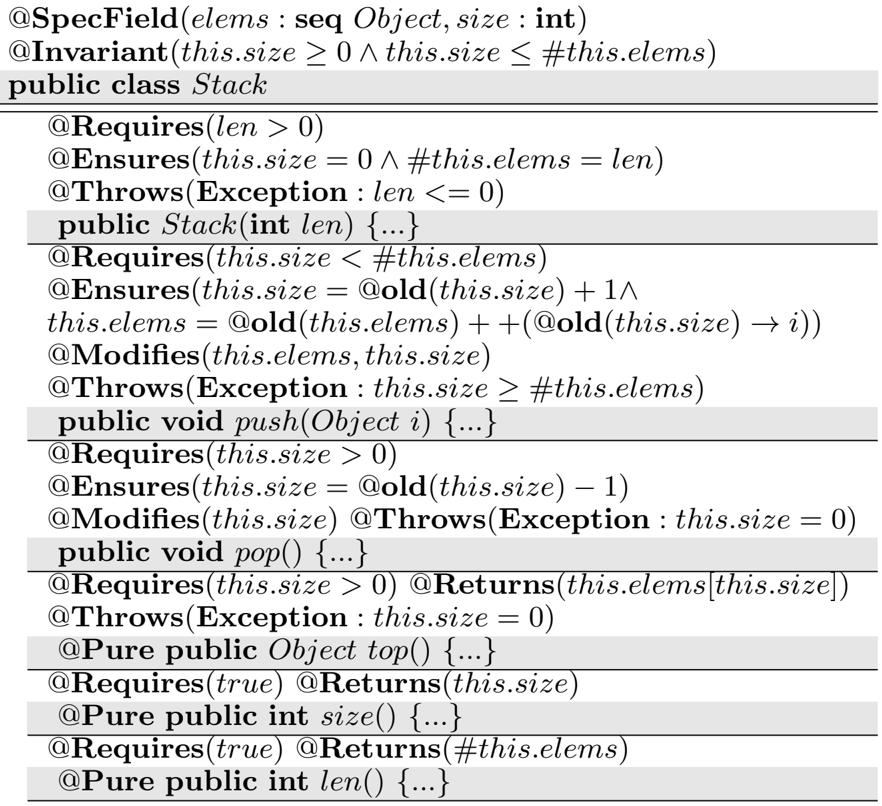
Contracts are a popular declarative specification technique to describe the behavior of stateful components in terms of pre/post conditions and invariants. Since each operation is specified separately in terms of an abstract implementation, it may be hard to understand and validate the resulting component behavior from contracts in terms of method interactions. In particular, properties expressed through algebraic axioms, which specify the effect of sequences of operations, require complex theorem proving techniques to be validated. In this paper, we propose an automatic small-scope based approach to synthesize incomplete behavioral abstractions for contracts expressed in the JFSL notation. The proposed abstraction technique enables the possibility to check that the contract behavior is coherent with behavioral properties expressed as axioms of an algebraic specifications. We assess the applicability of our approach by showing how the synthesis methodology can be applied to some classes of contract-based artifacts like specifications of data abstractions and requirement engineering models.
Synthesizing intensional behavior models by graph transformation
This paper describes an approach (SPY) to recover the specification of a software component from the observation of its run-time behavior. It focuses on components that behave as data abstractions. Components are assumed to be black boxes that do not allow any implementation inspection. The inferred description may help understand what the component does when no formal specification is available. SPY works in two main stages. First, it builds a deterministic finite-state machine that models the partial behavior of instances of the data abstraction. This is then generalized via graph transformation rules. The rules can generate a possibly infinite number of behavior models, which generalize the description of the data abstraction under an assumption of “regularity” with respect to the observed behavior. The rules can be viewed as a likely specification of the data abstraction. We illustrate how SPY works on relevant examples and we compare it with competing methods.