SANER
Browse all content with this tag
How to Gamify Software Engineering
Software development, like any prolonged and intellectually demanding activity, can negatively affect the motivation of developers. This is especially true in specific areas of software engineering, such as requirements engineering, test-driven development, bug reporting and fixing, where the creative aspects of programming fall short. The developers' engagement might progressively degrade, potentially impacting their work's quality. Gamification, the use of game elements and game design techniques in non-game contexts, is hailed as a means to boost the motivation of people for a wide range of rote activities. Indeed, well-designed games deeply involve gamers in a positive loop of production, feedback, and reward, eliciting desirable feelings like happiness and collaboration. The question we investigate is how the seemingly frivolous context of games and gamification can be ported to the technically challenging and sober domain of software engineering. Our investigation starts with a review of the state of the art of gamification, supported by a motivating scenario to expose how gamification elements can be integrated in software engineering. We provide a set of basic building blocks to apply gamification techniques, present a conceptual framework to do so, illustrated in two usage contexts, and critically discuss our findings.
Misery Loves Company - CrowdStacking Traces to Aid Problem Detection
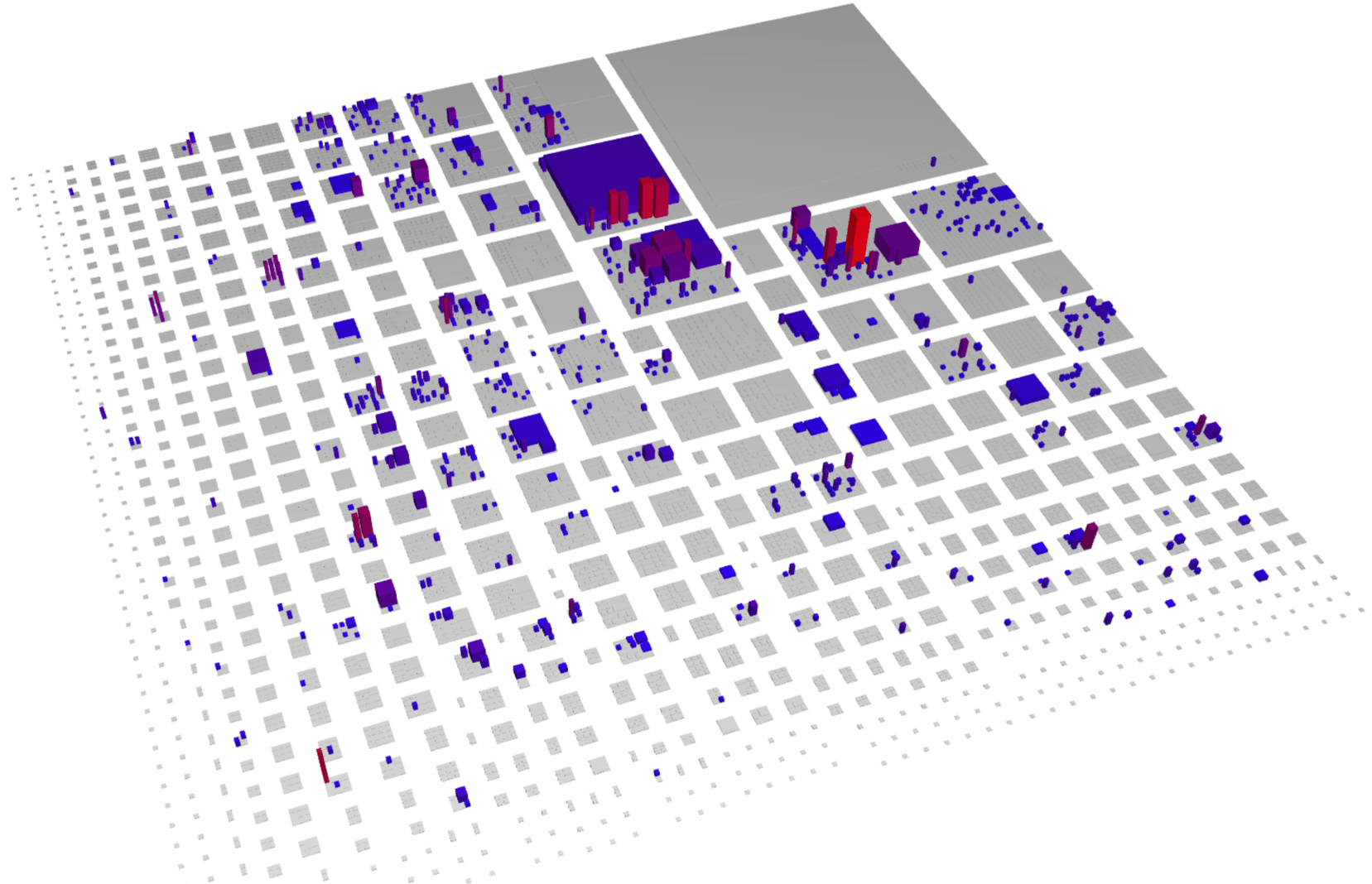
During software development, exceptions are by no means exceptional: Programmers repeatedly try and test their code to ensure that it works as expected. While doing so, runtime exceptions are raised, pointing out various issues, such as inappropriate usage of an API, convoluted code, as well as defects. Such failures result in stack traces, lists composed of the sequence of method invocations that led to the interruption of the program. Stack traces are useful to debug source code, and if shared also enhance the quality of bug reports. However, they are handled manually and individually, while we argue that they can be leveraged automatically and collectively to enable what we call crowdstacking, the automated collection of stack traces on the scale of a whole development community. We present our crowdstacking approach, supported by Shore-Line Reporter, a tool which seamlessly collects stack traces during program development and execution and stores them on a central repository. We illustrate how thousands of stack traces stemming from the IDEs of several developers can be leveraged to identify common hot spots in the code that are involved in failures, using this knowledge to retrieve relevant and related bug reports and to provide an effective, instant context of the problem to the developer.
CEL - Touching Software Modeling in Essence
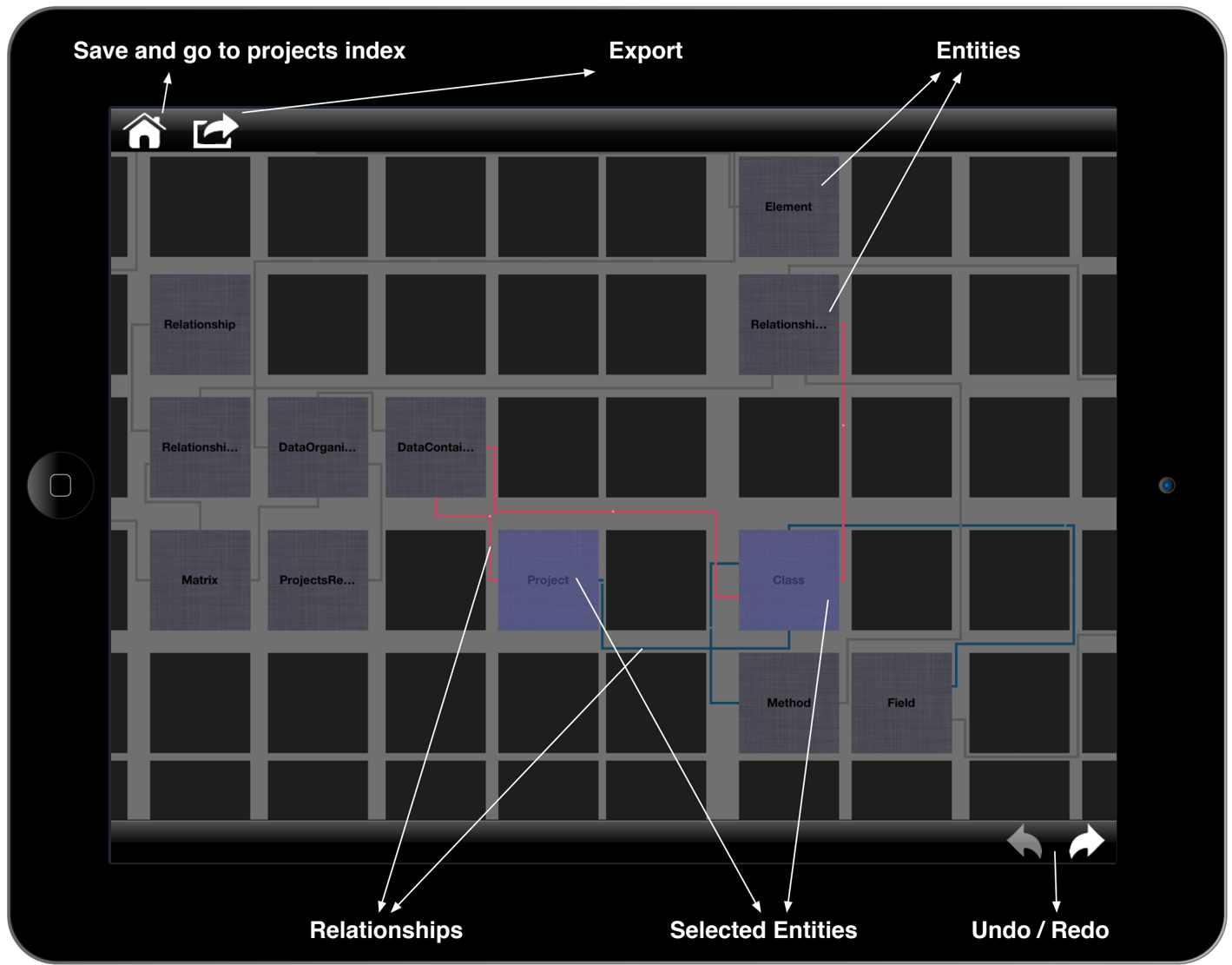
Understanding a problem domain is a fundamental prerequisite for good software design. In object-oriented systems design, modeling is the fundamental first phase that focuses on identifying core concepts and their relations. How to properly support modeling is still an open problem, and existing approaches and tools can be very different in nature. On the one hand, lightweight ones, such as pen & paper/whiteboard or CRC cards, are informal and support well the creative aspects of modeling, but produce artifacts that are difficult to store, process and reuse as documentation. On the other hand, more constrained and semi-formal ones, like UML, produce storable and processable structured artifacts with defined semantics, but this comes at the expense of creativity. We believe there exists a middle ground to investigate that maximizes the good of both worlds, that is, by supporting software modeling closer to its essence, with minimal constraints on the developer's creativity and still producing reusable structured artifacts. We also claim that modeling can be best treated by using the emerging technology of touch-based tablets. We present a novel gesture-based modeling approach based on a minimal set of constructs, and CEL, an iPad application, for rapidly creating, manipulating, and storing language agnostic object-oriented software models, which can be exported as skeleton source code in any language of choice. We assess our approach through a controlled qualitative study.
Code Review: Veni, ViDI, Vici
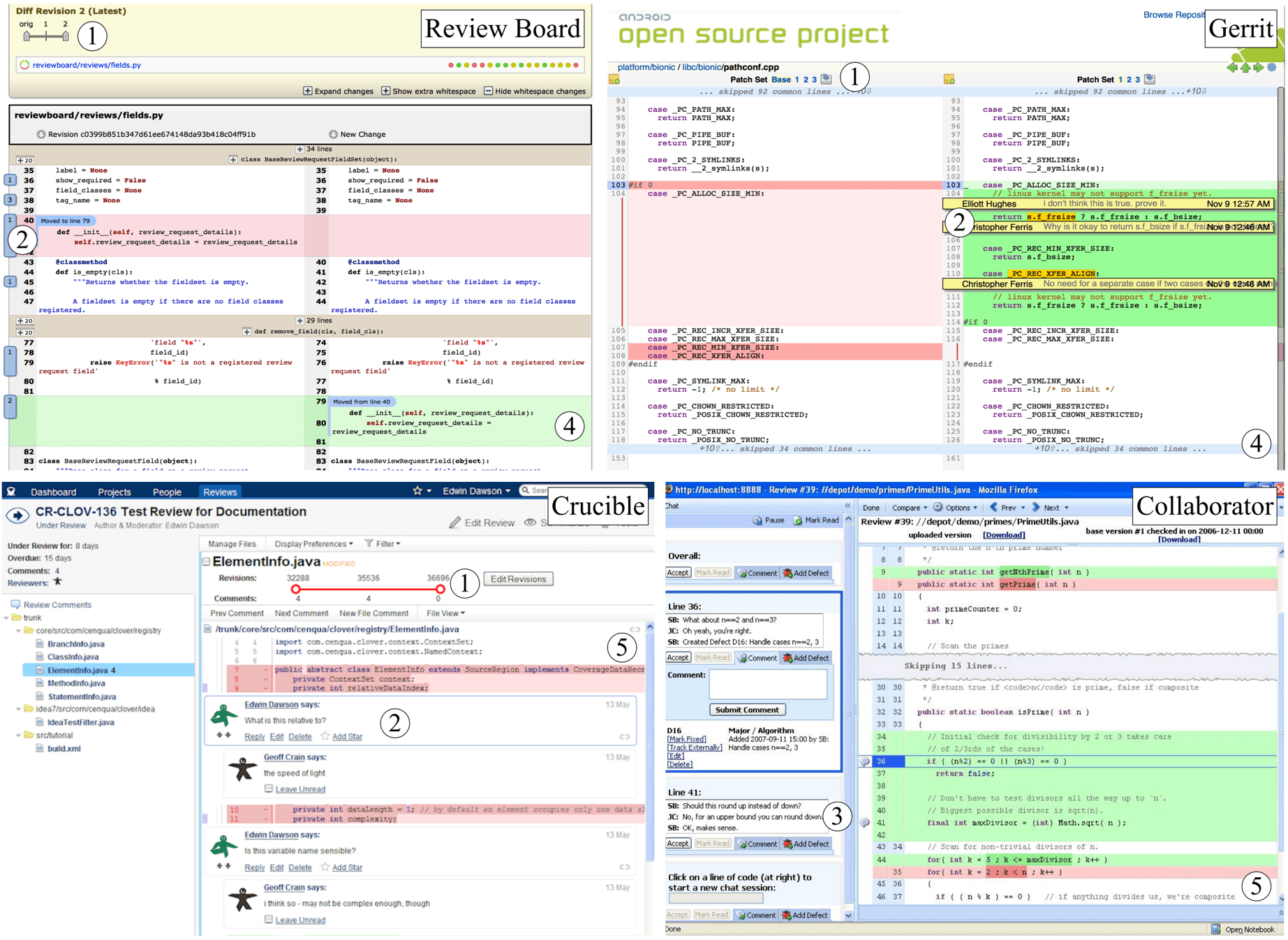
Modern software development sees code review as a crucial part of the process, because not only does it facilitate the sharing of knowledge about the system at hand, but it may also lead to the early detection of defects, ultimately improving the quality of the produced software. Although supported by numerous approaches and tools, code review is still in its infancy, and indeed researchers have pointed out a number of shortcomings in the state of the art. We present a critical analysis of the state of the art of code review tools and techniques, extracting a set of desired features that code review tools should possess. We then present our vision and initial implementation of a novel code review approach named Visual Design Inspection (ViDI), illustrated through a set of usage scenarios. ViDI is based on a combination of visualization techniques, design heuristics, and static code analysis techniques.