Software Visualization
Browse all content with this tag
Blended, Not Stirred: Multi-concern Visualization of Large Software Systems
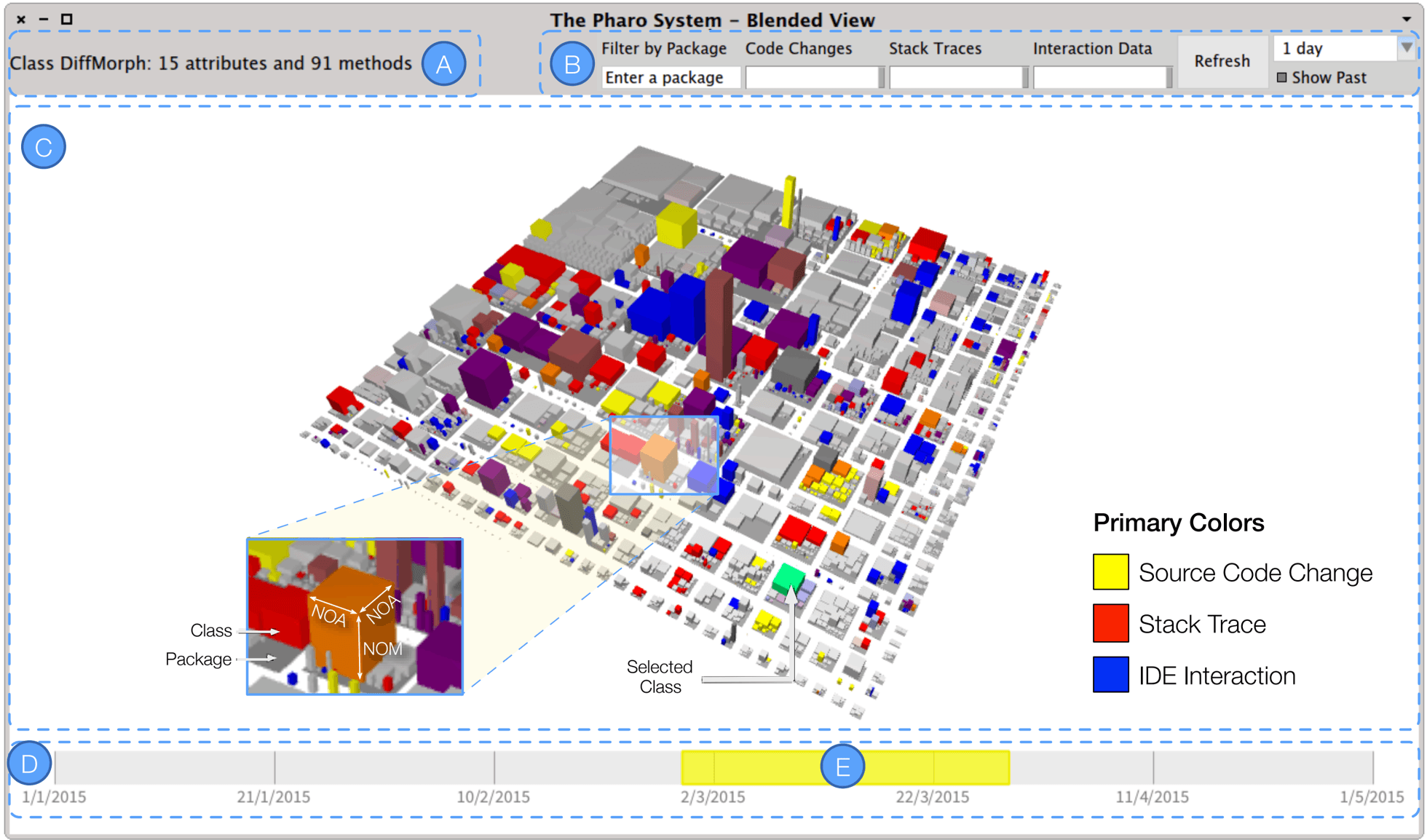
While constructing and evolving software systems, developers generate directly and indirectly a large amount of data of diverse nature, such as source code changes, bug tracking information, IDE interactions, stack traces, etc. Often these diverse data sources are processed and visualized in isolation, leading to a partial view of systems. We present a blended approach to visualize several data \"ingredients" at once, to give as complete an answer as possible to the question "What happened to the system in the last few days?". The goal is to enable a quick and comprehensive assessment of what happened to a software system in any given time frame.
Towards Visual Reflexion Models
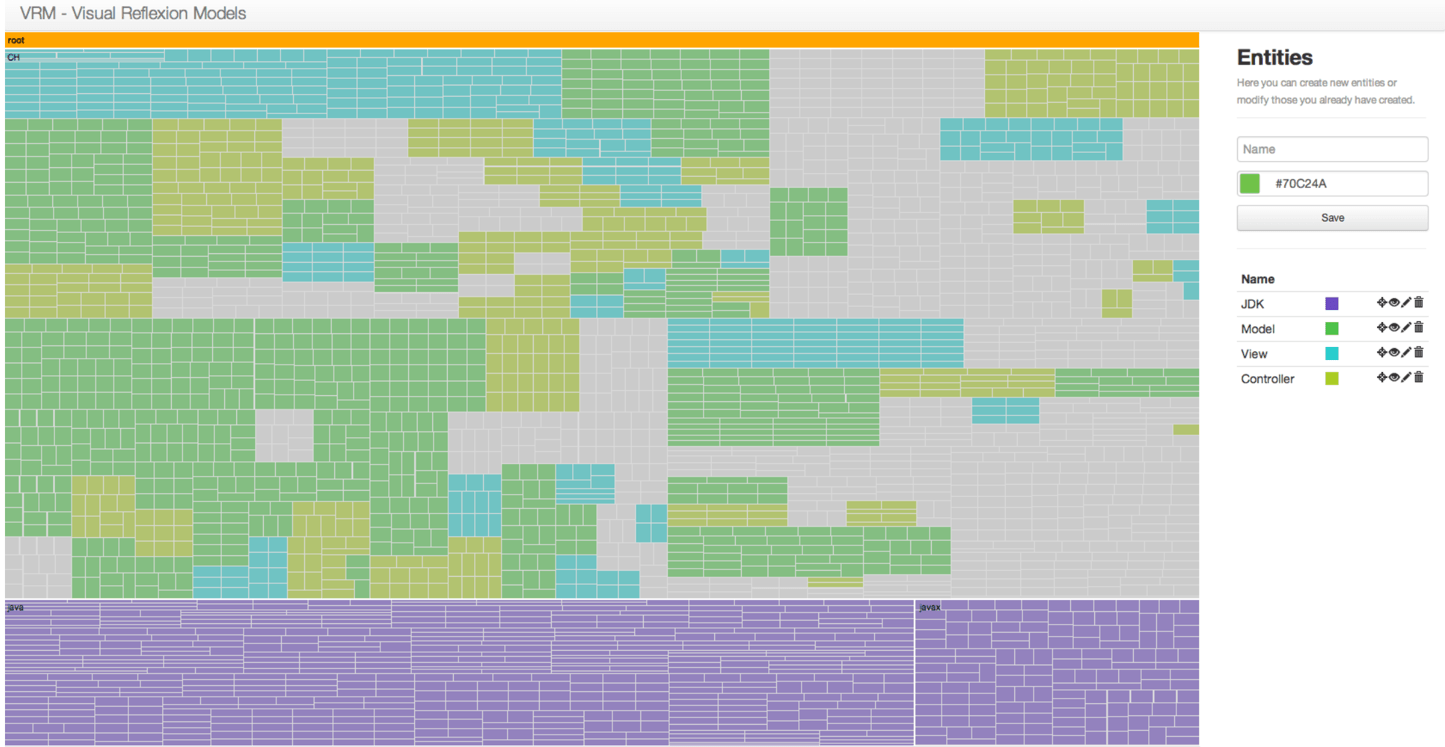
Source code and models of a software system, like architectural views, tend to evolve separately and drift apart over time. Previous research has shown that it is possible to effectively relate them through a reflexion model, defined as a \"summarization of a software system from the viewpoint of a particular high-level model". While effective, the process of constructing and analyzing reflexion models was supported by text-based tools with limited visual representation. With the original approach, it was relatively hard to understand which parts of the system were represented, and which parts of the system contributed to specific relations in the reflexion model. We present our vision on augmenting the construction and analysis of reflexion models with visual support, effectively providing the basis for visual reflexion models. We describe our approach, implemented as a web-based application, and two promising case studies involving two open-source projects.
ViDI: The Visual Design Inspector
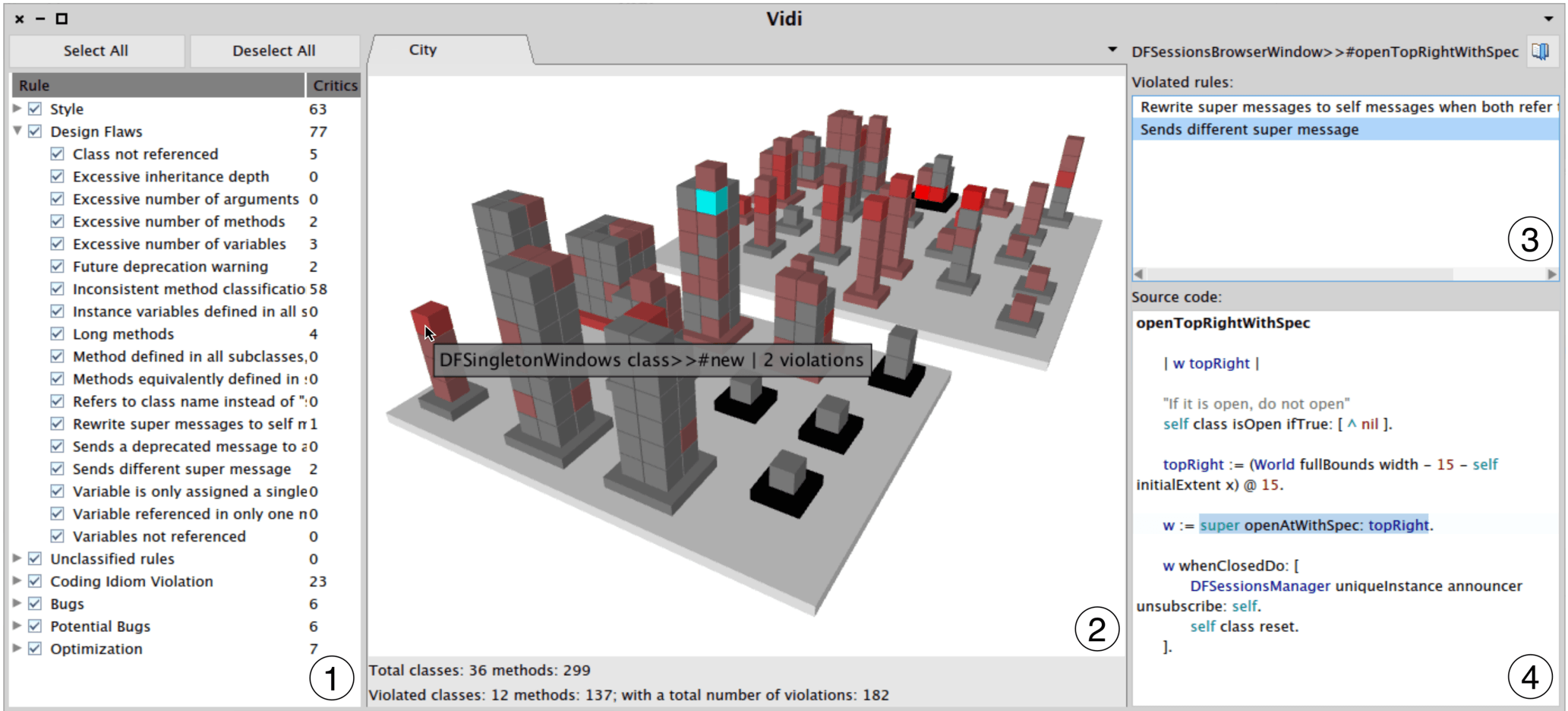
We present ViDI (Visual Design Inspector), a novel code review tool which focuses on quality concerns and design inspection as its cornerstones. It leverages visualization techniques to represent the reviewed software and augments the visualization with the results of quality analysis tools. To effectively understand the contribution of a reviewer in terms of the impact of her changes on the overall system quality, ViDI supports the recording and further inspection of reviewing sessions. ViDI is an advanced prototype which we will soon release to the Pharo open-source community.
Code Review: Veni, ViDI, Vici
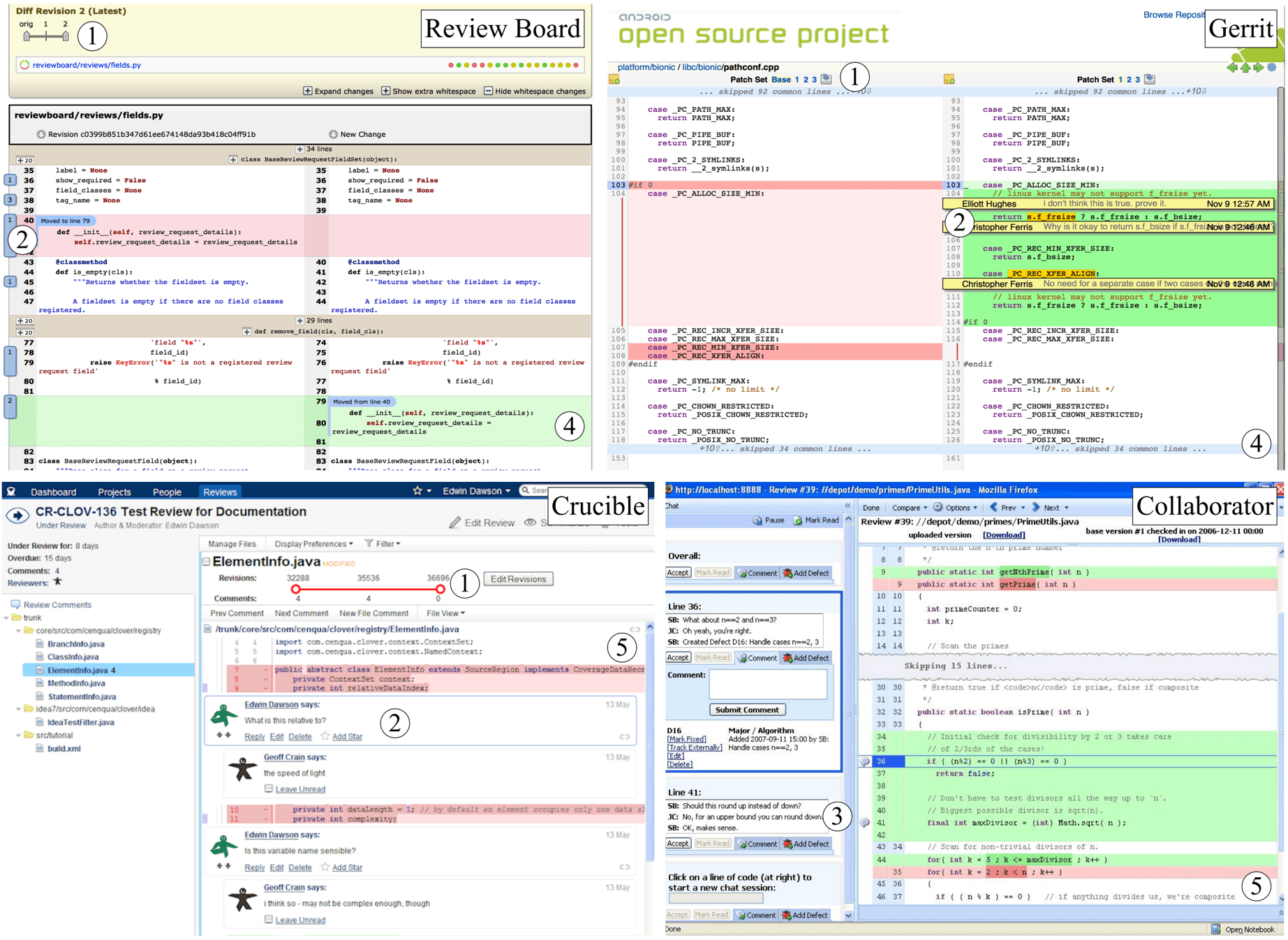
Modern software development sees code review as a crucial part of the process, because not only does it facilitate the sharing of knowledge about the system at hand, but it may also lead to the early detection of defects, ultimately improving the quality of the produced software. Although supported by numerous approaches and tools, code review is still in its infancy, and indeed researchers have pointed out a number of shortcomings in the state of the art. We present a critical analysis of the state of the art of code review tools and techniques, extracting a set of desired features that code review tools should possess. We then present our vision and initial implementation of a novel code review approach named Visual Design Inspection (ViDI), illustrated through a set of usage scenarios. ViDI is based on a combination of visualization techniques, design heuristics, and static code analysis techniques.
Visualizing Developer Interactions
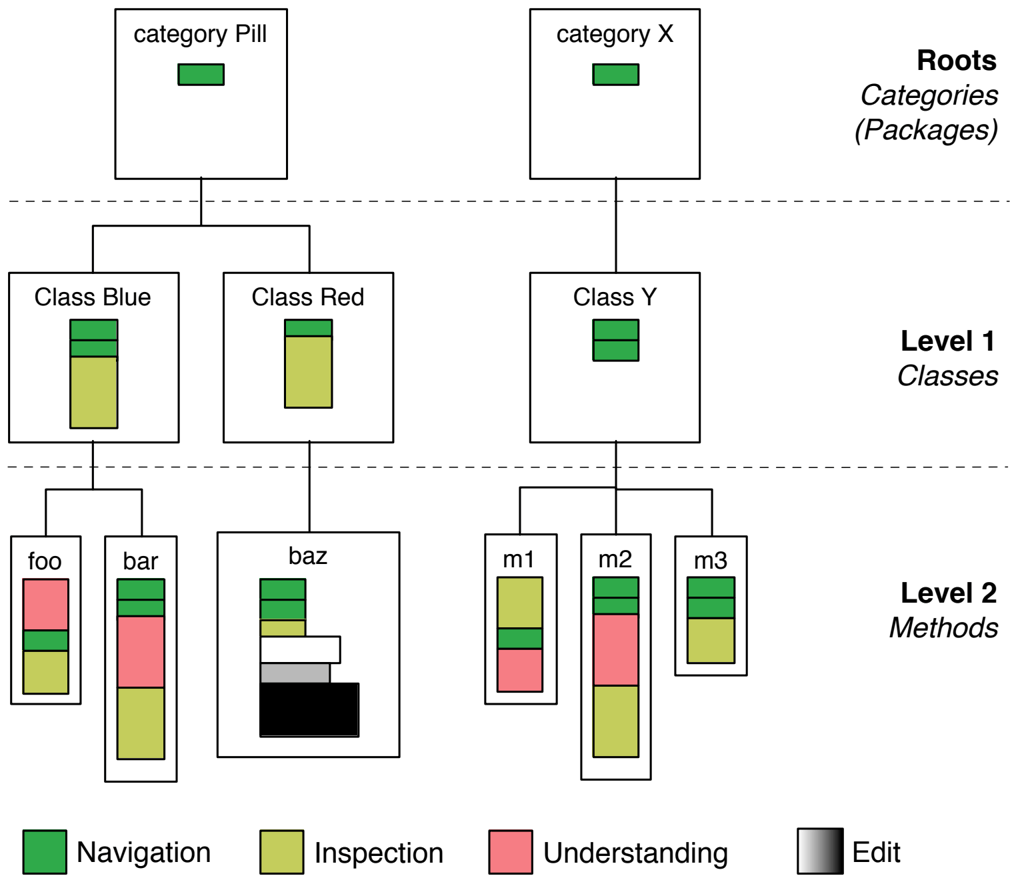
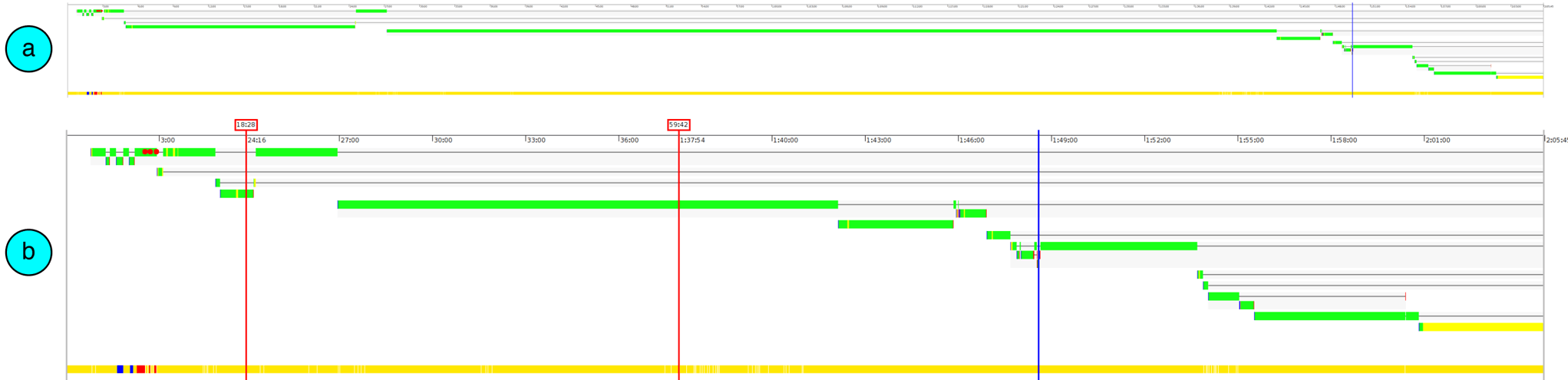
Integrated Development Environments (IDEs) have become the de facto standard vehicle to develop software systems. The user interface (UI) of an IDE offers a staggering amount of facilities to manipulate source code, such as inspectors, debuggers, recommenders, alternative viewers, etc. It is unclear how developers use the UI of an IDE and whether such UIs actually give appropriate support to the developers. We present a visual approach to understand and characterize development sessions from the UI perspective. The tool supporting our approach mines and processes the finest-grained UI-level events making up development sessions and presents them visually. We have collected, visualized, and analyzed hundreds of development sessions and report on our findings.
Visual Storytelling of Development Sessions
Most development activities, like program understanding, source code navigation and editing, are supported by Integrated Development Environments (IDEs). They provide different tools and user interfaces (UI) to interact with the source code, such as browsers, debuggers, and inspectors. It is uncertain how and when programmers use different UI elements of an IDE and to what extent they appropriately support development. Previously we developed DFLOW, a tool that seamlessly records and processes interaction data. Our long-term goal is to assess to what extent the UIs of IDEs support the workflow of developers and whether they can be improved. As a first step we present our approach to analyze development sessions in the form of visual storytelling. We illustrate our initial catalogue of visualizations through two development stories.