Testing & Analysis
Browse all content with this tag
AI-Driven Analysis and Optimization of Fairness in Competitive Video Games
Federico Lagrasta · Master of Science in Informatics
Testing Modern Web Applications Written in TypeScript and React
Armend Azizi · Bachelor of Science in Informatics
Investigating the Use of Code Analysis and NLP to Promote a Consistent Usage of Identifiers
Meaningless identifiers as well as inconsistent use of identifiers in the source code might hinder code readability and result in increased software maintenance efforts. Over the past years, effort has been devoted to promoting a consistent usage of identifiers across different parts of a system through approaches exploiting static code analysis and Natural Language Processing (NLP). These techniques have been evaluated in small-scale studies, but it is unclear how they compare to each other and how they complement each other. Furthermore, a full-fledged larger empirical evaluation is still missing.,,We aim at bridging this gap. We asked developers of five projects to assess the meaningfulness of the recommendations generated by three techniques, two already existing in the literature (one exploiting static analysis, one using NLP) and a novel one we propose. With a total of 922 rename refactorings evaluated, this is, to the best of our knowledge, the largest empirical study conducted to assess and compare rename refactoring tools promoting a consistent use of identifiers. Our study sheds light on the current state-of-the-art in rename refactoring recommenders, and indicates directions for future work.
Use at Your Own Risk: The Java Unsafe API in the Wild
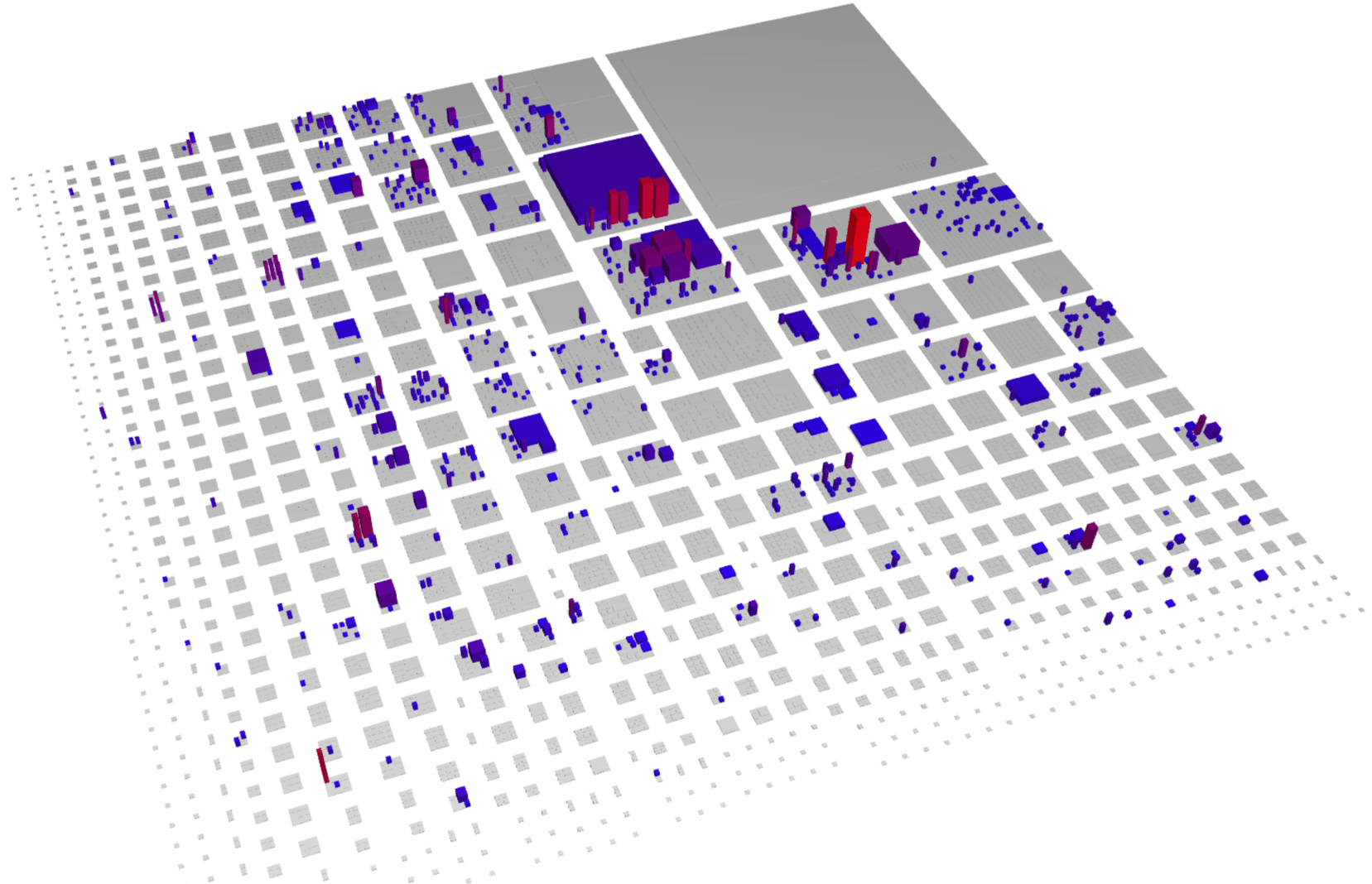
Java is a safe language. Its runtime environment provides strong safety guarantees that any Java application can rely on. Or so we think. We show that the runtime actually does not provide these guarantees—for a large fraction of today's Java code. Unbeknownst to many application developers, the Java runtime includes a \"backdoor" that allows expert library and framework developers to circumvent Java's safety guarantees. This backdoor is there by design, and is well known to experts, as it enables them to write high-performance systems-level code in Java. For much the same reasons that safe languages are preferred over unsafe languages, these powerful but unsafe capabilities in Java should be restricted. They should be made safe by changing the language, the runtime system, or the libraries. At the very least, their use should be restricted. This paper is a step in that direction. We analyzed 74 GB of compiled Java code, spread over 86,479 Java archives, to determine how Java’s unsafe capabilities are used in real-world libraries and applications. We found that 25% of Java bytecode archives depend on un- safe third-party Java code, and thus Java's safety guarantees cannot be trusted. We identify 14 different usage patterns of Java’s unsafe capabilities, and we provide supporting evidence for why real-world code needs these capabilities. Our long-term goal is to provide a foundation for the design of new language features to regain safety in Java.
Misery Loves Company - CrowdStacking Traces to Aid Problem Detection
During software development, exceptions are by no means exceptional: Programmers repeatedly try and test their code to ensure that it works as expected. While doing so, runtime exceptions are raised, pointing out various issues, such as inappropriate usage of an API, convoluted code, as well as defects. Such failures result in stack traces, lists composed of the sequence of method invocations that led to the interruption of the program. Stack traces are useful to debug source code, and if shared also enhance the quality of bug reports. However, they are handled manually and individually, while we argue that they can be leveraged automatically and collectively to enable what we call crowdstacking, the automated collection of stack traces on the scale of a whole development community. We present our crowdstacking approach, supported by Shore-Line Reporter, a tool which seamlessly collects stack traces during program development and execution and stores them on a central repository. We illustrate how thousands of stack traces stemming from the IDEs of several developers can be leveraged to identify common hot spots in the code that are involved in failures, using this knowledge to retrieve relevant and related bug reports and to provide an effective, instant context of the problem to the developer.
Code Review: Veni, ViDI, Vici
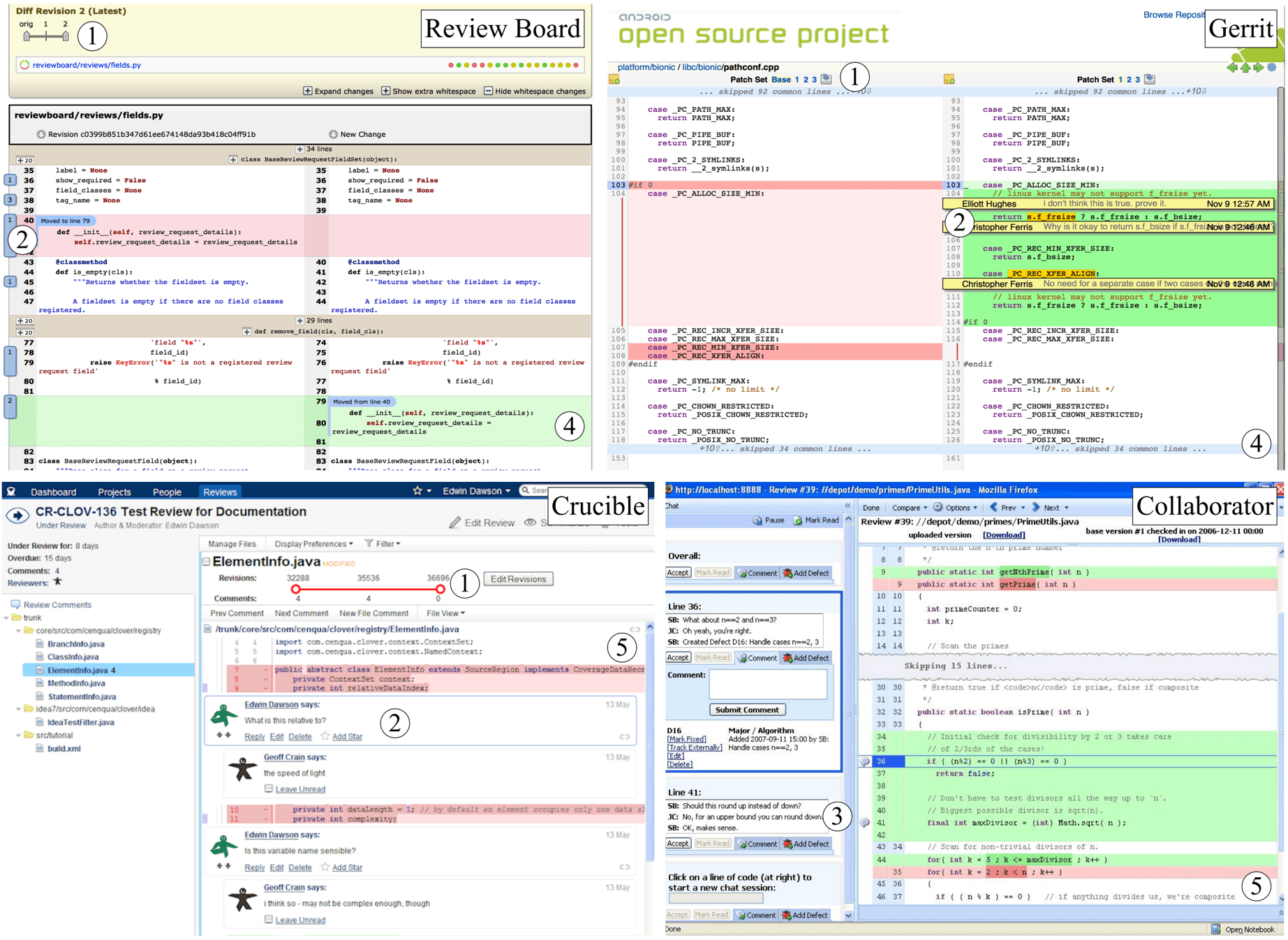
Modern software development sees code review as a crucial part of the process, because not only does it facilitate the sharing of knowledge about the system at hand, but it may also lead to the early detection of defects, ultimately improving the quality of the produced software. Although supported by numerous approaches and tools, code review is still in its infancy, and indeed researchers have pointed out a number of shortcomings in the state of the art. We present a critical analysis of the state of the art of code review tools and techniques, extracting a set of desired features that code review tools should possess. We then present our vision and initial implementation of a novel code review approach named Visual Design Inspection (ViDI), illustrated through a set of usage scenarios. ViDI is based on a combination of visualization techniques, design heuristics, and static code analysis techniques.
Mining Unit Tests for Code Recommendation
Developers spend a significant portion of their time understanding and learning the correct usage of the APIs of libraries they want to integrate in their projects. However, learning how to effectively use APIs is complex and time consuming. Code recommendation systems play a crucial role facilitating developers in this task by providing to them relevant examples while they code. This paper proposes a novel approach to code recommendation in which code examples are automatically obtained by mining and manipulating unit tests. In this paper we discuss the theoretical and practical implications that underpin this idea. The discussion leads to a series of fascinating research challenges that we organized in a research agenda.
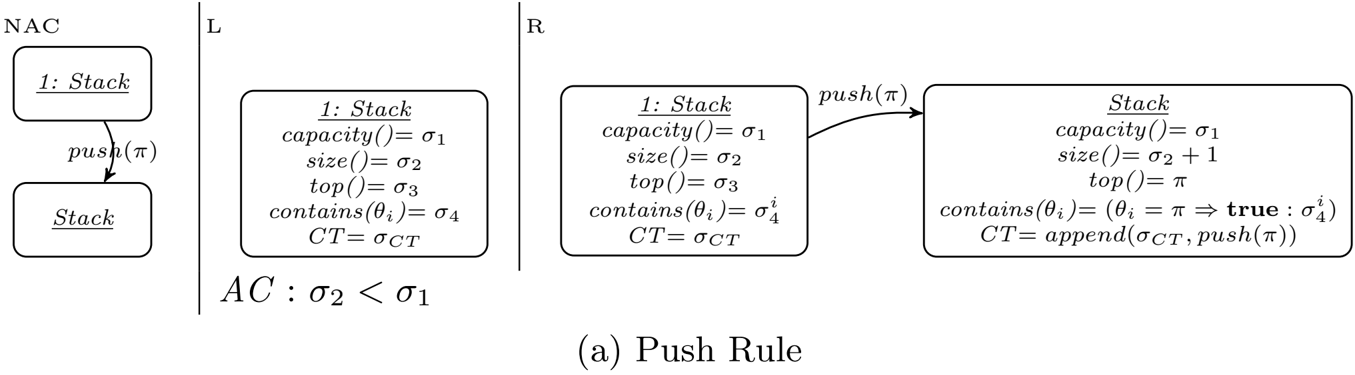
Synthesis of Infinite-State Abstractions and Their Use for Software Validation
In the recent years, several research efforts have been devoted to developing approaches to synthesize specifications of software behavior. Most of the proposed approaches addressed the inference of finite-state abstractions. The synthesized abstractions have been integrated in different validation scenarios, such as testing. While finite-state models can be effectively used as models of a software component’s behavior for certain specific purposes, they can hardly be used as full-fledged specifications. Because of their very limited expressive power, they cannot represent some of the component behaviors and may lead to synthesizing too coarse abstractions. In this paper, we survey a set of approaches that instead infer infinite-state abstractions, which can be used to express richer sets of behaviors of a software component in a black-box manner. For such approaches, we also discuss the few existing applications to software validation. In particular, we discuss the limitations and identify how, in principle, they can be used in different validation scenarios and how this opens new research directions.