Jesper Findahl

Collaborations with Jesper Findahl
 CodeLounge @ Software Institute, USI, Lugano
Projects
Institutional Foundations of Industrialization, Financialization, and Globalization of the Swiss Economy
Leveraging NLP and ML to transform historical corpora into structured geocoded data

Firms and tax competition in the digital economy: a data platform for geo-temporal network analysis
Building a data platform on the network of firms that supports geo and temporal analysis

Software quality assessment for Justitia 4.0
In-depth analysis of a large software system from multiple perspectives

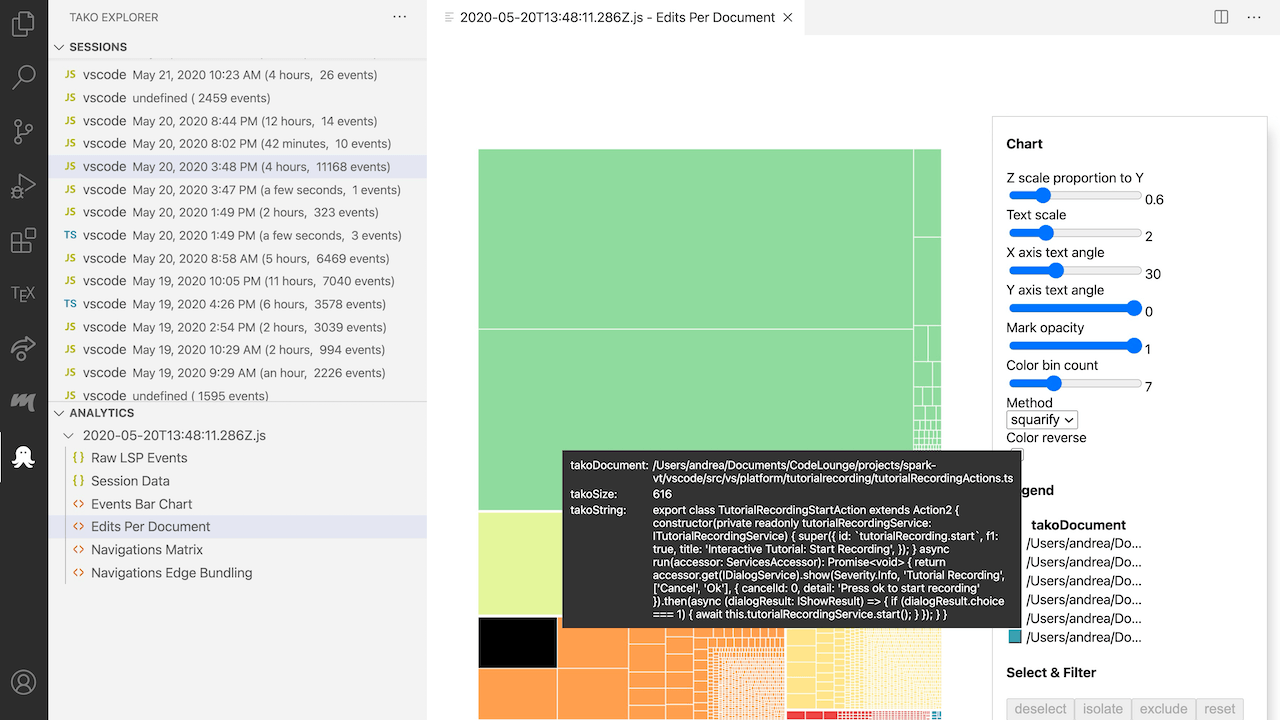
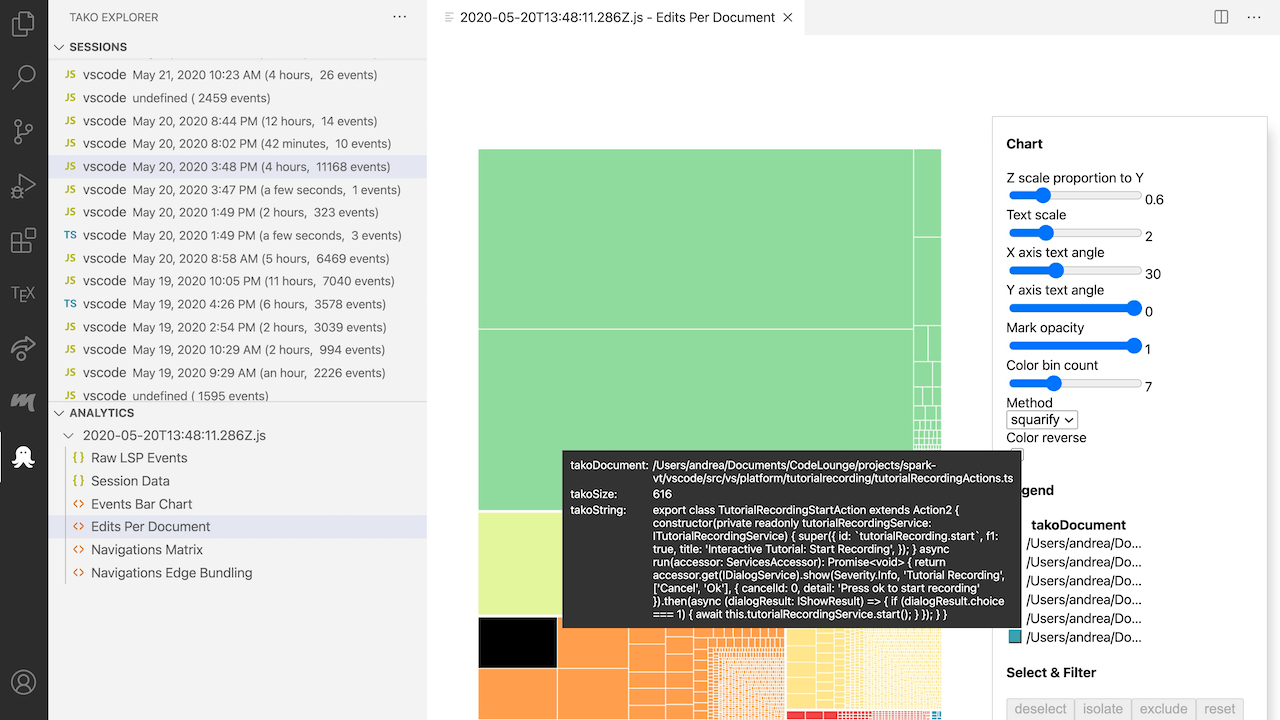
Collecting and Visualizing Development Activities in Visual Studio Code
Tracking low-level IDE interaction events and transforming them into meaningful data to understand our own productivity
myUSI Research & Teaching Support Platform
Management and analytics for the University

Teaching and Training Activities
No Pandas Were Harmed: Elegant and Efficient Data Analytics with Polars
## Workshop Description
USI Hackathon 2019: Making Data Alive
A three-day hackathon held from 15 to 17 November 2019 in the Aula Magna of the [USI](https://www.usi.ch) campus in Lugano, organized by [CodeLounge](https://codelounge.si.usi.ch), the research and development group of the [Software Institute](https://si.usi.ch), with the support of [Ated4Kids](https://www.ated.ch/progetto_ated4kids.php) and [Lugano Living Lab](https://luganolivinglab.ch). I was part of the organizing team, led by Marco D'Ambros and Michele Lanza together with Mauro Prevostini and Elisa Larghi from the Faculty of Informatics, and with my CodeLounge colleagues Luca Ponzanelli, Davide Paolo Tua, Jesper Findahl, and Roberto Minelli. I also took the pictures of the event, collected in the [Flickr album](https://www.flickr.com/photos/185754239@N08/albums/72157711974256596/). All the details are on the [event website](https://hackathon.usi.ch).
Software
Alfred
A Discord bot that helps the CodeLounge team with server maintenance: it follows Icinga monitoring alerts, calls in whoever is on duty, and keeps the weekly maintenance rotation
REFLEX Data Pipeline & REFLEXplorer
The software backbone of the REFLEX project: a document-AI and NLP pipeline turning 140 years of scanned Swiss commercial registry into structured, geocoded data, and a web platform to explore it
Tako
A Visual Studio Code extension that records, aggregates, and visualizes IDE interaction data — entirely on the developer's own machine
MyUSI Platform
A modular platform for managing the academic life of a university: a GraphQL-based, actor-oriented backend and a component-based frontend, piloted on the research service
Theses & Projects
Mining A Century of Swiss Trademarks
Daniel Travaglia · Master of Science in Software & Data Engineering
Co-Authored Publications
Mining a Century of Swiss Trademark Data
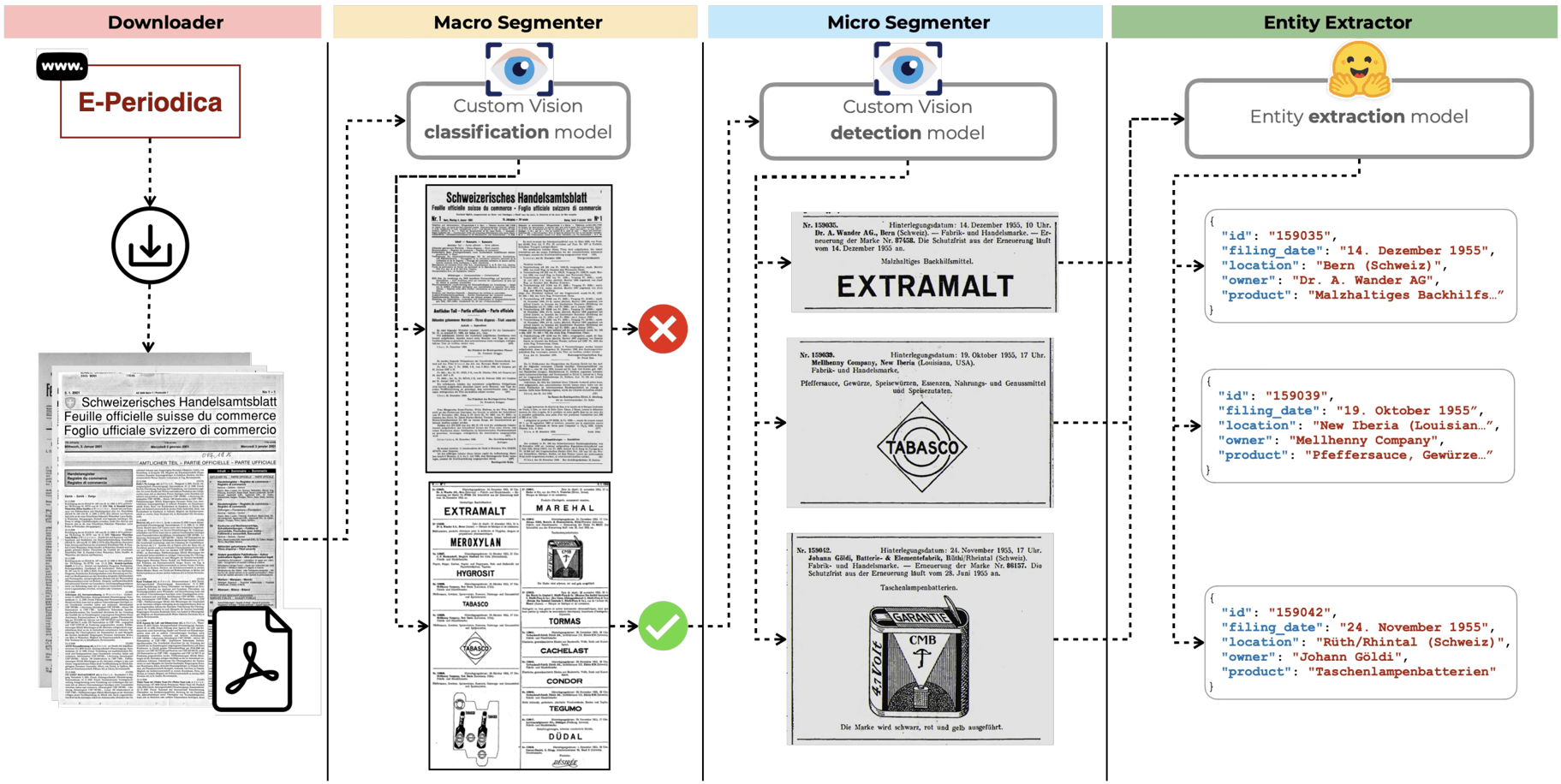
This paper presents an approach for extracting trademark registration events from the Swiss Official Gazette of Commerce (SOGC), an official daily journal published by the Swiss Confederation since January 1883. Until 2001, the data is only available as scanned documents, which constitute the target dataset of this study. Our approach is composed of a chain of three steps based on state-of-the-art deep learning techniques. We leverage image classification to identify pages containing trademarks (macro segmentation); we apply object detection to identify the portion of the page corresponding to a registration event (micro segmentation); last, we perform information extraction using a document AI technique. We obtain a dataset of ca. 500,000 trademark registration events, extracted from a corpus of 430,000 pages. Each step of our workflow has relatively high accuracy: the macro and micro segmentation steps show precision and recall greater than 95% on a manually constructed dataset. The dataset offers a unique historical perspective on trademark registrations in Switzerland that is not available from any other source. Showcasing what can be achieved with the extracted information, we provide answers to a set of preliminary economics questions.