
Software
SPY
SPecification RecoverY: inferring behavior models of stateful software components, and using them at run time to detect when a component's behavior changes
Co-Authored Publications
Synthesis of Infinite-State Abstractions and Their Use for Software Validation
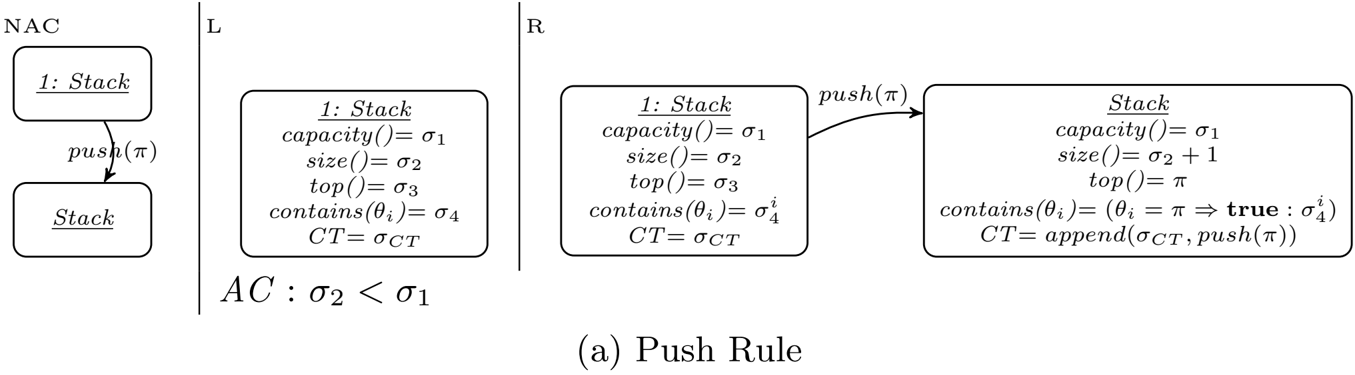
In the recent years, several research efforts have been devoted to developing approaches to synthesize specifications of software behavior. Most of the proposed approaches addressed the inference of finite-state abstractions. The synthesized abstractions have been integrated in different validation scenarios, such as testing. While finite-state models can be effectively used as models of a software component’s behavior for certain specific purposes, they can hardly be used as full-fledged specifications. Because of their very limited expressive power, they cannot represent some of the component behaviors and may lead to synthesizing too coarse abstractions. In this paper, we survey a set of approaches that instead infer infinite-state abstractions, which can be used to express richer sets of behaviors of a software component in a black-box manner. For such approaches, we also discuss the few existing applications to software validation. In particular, we discuss the limitations and identify how, in principle, they can be used in different validation scenarios and how this opens new research directions.
Detecting component changes at run time with behavior models
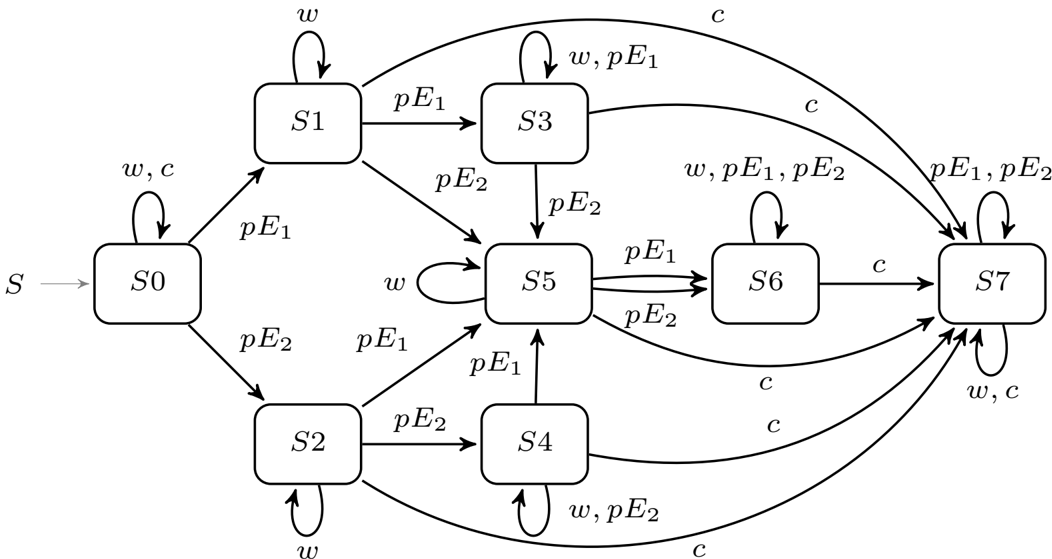
Modern software systems are composed of several services which may be developed and maintained by third parties and thus they can change independently and without notice during the system’s runtime execution. In such systems, changes may possibly be a threat to system functional correctness, and thus to its reliability. Hence, it is important to detect them as soon as they happen to enable proper reaction. Change detection can be done by monitoring system execution and comparing the observed execution traces against models of the services composing the application. Unfortunately, formal specifications for services are not usually provided and developers have to infer them. In this paper we propose a methodology which exactly addresses these issues by using software behavior models to monitor component execution and detect changes. In particular, we describe a technique to infer behavior model specifications with a dynamic black box approach, keep them up-to-date with run time observations and detect behavior changes. Finally, we present a case study to validate the effectiveness of the approach in component change detection for a component that implements a complex, real communication protocol.
Runtime Monitoring of Component Changes with Spy@Runtime
We present Spy@Runtime, a tool to infer and work with behavior models. Spy@Runtime generates models through a dynamic black box approach and is able to keep them updated with observations coming from actual system execution. We also show how to use models describing the protocol of interaction of a software component to detect and report functional changes as soon as they are discovered. Monitoring functional properties is particularly useful in an open environment in which there is a distributed ownership of a software system. Parts of the system may be changed independently and therefore it becomes necessary to monitor the component's behavior at run time.
Runtime Monitoring of Functional Component Changes with Behavior Models
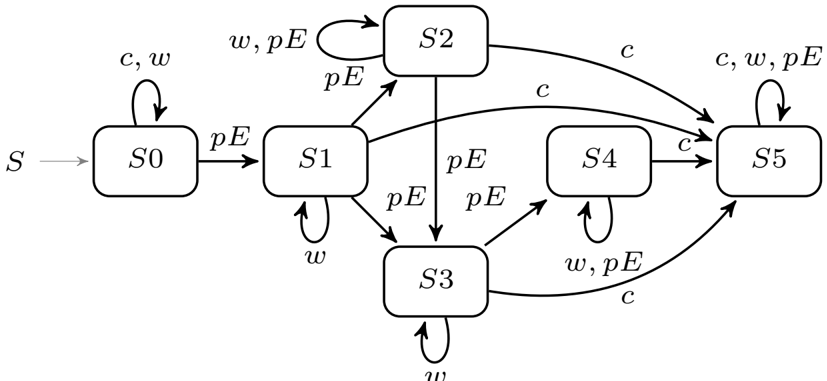
We consider the problem of run-time discovery and continuous monitoring of new components that live in an open environment. We focus on extracting a formal model—which may not be available upfront—by observing the behavior of the running component. We show how the model built at run time can be enriched through new observations (dynamic model update). We also use the inferred model to perform run-time verification. That is, we try to identify if any changes are made to the component that modify its original behavior, contradict the previous observations, and invalidate the inferred model.