ESSENTIALS: People-centric Essentials for Software Evolution

ESSENTIALS: People-centric Essentials for Software Evolution

1 April 2014 Project Postdoctoral Researcher

My Role on the Project

I worked on ESSENTIALS as a Postdoctoral Researcher in the REVEAL group led by Michele Lanza at the Software Institute of Università della Svizzera italiana, contributing to several of the project’s methods, tools, and publications on mining software repositories, recommender systems, and the analysis of unstructured software development data.

Project Scientific Abstract

Software evolution research has so far focused on structured and semi-structured data, typically the source code or versioning data of a software system. In this project, the focus now shifts to data that is essential to specific stakeholders in their current working context. Developers, testers, project managers, or product managers have very particular information needs when evolving a software system. We call this information “evolutionary essentials”, thereby concentrating on people-centric aspects of software development. This project investigates means and ways to examine the information available about a software system, to prepare it appropriately for the people involved, and to provide it for their current working context. The goal is thus a needs-oriented and efficient delivery of the essentials of a software system, tailored to the concrete contextual and work-related needs of the people involved in software evolution.

Technologies

People

Publications

1 May 2019 Paper
20594 words · 103 minutes

Automatic Identification and Classification of Software Development Video Tutorial Fragments

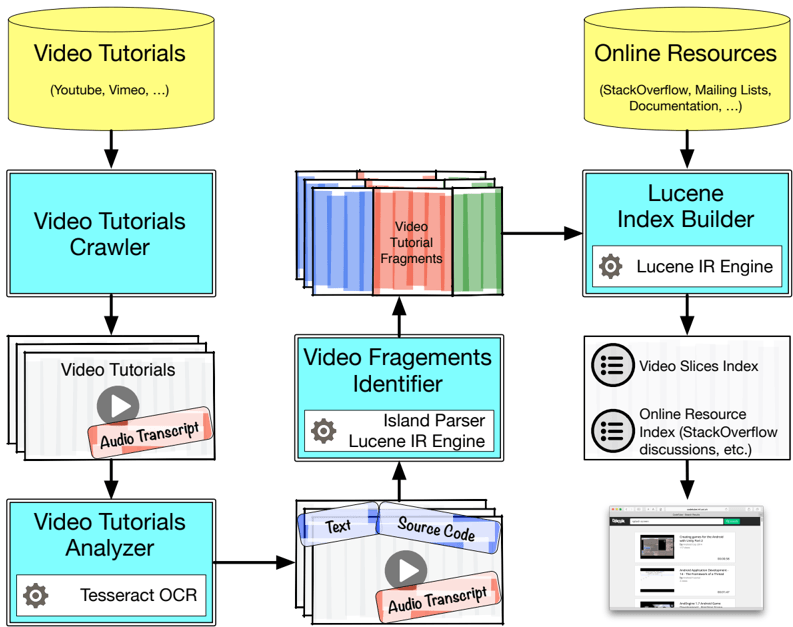
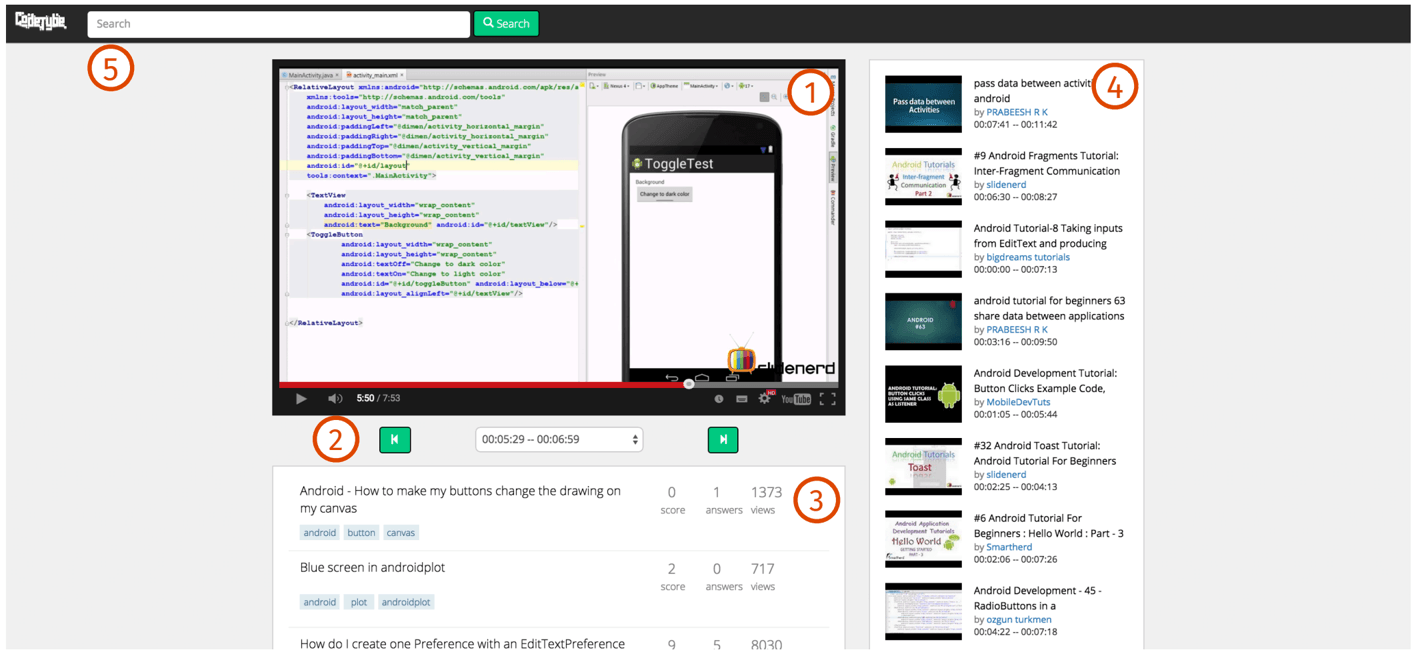
Software development video tutorials have seen a steep increase in popularity in recent years. Their main advantage is that they thoroughly illustrate how certain technologies, programming languages, etc. are to be used. However, they come with a caveat: there is currently little support for searching and browsing their content. This makes it difficult to quickly find the useful parts in a longer video, as the only options are watching the entire video, leading to wasted time, or fast-forwarding through it, leading to missed information. We present an approach to mine video tutorials found on the web and enable developers to query their contents as opposed to just their metadata. The video tutorials are processed and split into coherent fragments, such that only relevant fragments are returned in response to a query. Moreover, fragments are automatically classified according to their purpose, such as introducing theoretical concepts, explaining code implementation steps, or dealing with errors. This allows developers to set filters in their search to target a specific type of video fragment they are interested in. In addition, the video fragments in CodeTube are complemented with information from other sources, such as Stack Overflow discussions, giving more context and useful information for understanding the concepts.

Automatic Identification and Classification of Software Development Video Tutorial Fragments
29 June 2017 Paper
9512 words · 48 minutes

How Developers Document Pull Requests with External References

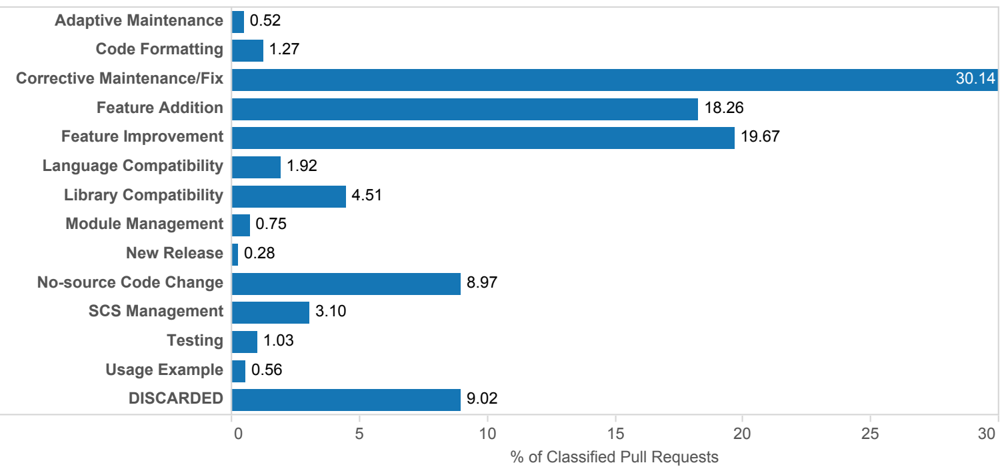
Online resources of formal and informal documentation-such as reference manuals, forum discussions and tutorials-have become an asset to software developers, as they allow them to tackle problems and to learn about new tools, libraries, and technologies. This study investigates to what extent and for which purpose developers refer to external online resources when they contribute changes to a repository by raising a pull request. Our study involved (i) a quantitative analysis of over 150k URLs occurring in pull requests posted in GitHub, (ii) a manual coding of the kinds of software evolution activities performed in commits related to a statistically significant sample of 2,130 pull requests referencing external documentation resources, (iii) a survey with 69 participants, who provided feedback on how they use online resources and how they refer to them when filing a pull request. Results of the study indicate that, on the one hand, developers find external resources useful to learn something new or to solve specific problems, and they perceive useful referring such resources to better document changes. On the other hand, both interviews and repository mining suggest that external resources are still rarely referred in document changes.

How Developers Document Pull Requests with External References
20 May 2017 Paper
10948 words · 55 minutes

Supporting Software Developers with a Holistic Recommender System

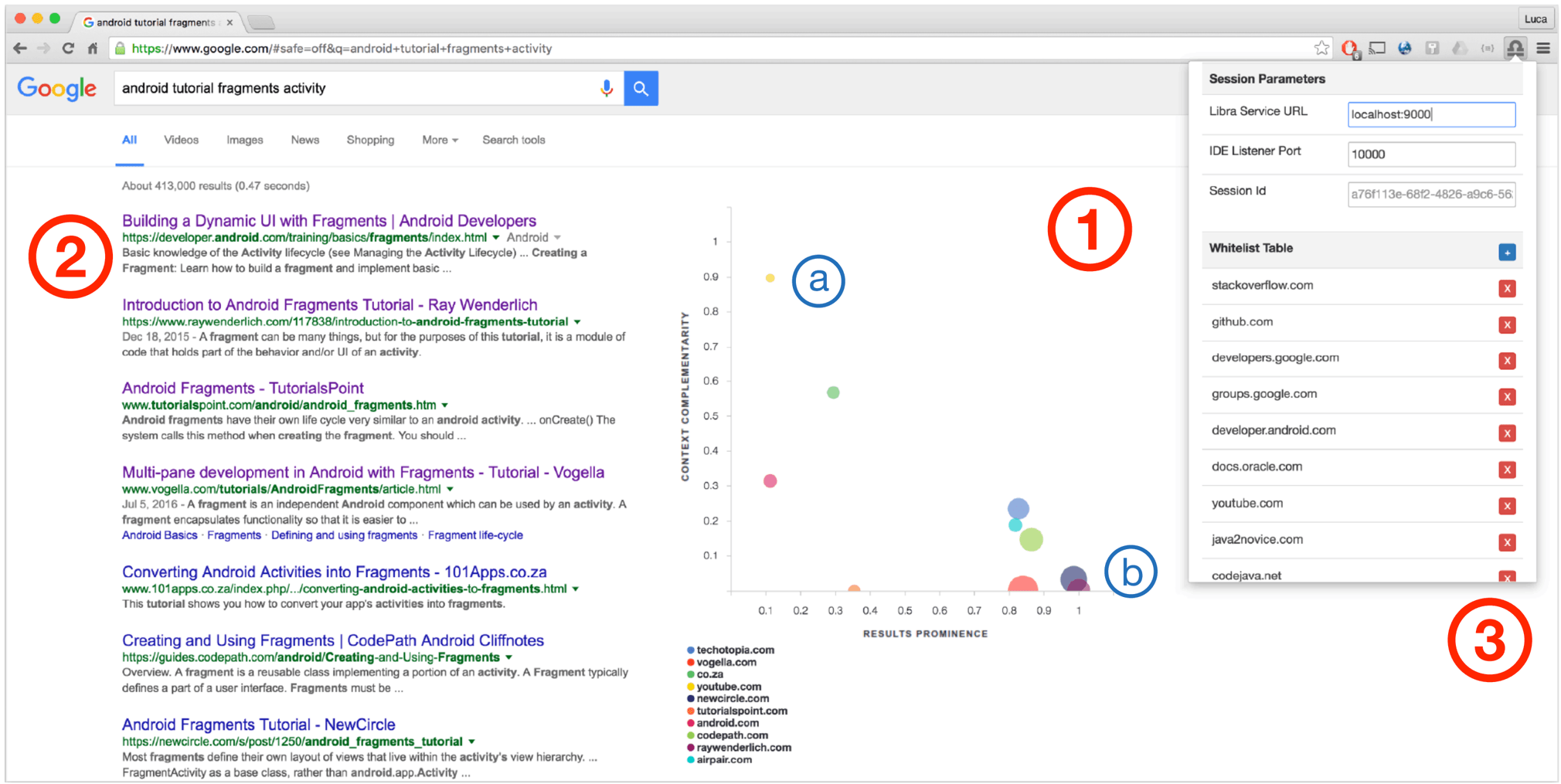
The promise of recommender systems is to provide intelligent support to developers during their programming tasks. Such support ranges from suggesting program entities to taking into account pertinent QnA pages. However, current recommender systems limit the context analysis to change history and developers' activities in the IDE, without considering what a developer has already consulted or perused, e.g., by performing searches from the Web browser. Given the faceted nature of many programming tasks, and the incompleteness of the information provided by a single artifact, several heterogeneous resources are required to obtain the broader picture needed by a developer to accomplish a task. We present Libra, a holistic recommender system. It supports the process of searching and navigating the information needed by constructing a holistic meta-information model of the resources perused by a developer, analyzing their semantic relationships, and augmenting the web browser with a dedicated interactive navigation chart. The quantitative and qualitative evaluation of Libra provides evidence that a holistic analysis of a developer's information context can indeed offer comprehensive and contextualized support to information navigation and retrieval during software development.

Supporting Software Developers with a Holistic Recommender System
14 May 2016 Paper
12936 words · 65 minutes

Too Long; Didn't Watch! Extracting Relevant Fragments from Software Development Video Tutorials

When knowledgeable colleagues are not available, developers resort to offline and online resources, e.g. tutorials, mailing lists, and Q&A websites. These, however, need to be found, read, and understood, which takes its toll in terms of time and mental energy. A more immediate and accessible resource are video tutorials found on the web, which in recent years have seen a steep increase in popularity. Nonetheless, videos are an intrinsically noisy data source, and finding the right piece of information might be even more cumbersome than using the previously mentioned resources. We present CodeTube, an approach which mines video tutorials found on the web, and enables developers to query their contents. The video tutorials are split into coherent fragments, to return only fragments related to the query. These are complemented with information from additional sources, such as Stack Overflow discussions. The results of two studies to assess CodeTube indicate that video tutorials - if appropriately processed - represent a useful, yet still under-utilized source of information for software development.

Too Long; Didn't Watch! Extracting Relevant Fragments from Software Development Video Tutorials
25 October 2015 Paper
10510 words · 53 minutes

Use at Your Own Risk: The Java Unsafe API in the Wild

Java is a safe language. Its runtime environment provides strong safety guarantees that any Java application can rely on. Or so we think. We show that the runtime actually does not provide these guarantees—for a large fraction of today's Java code. Unbeknownst to many application developers, the Java runtime includes a \"backdoor" that allows expert library and framework developers to circumvent Java's safety guarantees. This backdoor is there by design, and is well known to experts, as it enables them to write high-performance systems-level code in Java. For much the same reasons that safe languages are preferred over unsafe languages, these powerful but unsafe capabilities in Java should be restricted. They should be made safe by changing the language, the runtime system, or the libraries. At the very least, their use should be restricted. This paper is a step in that direction. We analyzed 74 GB of compiled Java code, spread over 86,479 Java archives, to determine how Java’s unsafe capabilities are used in real-world libraries and applications. We found that 25% of Java bytecode archives depend on un- safe third-party Java code, and thus Java's safety guarantees cannot be trusted. We identify 14 different usage patterns of Java’s unsafe capabilities, and we provide supporting evidence for why real-world code needs these capabilities. Our long-term goal is to provide a foundation for the design of new language features to regain safety in Java.

18 May 2015 Paper
2781 words · 14 minutes

Towards Visual Reflexion Models

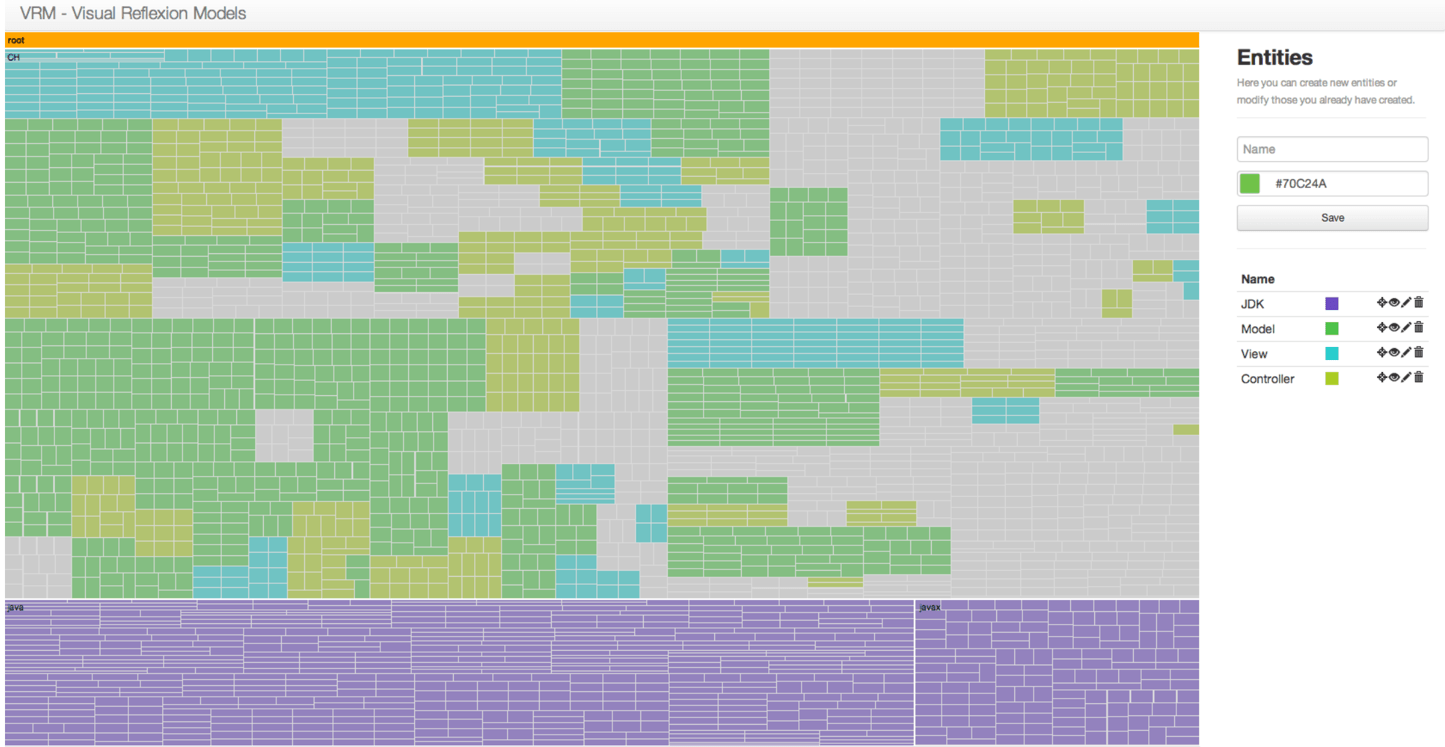
Source code and models of a software system, like architectural views, tend to evolve separately and drift apart over time. Previous research has shown that it is possible to effectively relate them through a reflexion model, defined as a \"summarization of a software system from the viewpoint of a particular high-level model". While effective, the process of constructing and analyzing reflexion models was supported by text-based tools with limited visual representation. With the original approach, it was relatively hard to understand which parts of the system were represented, and which parts of the system contributed to specific relations in the reflexion model. We present our vision on augmenting the construction and analysis of reflexion models with visual support, effectively providing the basis for visual reflexion models. We describe our approach, implemented as a web-based application, and two promising case studies involving two open-source projects.

Towards Visual Reflexion Models
16 May 2015 Paper
3330 words · 17 minutes

StORMeD: Stack Overflow Ready Made Data

Stack Overflow is the de facto Question and Answer (Q&A) website for developers, and it has been used in many approaches by software engineering researchers to mine useful data. However, the contents of a Stack Overflow discussion are inherently heterogeneous, mixing natural language, source code, stack traces and configuration files in XML or JSON format. We constructed a full island grammar capable of modeling the set of 700,000 Stack Overflow discussions talking about Java, building a heterogeneous abstract syntax tree (H-AST) of each post (question, answer or comment) in a discussion. The resulting dataset models every Stack Overflow discussion, providing a full H-AST for each type of structured fragment (i.e., JSON, XML, Java, Stack traces), and complementing this information with a set of basic meta-information like term frequency to enable natural language analyses. Our dataset allows the end-user to perform combined analyses of the Stack Overflow by visiting the H-AST of a discussion.

16 May 2015 Paper
4355 words · 22 minutes

Summarizing Complex Development Artifacts by Mining Heterogeneous Data

Summarization is hailed as a promising approach to reduce the amount of information that must be taken in by the person who wants to understand development artifacts, such as pieces of code, bug reports, emails, etc. However, existing approaches treat artifacts as pure textual entities, disregarding the heterogeneous and partially structured nature of most artifacts, which contain intertwined pieces of distinct type, such as source code, diffs, stack traces, human language, etc. We present a novel approach to augment existing summarization techniques (such as LexRank) to deal with the heterogeneous and multidimensional nature of complex artifacts. Our preliminary results on heterogeneous artifacts suggest our approach outperforms the current text-based approaches.

Summarizing Complex Development Artifacts by Mining Heterogeneous Data
2 March 2015 Paper
8887 words · 45 minutes

Code Review: Veni, ViDI, Vici

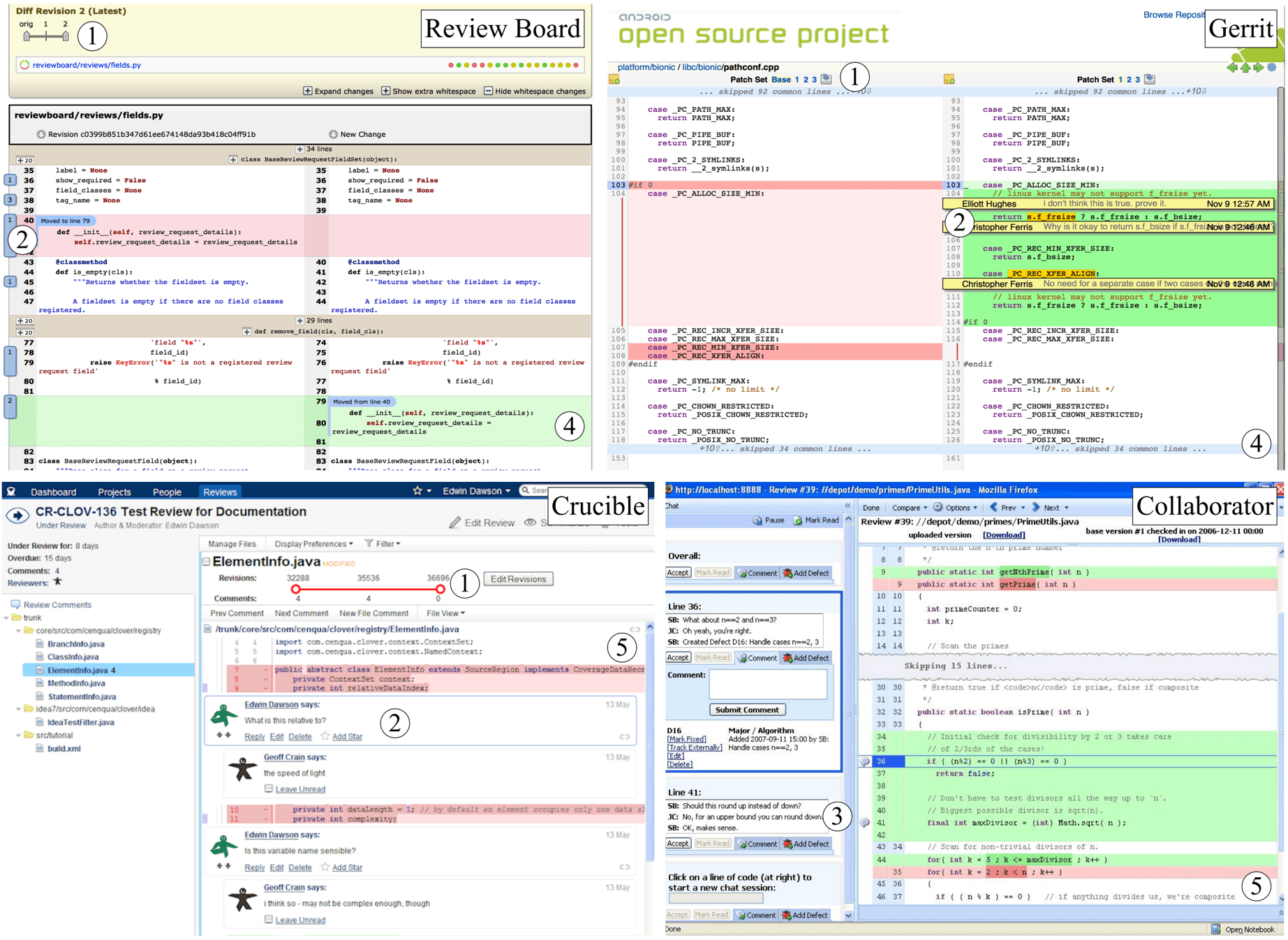
Modern software development sees code review as a crucial part of the process, because not only does it facilitate the sharing of knowledge about the system at hand, but it may also lead to the early detection of defects, ultimately improving the quality of the produced software. Although supported by numerous approaches and tools, code review is still in its infancy, and indeed researchers have pointed out a number of shortcomings in the state of the art. We present a critical analysis of the state of the art of code review tools and techniques, extracting a set of desired features that code review tools should possess. We then present our vision and initial implementation of a novel code review approach named Visual Design Inspection (ViDI), illustrated through a set of usage scenarios. ViDI is based on a combination of visualization techniques, design heuristics, and static code analysis techniques.

Code Review: Veni, ViDI, Vici
2 October 2014 Paper
9677 words · 49 minutes

Quantitatively Exploring Non-code Software Artifacts

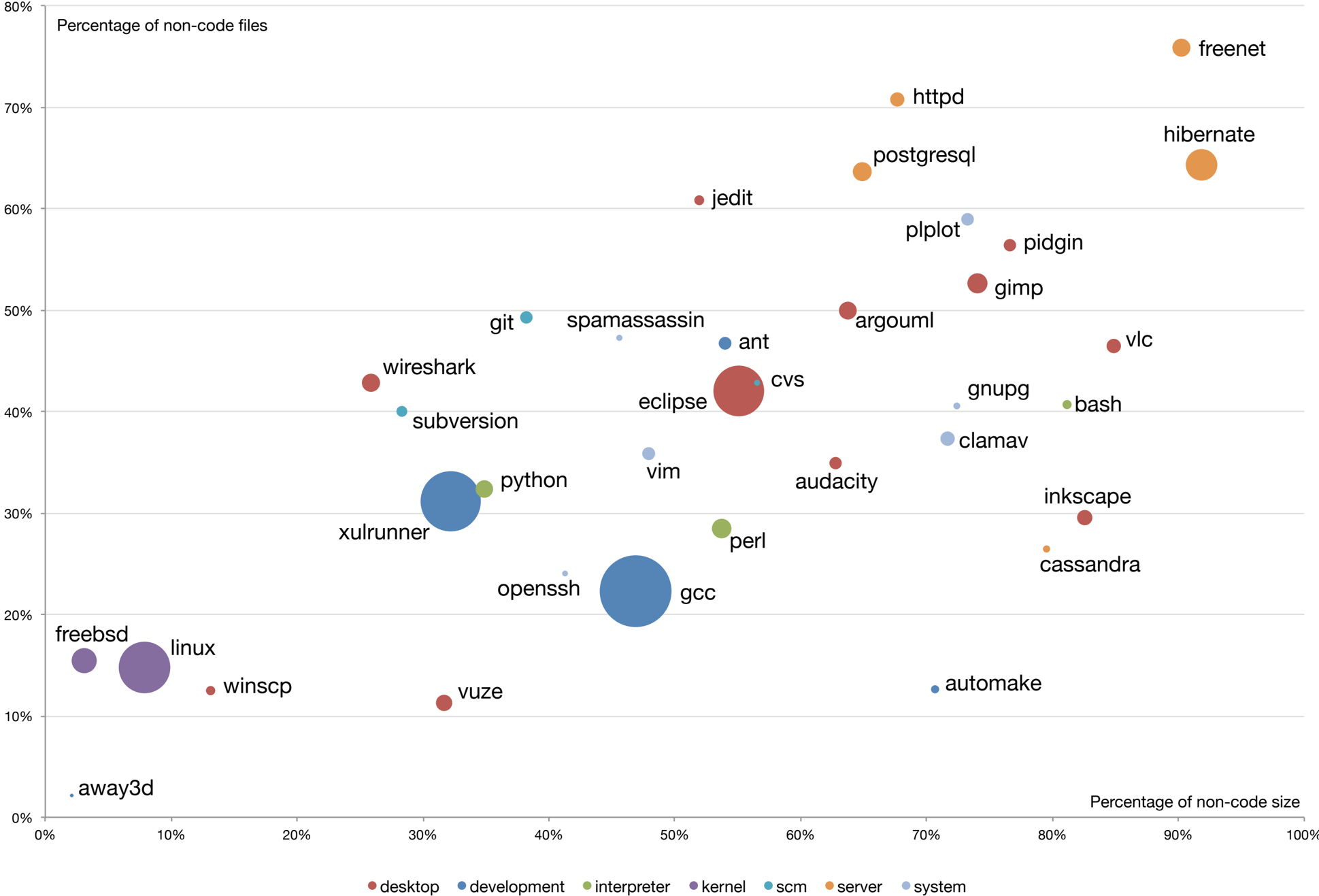
Most software engineering research focuses its analyses on source code, because correct, well designed, and efficient program code is the desired end output of software development. Nevertheless, source code is not the only constituent of software systems: Programs also comprise other types of artifacts, such as documentation, build system and configuration files, and graphics. These non-code artifacts only recently got the attention of researchers and are not yet investigated as a whole, but separately and with very specific aims. By taking a quantitative perspective, we look into non-code software artifacts to measure their role in software systems. We analyze 35 mature open-source software systems and we address exploratory questions such as: How many non-code software artifacts do software systems contain? How do they relate to source code? How much effort is put into producing and maintaining them? Our results show that a significant portion of systems is made of non-code artifacts, and that programmers spend a relevant part of their effort on non-code artifacts during the development process. Our analysis opens questions for future investigations.

Quantitatively Exploring Non-code Software Artifacts
2 October 2014 Paper
11200 words · 56 minutes

Understanding and Classifying the Quality of Technical Forum Questions

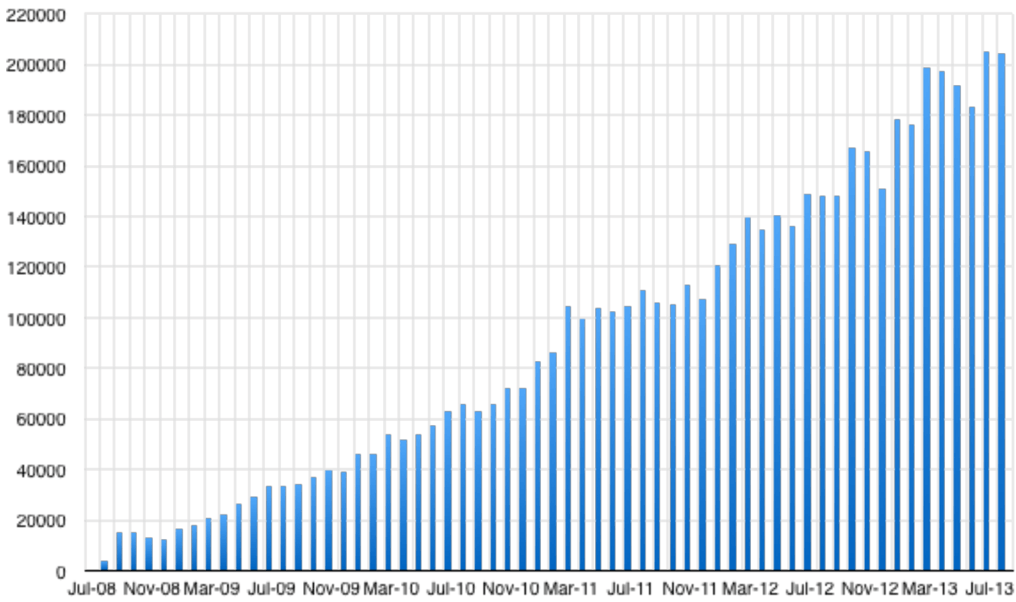
Technical questions and answers (Q&A) services have become a valuable resource for developers. A prominent example of technical Q&A website is StackOverflow (SO), which relies on a growing community of more than two millions of users who actively contribute by asking questions and providing answers. To maintain the value of this resource, poor quality questions - among the more than 6,000 asked daily - have to be filtered out. Currently, poor quality questions are manually identified and reviewed by selected users in SO, this costs considerable time and effort. Automating the process would save time and unload the review queue, improving the efficiency of SO as a resource for developers. We present an approach to automate the classification of questions according to their quality. We present an empirical study that investigates how to model and predict the quality of a question by considering as features both the contents of a post (e.g., from simple textual features to more complex readability metrics) and community-related aspects (e.g., popularity of a user in the community). Our findings show that there is indeed the possibility of at least a partial automation of the costly SO review process.

Understanding and Classifying the Quality of Technical Forum Questions
29 September 2014 Paper
4601 words · 24 minutes

Improving Low Quality Stack Overflow Post Detection

Stack Overflow is a popular questions and answers (Q&A) website among software developers. It counts more than two millions of users who actively contribute by asking and answering thousands of questions daily. Identifying and reviewing low quality posts preserves the quality of site's contents and it is crucial to maintain a good user experience. In Stack Overflow the identification of poor quality posts is performed by selected users manually. The system also uses an automated identification system based on textual features. Low quality posts automatically enter a review queue maintained by experienced users. We present an approach to improve the automated system in use at Stack Overflow. It analyzes both the content of a post (e.g., simple textual features and complex readability metrics) and community-related aspects (e.g., popularity of a user in the community). Our approach reduces the size of the review queue effectively and removes misclassified good quality posts.

31 May 2014 Paper
3258 words · 17 minutes

Collaboration in Open-source Projects: Myth or Reality?

One of the fundamental principles of open-source projects is that they foster collaboration among developers, disregarding their geographical location or personal background. When it comes to software repositories collaboration is a rather ephemeral phenomenon which lacks a clear definition, and it must therefore be mined and modeled. This throws up the question whether what is mined actually maps to reality. In this paper we investigate collaboration by modeling it using a number of diverse approaches that we then compare to a ground truth obtained by surveying a substantial set of developers of the Pharo open-source community. Our findings indicate that the notion of collaboration must be revisited, as it is undermined by a number of factors that are often tackled in imprecise ways or not taken into account at all.

Collaboration in Open-source Projects: Myth or Reality?
16 May 2015 Library

StORMeD

Heterogeneous abstract syntax trees for Stack Overflow: a Scala development kit, a ready-made JSON dataset, and an island-parsing web service


ESSENTIALS: People-centric Essentials for Software Evolution

1 April 2014 Project