HI-SEA: Holistic Immersive Software Evolution Ambient

HI-SEA: Holistic Immersive Software Evolution Ambient

1 April 2013 Project Postdoctoral Researcher

My Role on the Project

I worked on HI-SEA as a Postdoctoral Researcher in the REVEAL group led by Michele Lanza at the Software Institute of Università della Svizzera italiana, contributing to several of the project’s methods, tools, and publications on software evolution, mining software repositories, and IDE interaction data.

Project Scientific Abstract

Despite the progress that software engineering research and practice has made in developing methods and techniques to tackle the many challenges that developing software entails, the main vehicle to develop software, the integrated development environment (IDE), has essentially remained unchanged since the first IDEs appeared 30 years ago. IDEs certainly progressed to offer support for versioning, integration, and programming in modern languages, but essentially remain mere text editors. They are inappropriate to face the many new challenges of modern software development: Developers deal with an exploding amount of data not only related to the source code, but also to complementary –and often neglected– information, such as Q&A websites and documents written in natural language (emails, documentation, instant messages, etc.) revolving around systems. Leveraging such information often comes as an afterthought and manifests itself as simplistic extensions of existing IDEs, in the form of plugins and recommender systems that have a hard time making it into the spotlight, often remaining at the stage of prototypes.

Our goal is to develop methods and techniques to enable a holistic immersive ambient for software evolution, i.e., a visual environment for analyzing existing and developing new software, where the plethora of data revolving around a project is integrated to provide a holistic view and serves as the basis for intelligent recommender systems.

People

Publications

29 June 2017 Paper
8295 words · 42 minutes

On the Uniqueness of Code Redundancies

Code redundancy widely occurs in software projects. Researchers have investigated the existence, causes, and impacts of code redundancy, showing that it can be put to good use, for example in the context of code completion. When analyzing source code redundancy, previous studies considered software projects as sequences of tokens, neglecting the role of the syntactic structures enforced by programming languages. However, differences in the redundancy of such structures may jeopardize the performance of applications leveraging code redundancy. We present a study of the redundancy of several types of code constructs in a large-scale dataset of active Java projects mined from GitHub, unveiling that redundancy is not uniform and mainly resides in specific code constructs. We further investigate the implications of the locality of redundancy by analyzing the performance of language models when applied to code completion. Our study discloses the perils of exploiting code redundancy without taking into account its strong locality in specific code constructs.

3 October 2016 Paper
6760 words · 34 minutes

Visualizing the Evolution of Working Sets

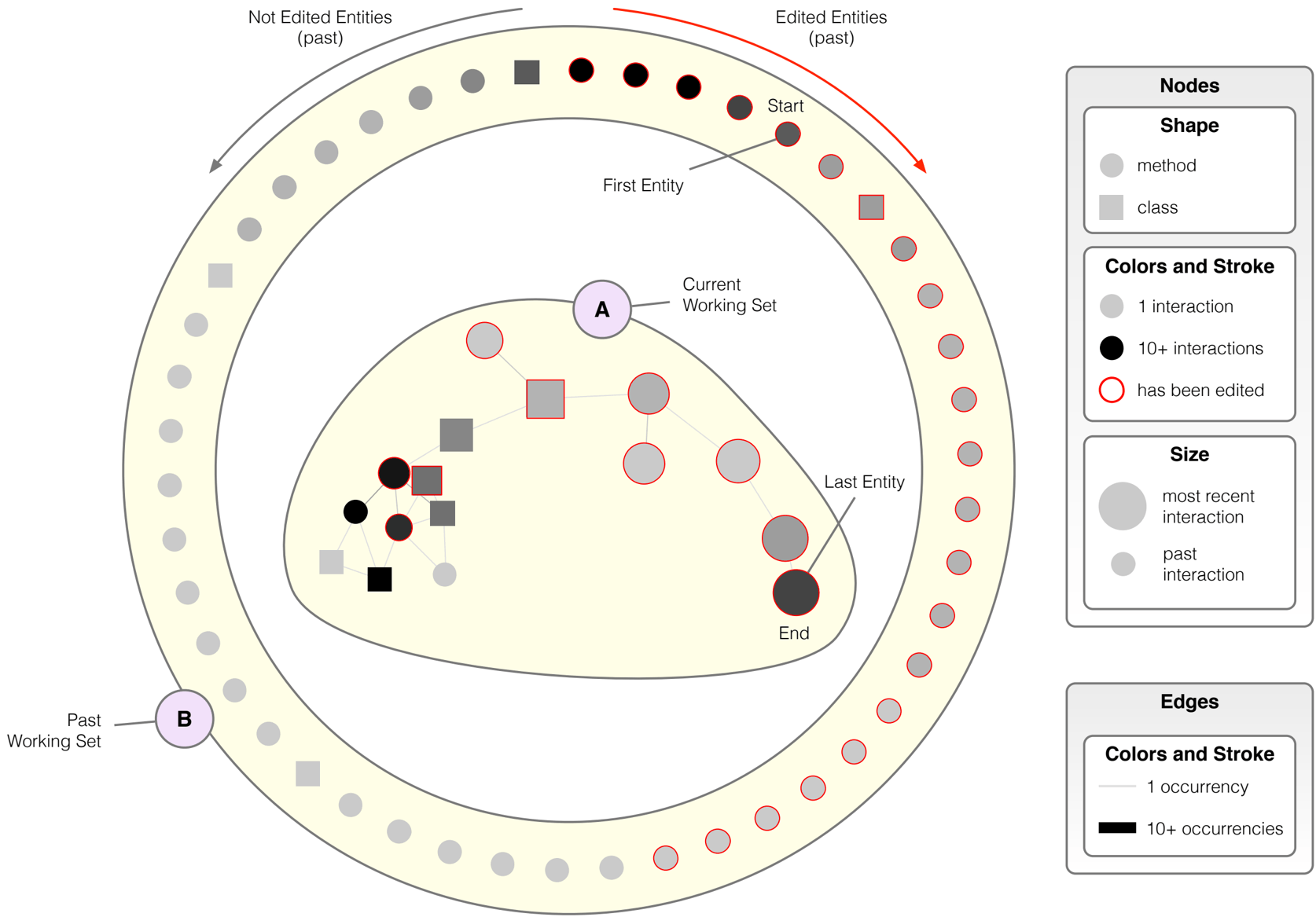
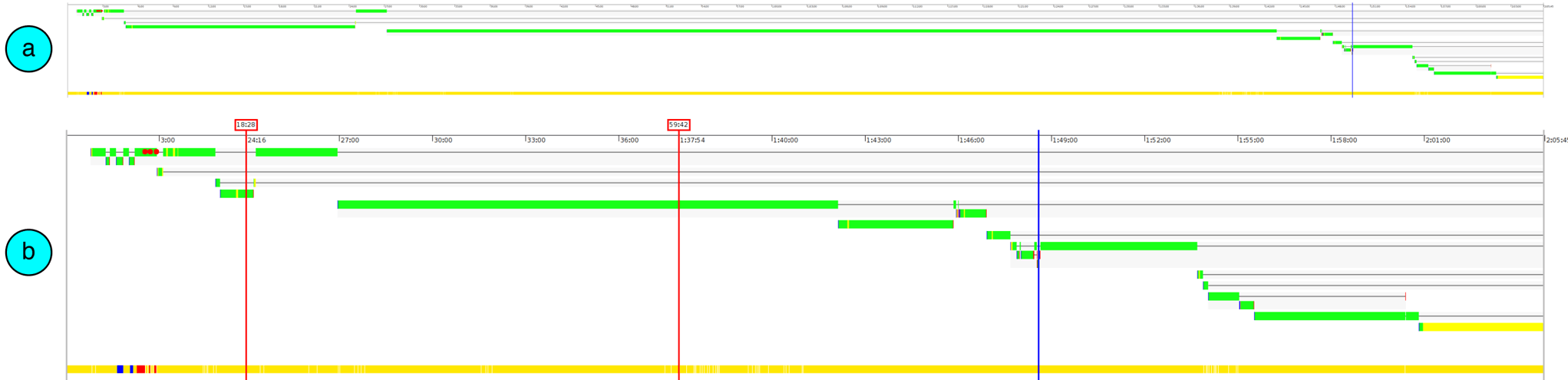
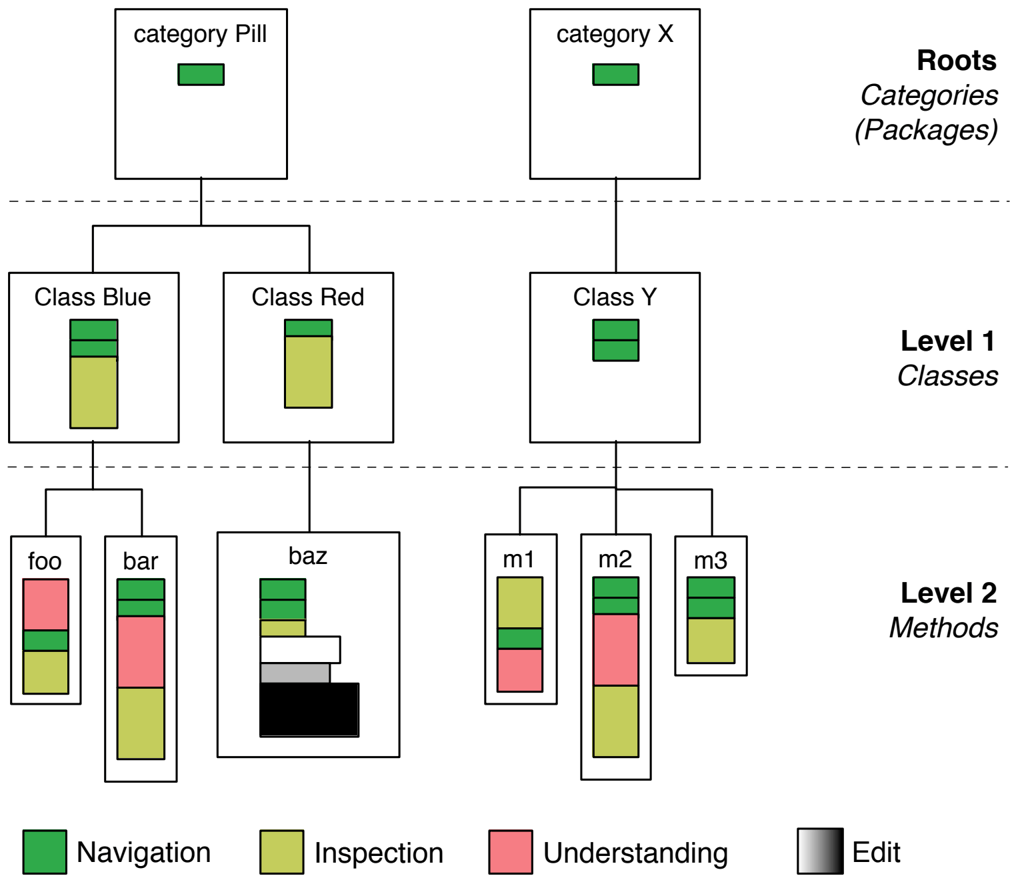
As part as their daily work, developers interact with Integrated Development Environments (IDE), generating thousands of events. Together with other aspects of development, this data also captures the modus operandi of the developer, including all the program entities she interacted with during a development session. This \"working set" (or context) is leveraged by developers to create and maintain their mental model of the software system at hand. Understanding how developers navigate and interact with source code during a development session is an open question. We present a novel visual approach to understand how working sets evolve during a development session. The visualization incrementally depicts all the program entities involved in a development session, the intensity of the developer activity on them, and the navigation paths that occurred between them. We visualized more than a thousand development sessions, and categorized them according to their visual properties.

Visualizing the Evolution of Working Sets
1 August 2016 Paper
8632 words · 44 minutes

What Makes a Satisficing Bug Report?

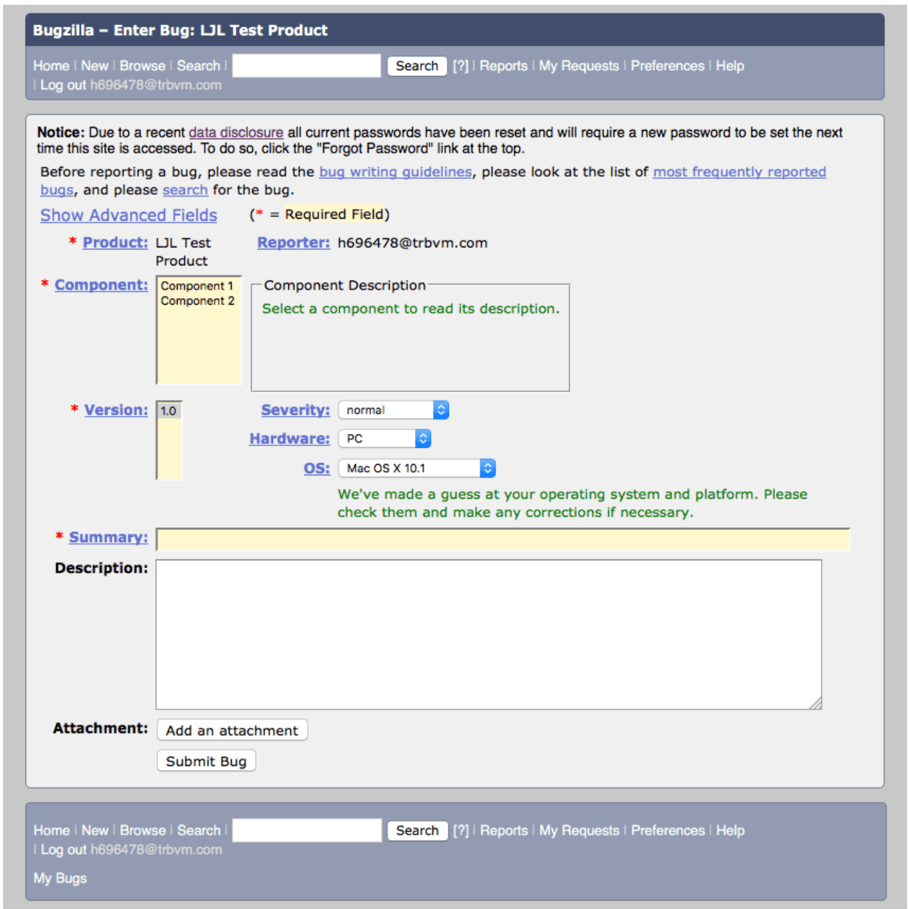
To ensure quality of software systems, developers use bug reports to track defects. It is in the interest of users and developers that bug reports provide the necessary information to ease the fixing process. Past research found that users do not provide the information that developers deem ideally useful to fix a bug. This raises an interesting question: What is the satisficing information to speed up the bug fixing process? We conducted an observational study on the relation between provided report information and its lifetime, considering more than 650,000 reports from open-source systems using popular bug trackers. We distilled a meta-model for a minimal bug report, establishing a basic layer of core features. We found that few fields influence the resolution time and that customized fields have little impact on it. We performed a survey to investigate what users deem easy to provide in a bug report.

What Makes a Satisficing Bug Report?
16 May 2016 Paper
9467 words · 48 minutes

Taming the IDE with Fine-grained Interaction Data

Integrated Development Environments (IDEs) lack effective support to browse complex relationships between source code elements. As a result, developers are often forced to exploit multiple user interface components at the same time, bringing the IDE into a complex, \"chaotic" state. Keeping track of these relationships demands increased source code navigation and cognitive load, leading to productivity deficits documented in observational studies. Beyond small-scale studies, the amount and nature of the chaos experienced by developers in the wild is unclear, and more importantly it is unclear how to tame it. Based on a dataset of fine-grained interaction data, we propose several metrics to characterize and quantify the "level of chaos" of an IDE. Our results suggest that developers spend, on average, more than 30% of their time in a chaotic environment, and that this may affect their productivity. To support developers, we devise and evaluate simple strategies that automatically alter the UI of the IDE. We find that even simple strategies may considerably reduce the level of chaos both in terms of effective space occupancy and time spent in a chaotic environment.

Taming the IDE with Fine-grained Interaction Data
13 March 2016 Paper
4675 words · 24 minutes

Measuring Navigation Efficiency in the IDE

While coding, developers construct and maintain mental models of software systems to support the task at hand. Although source code is the main product of software development, the process involves navigating and inspecting entities beyond the ones that are edited by the end of a task. Developers use various user interfaces (UI) offered by the Integrated Development Environment (IDE) to navigate the complex, and often hidden, relationships between program entities. These UIs impose fixed navigation costs, in terms of the number of interactions that a developer is required to perform to reach an entity of interest. It is unclear to what extent the actual navigation effort differs from an ideal setting, and if there is any room for actual improvement. We present a preliminary empirical study, where we analyzed a corpus of IDE interaction data coming from 6 developers totaling more than 20 days of development activity. To measure the navigation efficiency, we compute a combination of different ideal settings and compare them against the observed navigation events. Our findings reveal that, on average, developers perform 1.5 to 19 times more navigation events than the ideal case. While different factors make the ideal setting unfeasible, we believe that this calls for novel approaches to support the navigation in integrated development environments.

29 September 2015 Paper
2099 words · 11 minutes

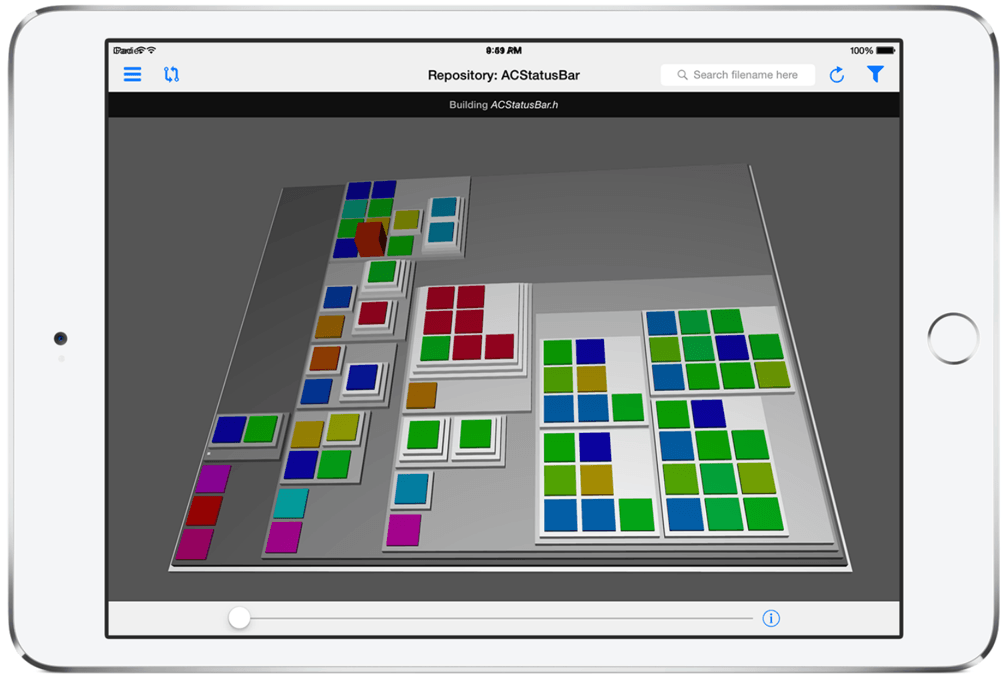
UrbanIt: Visualizing Repositories Everywhere

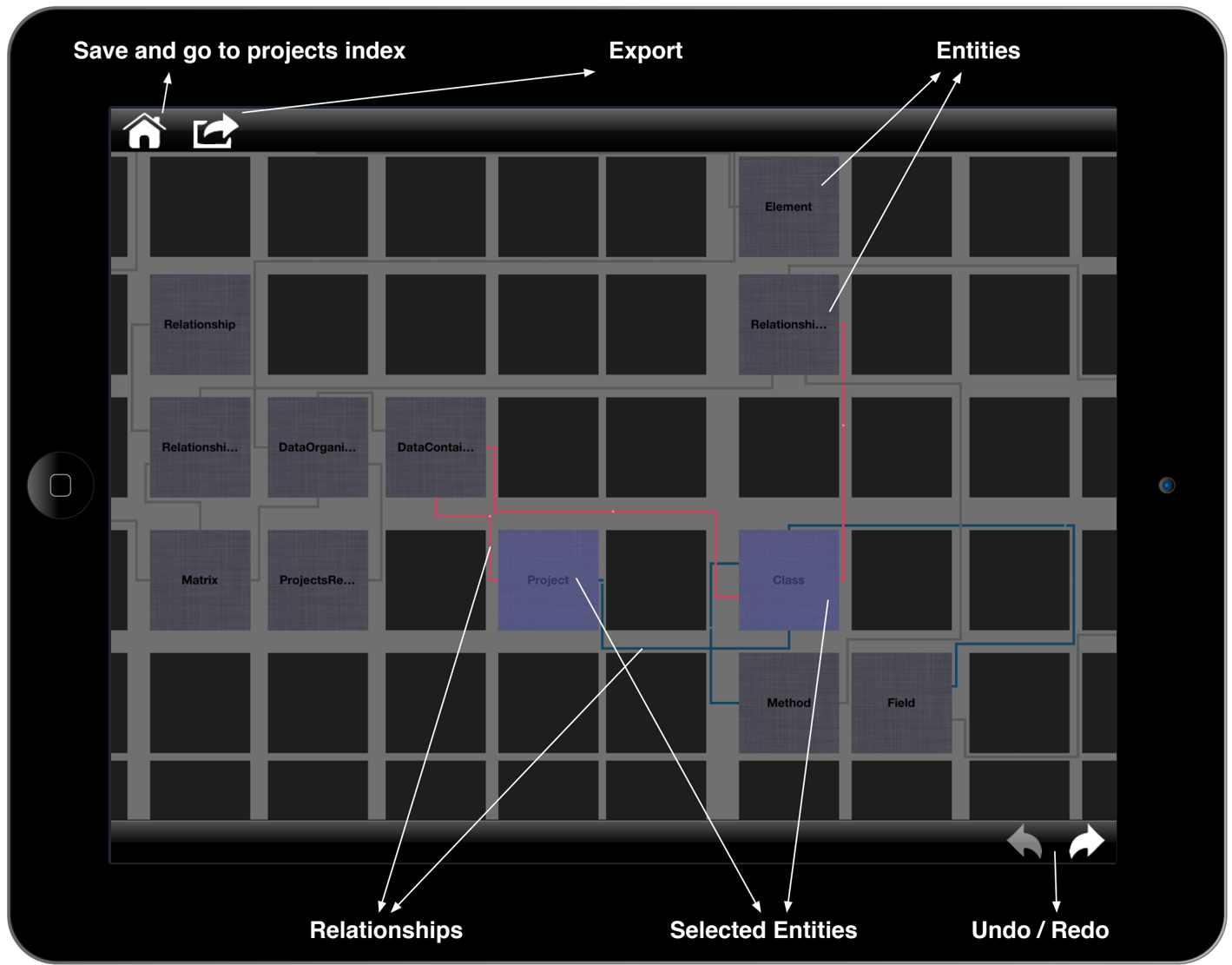
Software evolution is supported by a variety of tools that help developers understand the structure of a software system, analyze its history and support specific classes of analyses. However, the increasingly distributed nature of software development requires basic repository analyses to be always available to developers, even when they cannot access their workstation with full-fledged applications and command-line tools. We present UrbanIt, a gesture-based tablet application for the iPad that supports the visualization of software repositories together with useful evolutionary analyses (e.g., version diff) and basic sharing features in a portable and mobile setting. UrbanIt is paired with a web application that manages synchronization of multiple repositories.

UrbanIt: Visualizing Repositories Everywhere
28 September 2015 Paper
2806 words · 15 minutes

SODA: The Stack Overflow Dataset Almanac

Stack Overflow has become a fundamental resource for developers, becoming the de facto Question and Answer (Q&A) website, and one of the standard unstructured data sources for software engineering research to mine knowledge about development. We present SODA, the Stack Overflow Dataset Almanac, a tool that helps researchers and developers to better understand the trends of discussion topics in Stack Overflow, based on the available tagging system. SODA provides an effective visualization to support the analysis of topics in different time intervals and frames, leveraging single or co-occurrent tags. We show, through simple usage scenarios, how SODA can be used to find interesting peculiar moments in the evolution of Stack Overflow discussions that closely match specific recent events in the area of software development. SODA is available at http://rio.inf.usi.ch/soda/

Workshop No tags assigned
27 September 2015 Paper
6375 words · 32 minutes

Blended, Not Stirred: Multi-concern Visualization of Large Software Systems

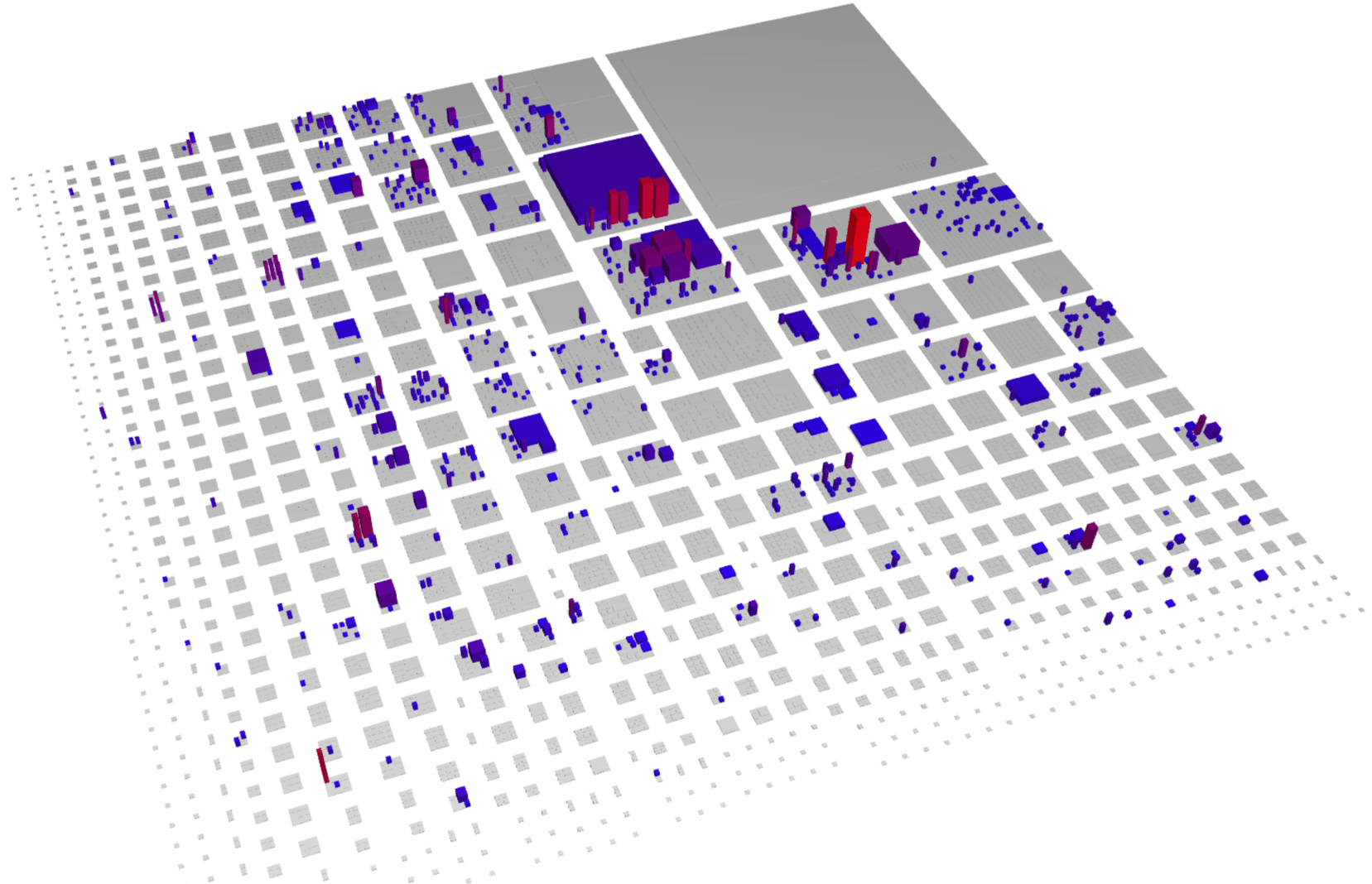
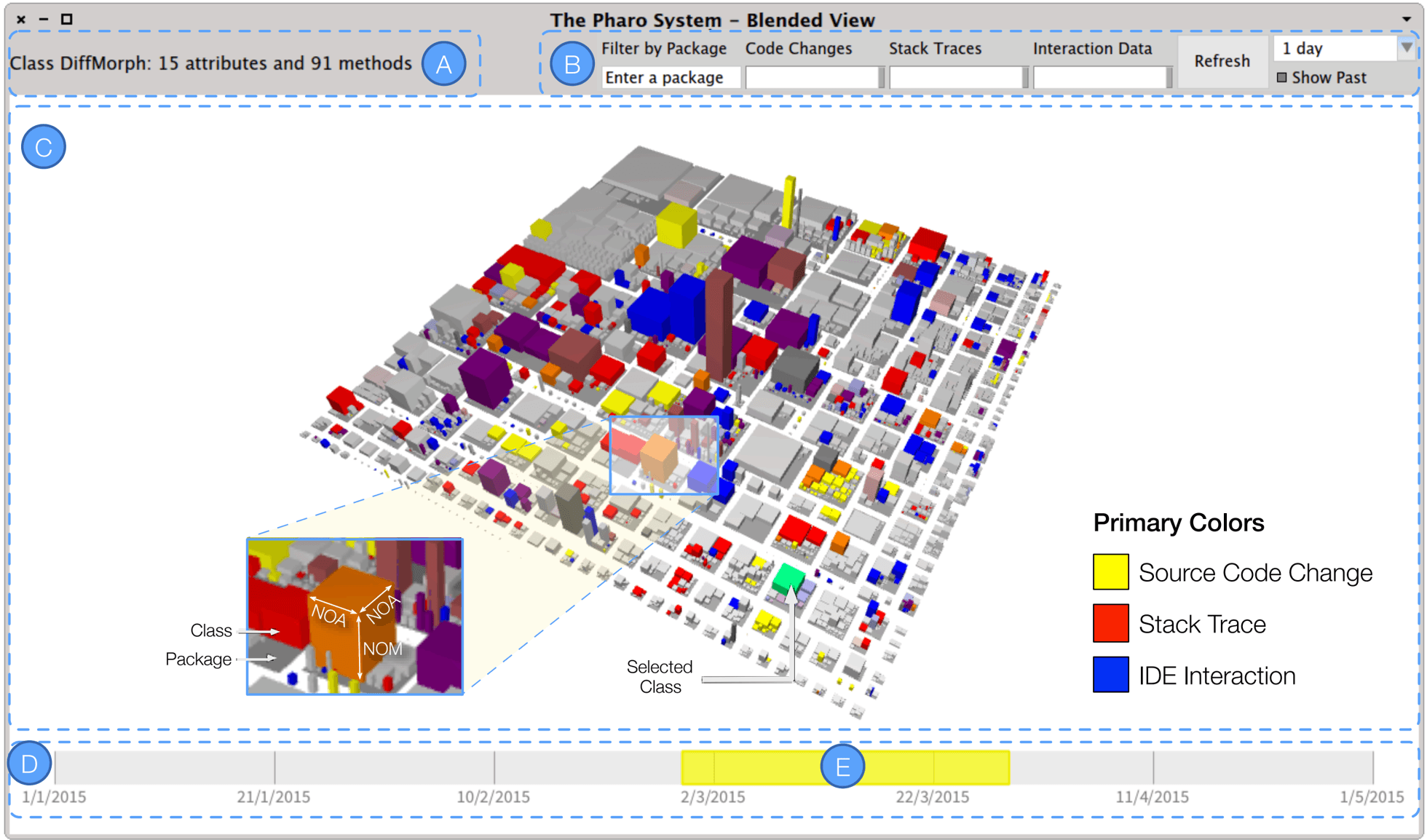
While constructing and evolving software systems, developers generate directly and indirectly a large amount of data of diverse nature, such as source code changes, bug tracking information, IDE interactions, stack traces, etc. Often these diverse data sources are processed and visualized in isolation, leading to a partial view of systems. We present a blended approach to visualize several data \"ingredients" at once, to give as complete an answer as possible to the question "What happened to the system in the last few days?". The goal is to enable a quick and comprehensive assessment of what happened to a software system in any given time frame.

Blended, Not Stirred: Multi-concern Visualization of Large Software Systems
18 May 2015 Paper
11130 words · 56 minutes

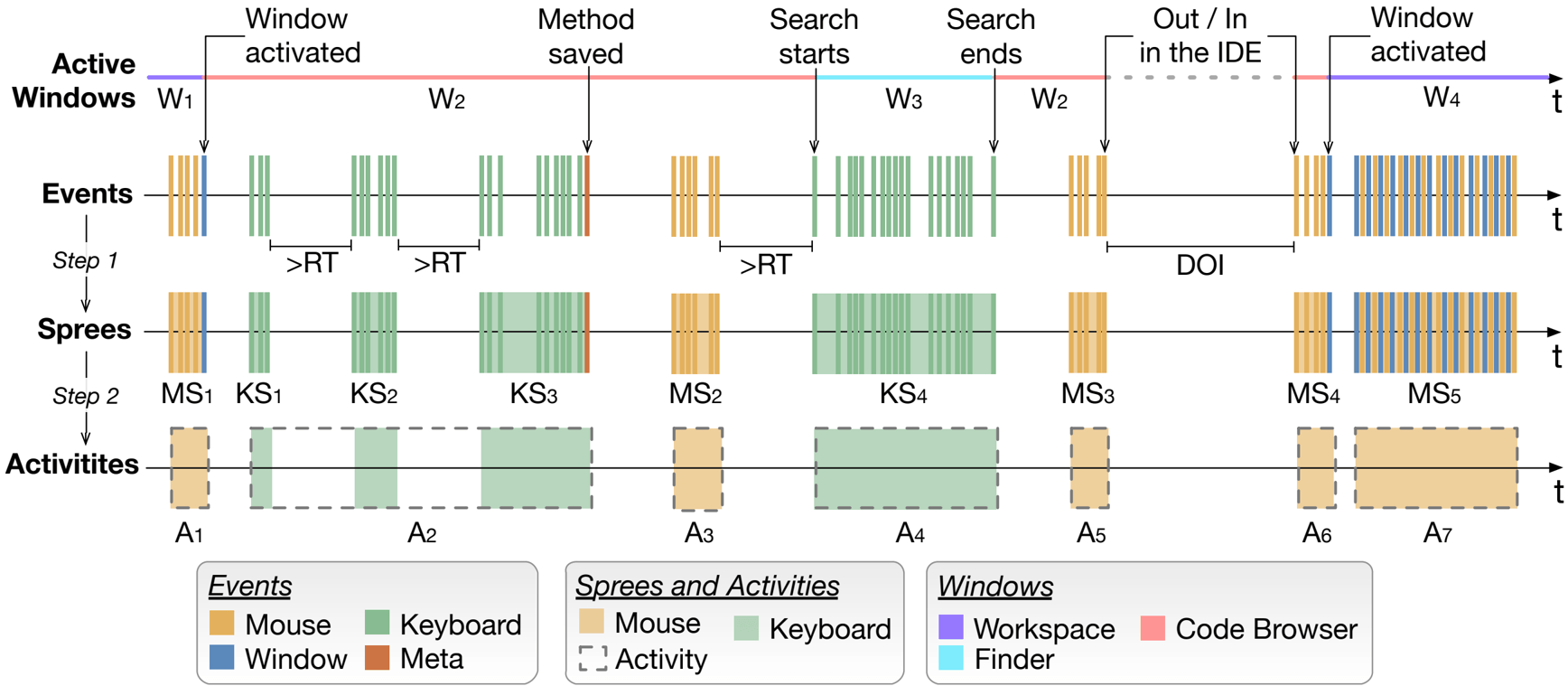
I Know What You Did Last Summer -- An Investigation of How Developers Spend Their Time

Developing software is a complex mental activity, requiring extensive technical knowledge and abstraction capabilities. The tangible part of development is the use of tools to read, inspect, edit, and manipulate source code, usually through an IDE (integrated development environment). Common claims about software development include that program comprehension takes up half of the time of a developer, or that certain UI (user interface) paradigms of IDEs offer insufficient support to developers. Such claims are often based on anecdotal evidence, throwing up the question of whether they can be corroborated on more solid grounds. We present an in-depth analysis of how developers spend their time, based on a fine-grained IDE interaction dataset consisting of ca. 740 development sessions by 18 developers, amounting to 200 hours of development time and 5 million of IDE events. We propose an inference model of development activities to precisely measure the time spent in editing, navigating and searching for artifacts, interacting with the UI of the IDE, and performing corollary activities, such as inspection and debugging. We report several interesting findings which in part confirm and reinforce some common claims, but also disconfirm other beliefs about software development.

I Know What You Did Last Summer -- An Investigation of How Developers Spend Their Time
18 May 2015 Paper
3178 words · 16 minutes

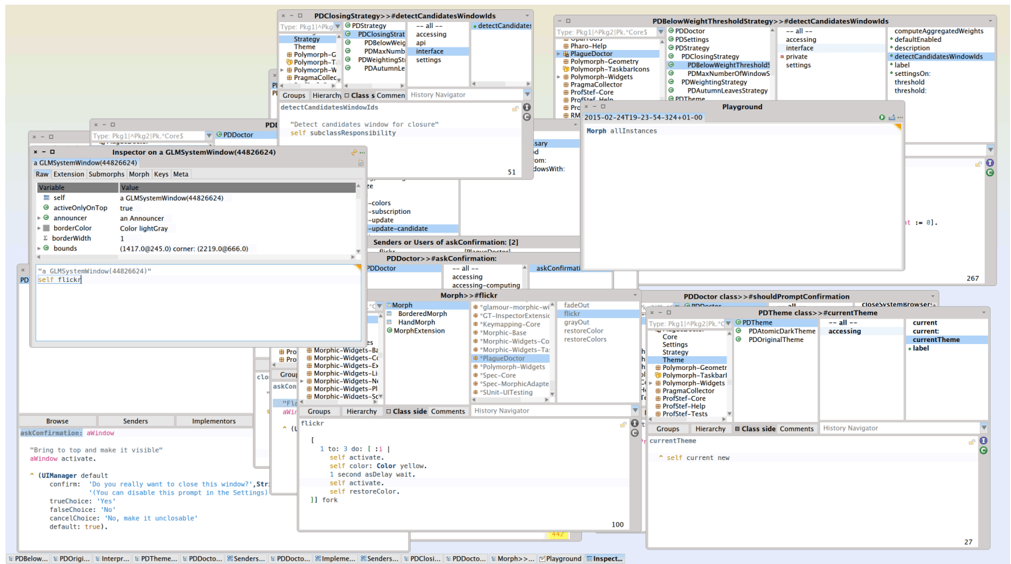
The Plague Doctor: A Promising Cure for the Window Plague

Modern Integrated Development Environments (IDEs) are often affected by the \"window plague", an overly crowded workspace with many open windows and tabs. The main cause is the lack of navigation support in IDEs, also due to the many - and not always obvious - complex relationships that exist between program entities. Researchers have shown that it is possible to mitigate the window plague by exploiting the data obtained by monitoring how developers interact with the user interface of the IDE. However, despite initial results the approach was never fully integrated in an IDE. In our previous work, we implemented DFLOW, an automatic interaction profiler that monitors all the fine-grained interactions of the developer with the IDE. Here we present a first prototype of the PLAGUE DOCTOR, a tool that seamlessly detects the windows that are less likely to be used in the future and automatically closes them. We discuss our long term vision on how to fully exploit the interaction data recorded by DFLOW to provide a more effective cure for the window plague.

The Plague Doctor: A Promising Cure for the Window Plague
2 March 2015 Paper
9157 words · 46 minutes

Misery Loves Company - CrowdStacking Traces to Aid Problem Detection

During software development, exceptions are by no means exceptional: Programmers repeatedly try and test their code to ensure that it works as expected. While doing so, runtime exceptions are raised, pointing out various issues, such as inappropriate usage of an API, convoluted code, as well as defects. Such failures result in stack traces, lists composed of the sequence of method invocations that led to the interruption of the program. Stack traces are useful to debug source code, and if shared also enhance the quality of bug reports. However, they are handled manually and individually, while we argue that they can be leveraged automatically and collectively to enable what we call crowdstacking, the automated collection of stack traces on the scale of a whole development community. We present our crowdstacking approach, supported by Shore-Line Reporter, a tool which seamlessly collects stack traces during program development and execution and stores them on a central repository. We illustrate how thousands of stack traces stemming from the IDEs of several developers can be leveraged to identify common hot spots in the code that are involved in failures, using this knowledge to retrieve relevant and related bug reports and to provide an effective, instant context of the problem to the developer.

Misery Loves Company - CrowdStacking Traces to Aid Problem Detection
2 March 2015 Paper
9775 words · 49 minutes

CEL - Touching Software Modeling in Essence

Understanding a problem domain is a fundamental prerequisite for good software design. In object-oriented systems design, modeling is the fundamental first phase that focuses on identifying core concepts and their relations. How to properly support modeling is still an open problem, and existing approaches and tools can be very different in nature. On the one hand, lightweight ones, such as pen & paper/whiteboard or CRC cards, are informal and support well the creative aspects of modeling, but produce artifacts that are difficult to store, process and reuse as documentation. On the other hand, more constrained and semi-formal ones, like UML, produce storable and processable structured artifacts with defined semantics, but this comes at the expense of creativity. We believe there exists a middle ground to investigate that maximizes the good of both worlds, that is, by supporting software modeling closer to its essence, with minimal constraints on the developer's creativity and still producing reusable structured artifacts. We also claim that modeling can be best treated by using the emerging technology of touch-based tablets. We present a novel gesture-based modeling approach based on a minimal set of constructs, and CEL, an iPad application, for rapidly creating, manipulating, and storing language agnostic object-oriented software models, which can be exported as skeleton source code in any language of choice. We assess our approach through a controlled qualitative study.

CEL - Touching Software Modeling in Essence
2 October 2014 Paper
9843 words · 50 minutes

Quantifying Program Comprehension with Interaction Data

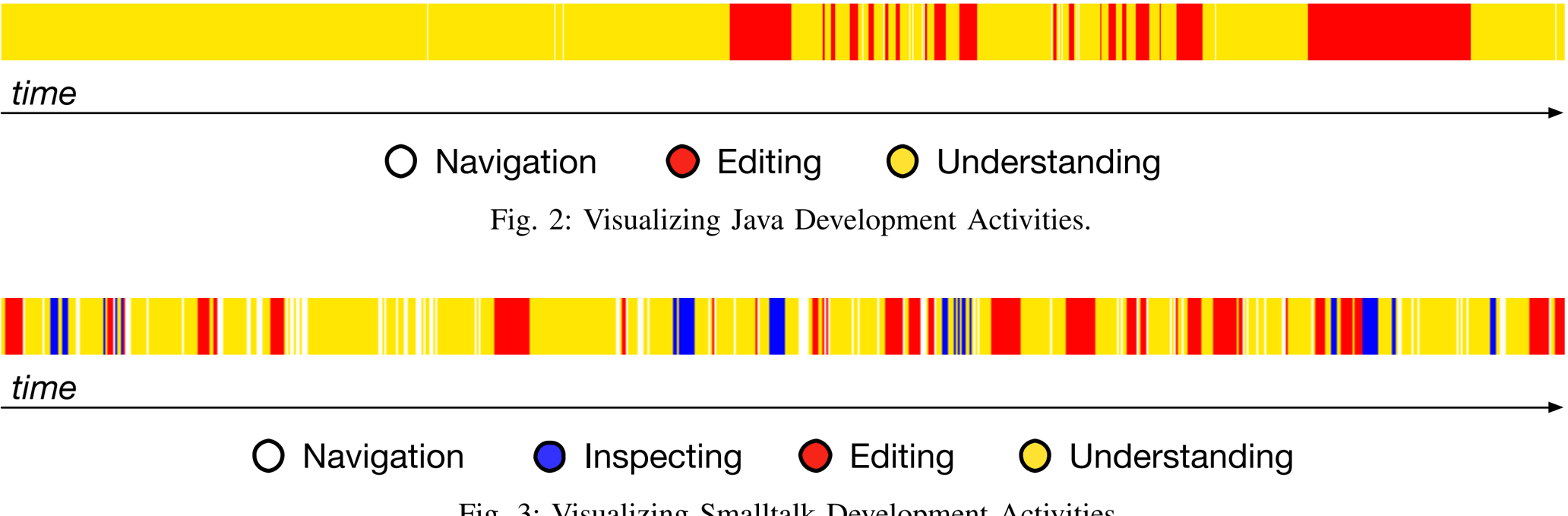
It is common knowledge that program comprehension takes up a substantial part of software development. This \"urban legend" is based on work that dates back decades, which throws up the question whether the advances in software development tools, techniques, and methodologies that have emerged since then may invalidate or confirm the claim. We present an empirical investigation which goal is to confirm or reject the claim, based on interaction data which captures the user interface activities of developers. We use interaction data to empirically quantify the distribution of different developer activities during software development: In particular, we focus on estimating the role of program comprehension. In addition, we investigate if and how different developers and session types influence the duration of such activities. We analyze interaction data from two different contexts: One comes from the ECLIPSE IDE on Java source code development, while the other comes from the PHARO IDE on Smalltalk source code development. We found evidence that code navigation and editing occupies only a small fraction of the time of developers, while the vast majority of the time is spent on reading & understanding source code. In essence, the importance of program comprehension was significantly underestimated by previous research.

Quantifying Program Comprehension with Interaction Data
29 September 2014 Paper
7871 words · 40 minutes

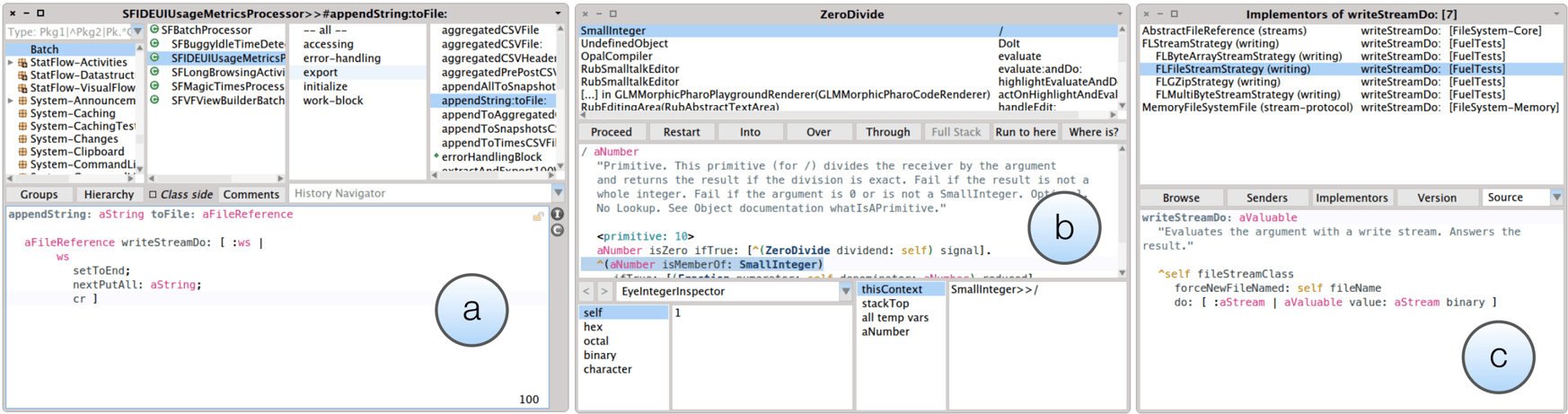
Visualizing Developer Interactions

Integrated Development Environments (IDEs) have become the de facto standard vehicle to develop software systems. The user interface (UI) of an IDE offers a staggering amount of facilities to manipulate source code, such as inspectors, debuggers, recommenders, alternative viewers, etc. It is unclear how developers use the UI of an IDE and whether such UIs actually give appropriate support to the developers. We present a visual approach to understand and characterize development sessions from the UI perspective. The tool supporting our approach mines and processes the finest-grained UI-level events making up development sessions and presents them visually. We have collected, visualized, and analyzed hundreds of development sessions and report on our findings.

Visualizing Developer Interactions
29 September 2014 Paper
3436 words · 18 minutes

Visual Storytelling of Development Sessions

Most development activities, like program understanding, source code navigation and editing, are supported by Integrated Development Environments (IDEs). They provide different tools and user interfaces (UI) to interact with the source code, such as browsers, debuggers, and inspectors. It is uncertain how and when programmers use different UI elements of an IDE and to what extent they appropriately support development. Previously we developed DFLOW, a tool that seamlessly records and processes interaction data. Our long-term goal is to assess to what extent the UIs of IDEs support the workflow of developers and whether they can be improved. As a first step we present our approach to analyze development sessions in the form of visual storytelling. We illustrate our initial catalogue of visualizations through two development stories.

Visual Storytelling of Development Sessions

HI-SEA: Holistic Immersive Software Evolution Ambient

1 April 2013 Project