
Publications
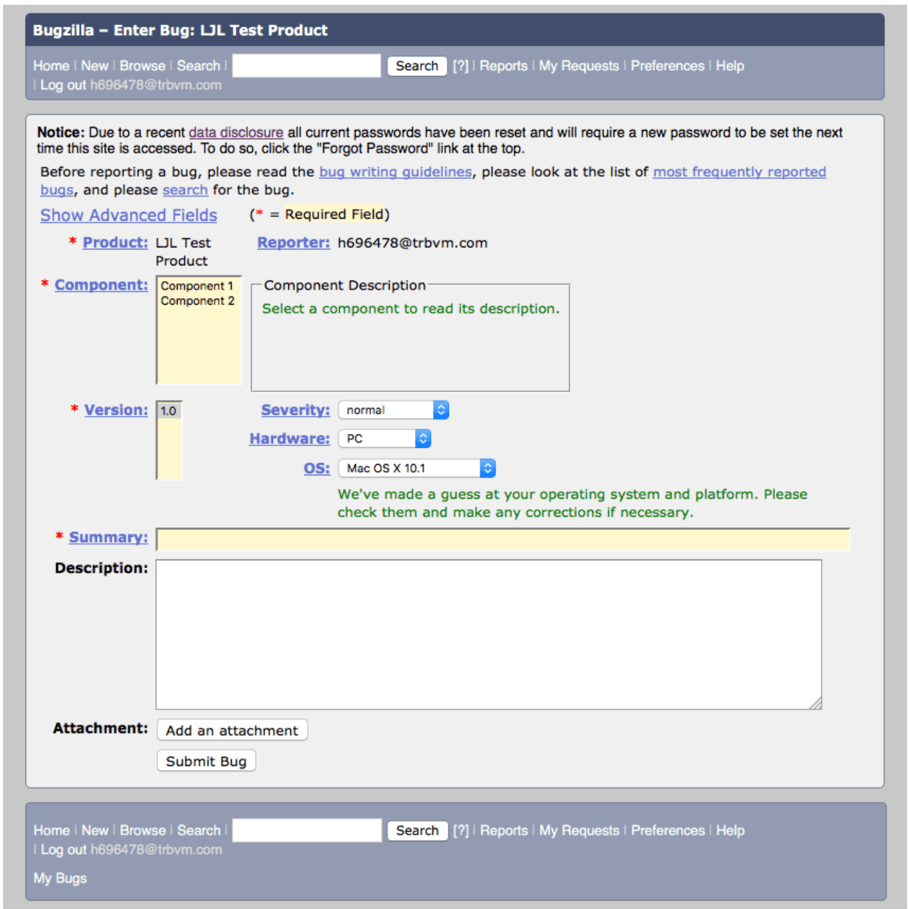
What Makes a Satisficing Bug Report?
To ensure quality of software systems, developers use bug reports to track defects. It is in the interest of users and developers that bug reports provide the necessary information to ease the fixing process. Past research found that users do not provide the information that developers deem ideally useful to fix a bug. This raises an interesting question: What is the satisficing information to speed up the bug fixing process? We conducted an observational study on the relation between provided report information and its lifetime, considering more than 650,000 reports from open-source systems using popular bug trackers. We distilled a meta-model for a minimal bug report, establishing a basic layer of core features. We found that few fields influence the resolution time and that customized fields have little impact on it. We performed a survey to investigate what users deem easy to provide in a bug report.
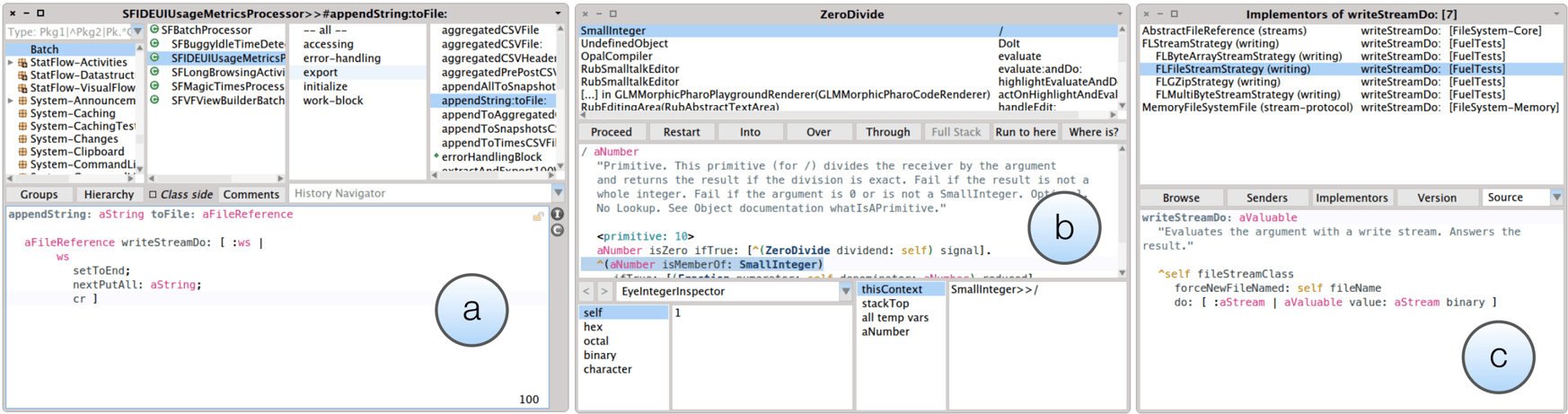
Taming the IDE with Fine-grained Interaction Data
Integrated Development Environments (IDEs) lack effective support to browse complex relationships between source code elements. As a result, developers are often forced to exploit multiple user interface components at the same time, bringing the IDE into a complex, \"chaotic" state. Keeping track of these relationships demands increased source code navigation and cognitive load, leading to productivity deficits documented in observational studies. Beyond small-scale studies, the amount and nature of the chaos experienced by developers in the wild is unclear, and more importantly it is unclear how to tame it. Based on a dataset of fine-grained interaction data, we propose several metrics to characterize and quantify the "level of chaos" of an IDE. Our results suggest that developers spend, on average, more than 30% of their time in a chaotic environment, and that this may affect their productivity. To support developers, we devise and evaluate simple strategies that automatically alter the UI of the IDE. We find that even simple strategies may considerably reduce the level of chaos both in terms of effective space occupancy and time spent in a chaotic environment.
Too Long; Didn't Watch! Extracting Relevant Fragments from Software Development Video Tutorials
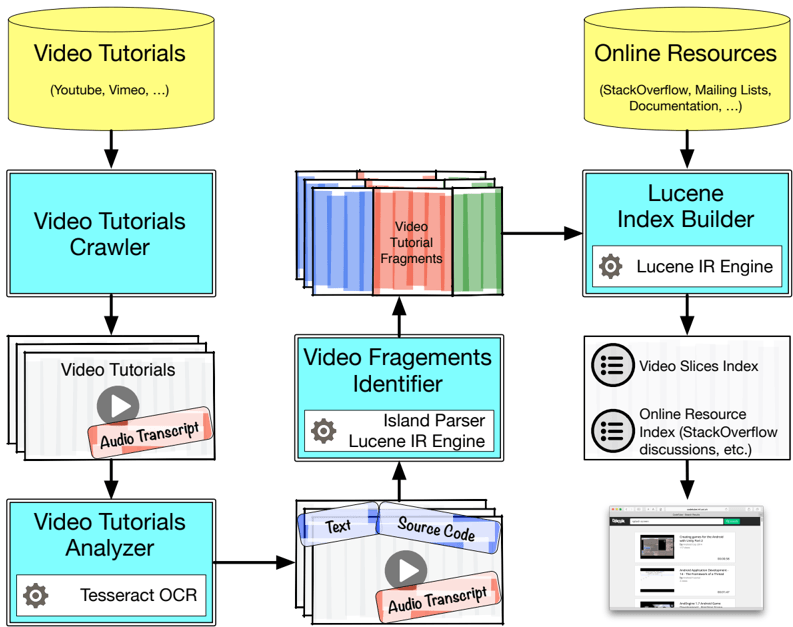
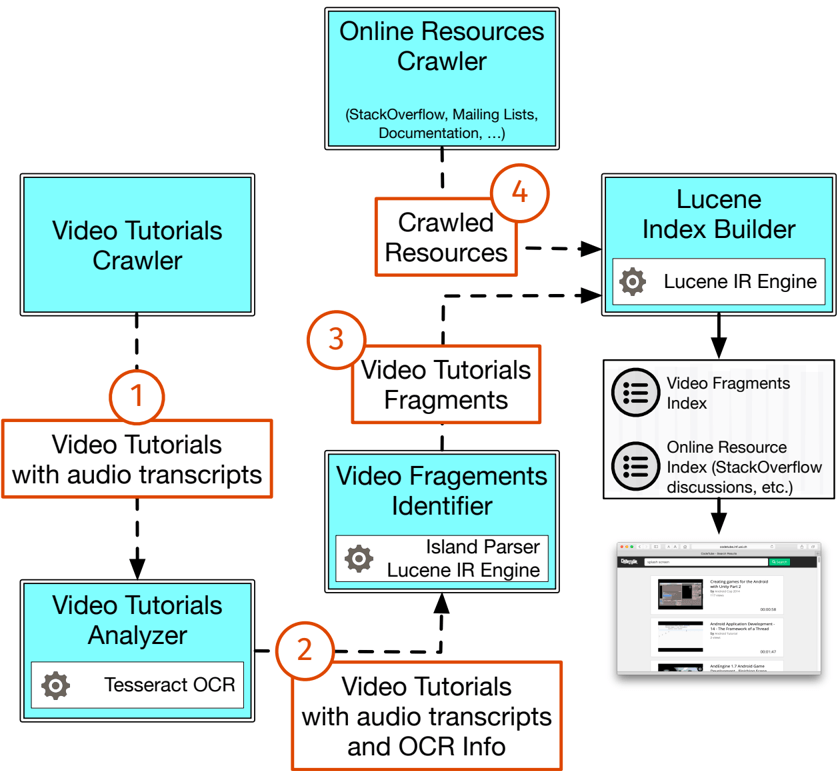
When knowledgeable colleagues are not available, developers resort to offline and online resources, e.g. tutorials, mailing lists, and Q&A websites. These, however, need to be found, read, and understood, which takes its toll in terms of time and mental energy. A more immediate and accessible resource are video tutorials found on the web, which in recent years have seen a steep increase in popularity. Nonetheless, videos are an intrinsically noisy data source, and finding the right piece of information might be even more cumbersome than using the previously mentioned resources. We present CodeTube, an approach which mines video tutorials found on the web, and enables developers to query their contents. The video tutorials are split into coherent fragments, to return only fragments related to the query. These are complemented with information from additional sources, such as Stack Overflow discussions. The results of two studies to assess CodeTube indicate that video tutorials - if appropriately processed - represent a useful, yet still under-utilized source of information for software development.
CodeTube: Extracting Relevant Fragments from Software Development Video Tutorials
Nowadays developers heavily rely on sources of informal documentation. Examples include Q&A forums, slides, or video tutorials, the latter being particularly useful to provide introductory notions for a piece of technology. The current practice is that developers have to browse sources individually, which in the case of video tutorials is cumbersome, as they are lengthy and cannot be searched based on their contents. We present CodeTube, a Web-based recommender system that analyzes the contents of video tutorials and is able to provide, given a query, cohesive and self-contained video fragments, along with links to relevant Stack Overflow discussions. CodeTube relies on a combination of textual analysis and image processing applied on video tutorial frames and speech transcripts to split videos into cohesive fragments, index them and identify related Stack Overflow discussions.
Measuring Navigation Efficiency in the IDE
While coding, developers construct and maintain mental models of software systems to support the task at hand. Although source code is the main product of software development, the process involves navigating and inspecting entities beyond the ones that are edited by the end of a task. Developers use various user interfaces (UI) offered by the Integrated Development Environment (IDE) to navigate the complex, and often hidden, relationships between program entities. These UIs impose fixed navigation costs, in terms of the number of interactions that a developer is required to perform to reach an entity of interest. It is unclear to what extent the actual navigation effort differs from an ideal setting, and if there is any room for actual improvement. We present a preliminary empirical study, where we analyzed a corpus of IDE interaction data coming from 6 developers totaling more than 20 days of development activity. To measure the navigation efficiency, we compute a combination of different ideal settings and compare them against the observed navigation events. Our findings reveal that, on average, developers perform 1.5 to 19 times more navigation events than the ideal case. While different factors make the ideal setting unfeasible, we believe that this calls for novel approaches to support the navigation in integrated development environments.
Use at Your Own Risk: The Java Unsafe API in the Wild
Java is a safe language. Its runtime environment provides strong safety guarantees that any Java application can rely on. Or so we think. We show that the runtime actually does not provide these guarantees—for a large fraction of today's Java code. Unbeknownst to many application developers, the Java runtime includes a \"backdoor" that allows expert library and framework developers to circumvent Java's safety guarantees. This backdoor is there by design, and is well known to experts, as it enables them to write high-performance systems-level code in Java. For much the same reasons that safe languages are preferred over unsafe languages, these powerful but unsafe capabilities in Java should be restricted. They should be made safe by changing the language, the runtime system, or the libraries. At the very least, their use should be restricted. This paper is a step in that direction. We analyzed 74 GB of compiled Java code, spread over 86,479 Java archives, to determine how Java’s unsafe capabilities are used in real-world libraries and applications. We found that 25% of Java bytecode archives depend on un- safe third-party Java code, and thus Java's safety guarantees cannot be trusted. We identify 14 different usage patterns of Java’s unsafe capabilities, and we provide supporting evidence for why real-world code needs these capabilities. Our long-term goal is to provide a foundation for the design of new language features to regain safety in Java.
UrbanIt: Visualizing Repositories Everywhere
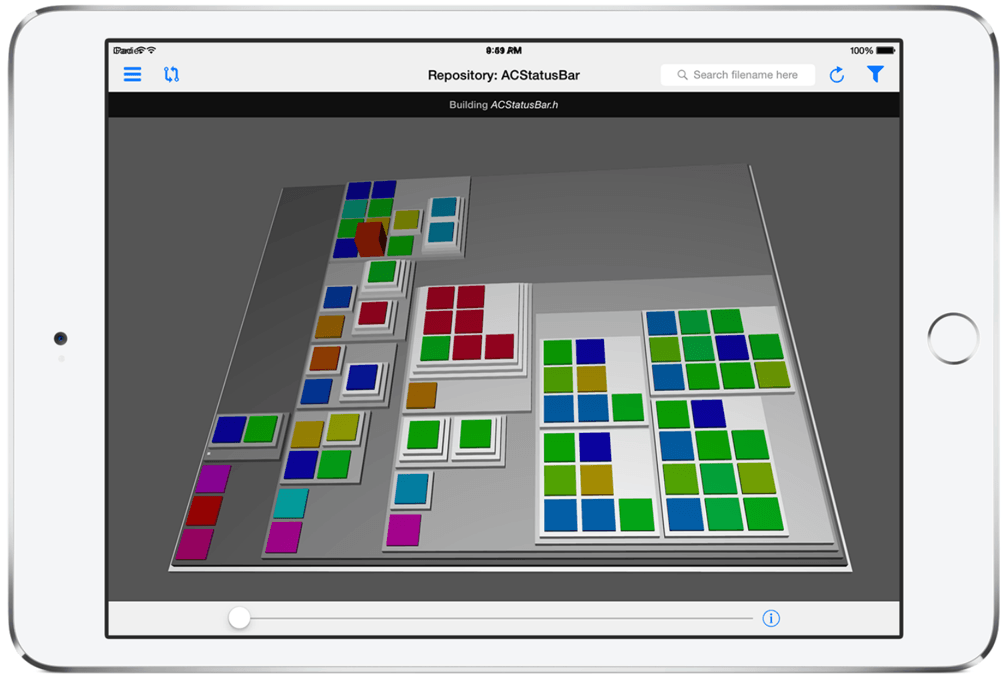
Software evolution is supported by a variety of tools that help developers understand the structure of a software system, analyze its history and support specific classes of analyses. However, the increasingly distributed nature of software development requires basic repository analyses to be always available to developers, even when they cannot access their workstation with full-fledged applications and command-line tools. We present UrbanIt, a gesture-based tablet application for the iPad that supports the visualization of software repositories together with useful evolutionary analyses (e.g., version diff) and basic sharing features in a portable and mobile setting. UrbanIt is paired with a web application that manages synchronization of multiple repositories.
SODA: The Stack Overflow Dataset Almanac
Stack Overflow has become a fundamental resource for developers, becoming the de facto Question and Answer (Q&A) website, and one of the standard unstructured data sources for software engineering research to mine knowledge about development. We present SODA, the Stack Overflow Dataset Almanac, a tool that helps researchers and developers to better understand the trends of discussion topics in Stack Overflow, based on the available tagging system. SODA provides an effective visualization to support the analysis of topics in different time intervals and frames, leveraging single or co-occurrent tags. We show, through simple usage scenarios, how SODA can be used to find interesting peculiar moments in the evolution of Stack Overflow discussions that closely match specific recent events in the area of software development. SODA is available at http://rio.inf.usi.ch/soda/